Helping the Minoritized Achieve in Academic Science

Posts tagged ‘Management’

More Management Stuff

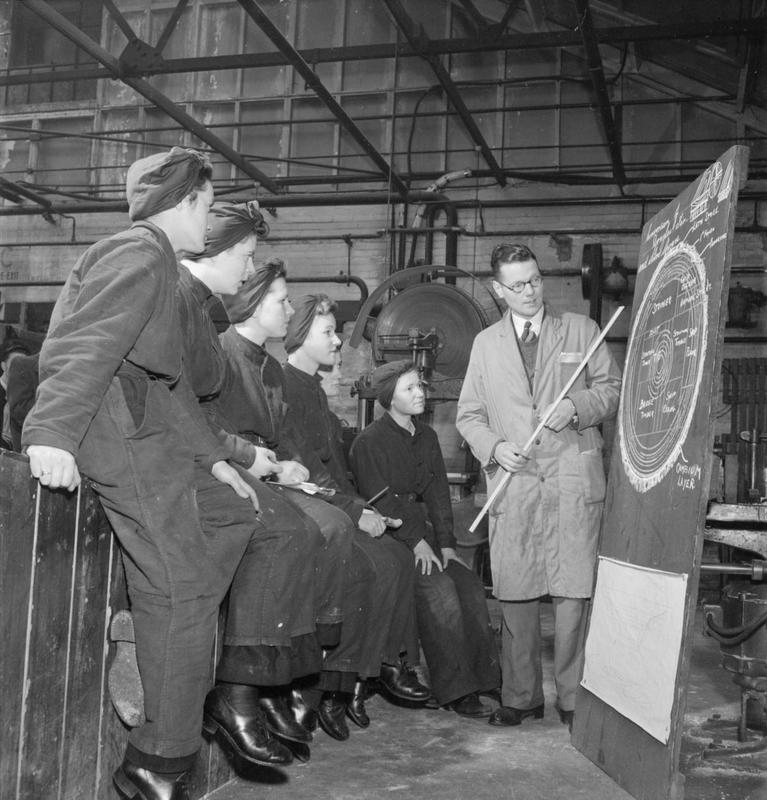
S._Sgt._Lorraine_Robitaille,_switchboard_supervisor,_from_Duluth,_Minnesota,_looks_down_the_line_of_the_Victory..._-_NARA_-_199009Over the past year and a half of this blog (has it been that long?) I have had a number of posts about research group management (i.e. here, here, here, here, herehere, and here). Wow! That’s a lot. I spend a lot of time thinking about how to manage my group well, but I don’t always think that I succeed. I had previously lamented before that I could not find a course locally to help with leadership or management. Well, I am happy to say that I have found and I am currently enrolled and taking such a course at my university.

How I found a course: Every year, we get a flyer about workplace development at UState. In some years, I went through it looking for interesting courses that would help me, but found nothing. Other years, I was so overwhelmed with stuff and getting tenure that I have no idea if i even got the flyer. This year, I noticed, looked, and saw two courses. One was half day workshop on stuff that seemed useful, but the one I signed up for meets 7 weeks for three hour sessions and is about being a Supervisor. A supervisor! That is what I am! I was using the wrong word before. This is why I stink at Googling. Anyway, I found the course and signed up.

Who this course is for: This course is geared toward anyone at UState who supervises others. It is also geared toward staff. The course has a majority of participants who are on campus staff, several participants who work for local non-profits and the local town governments, and two professors – myself and another WomanOfScience I convinced to take the course. The sessions are 3 hours every week for 7 weeks, and the time is during a seminar that I normally attend, so I am giving up some things to attend this course. I was a bit worried that they wouldn’t professors take the course, but we were welcomed to the course.

Is it good?: We have had two sessions (I will talk more about them in follow-up posts), and I am very happy with it. I feel like I am learning a lot! I would highly recommend taking  course like this. Also, having the course mostly filled with “normal people” who do not live for their jobs, but rather deal with a 9-5 business is good. It is great to see that they have similar issues that academics have. The course is taught in an active learning style where we discuss in small groups, share with the class, role play, and often do kinesthetic activities. Also, even though it is 3 hours, the time flies by, because the topic is interesting and I am very excited in learning about it.

So, I will be giving some updates about both the lessons I am learning and the effectiveness of trying to implement these lessons over the next few weeks. Stay tuned to have a bad version of a second-hand management course. To get an email every time I post, push the +Follow button.

Leadership, but not Administration

808px-Queen_Elizabeth_I_by_George_GowerAs I have lamented before, with the coming of tenure seems to be the loss of mentoring. There are a number of new pursuits one can attempt to achieve after attaining tenure, but before Full Professor. For instance, you can begin to take on leadership roles within larger, multi-PI grants or center grants. You will likely be assigned to lead some committees within the department or within the college. You might need to organize a conference. You might get elected to a national or international organization or committee. You can become an editor of a journal or edit a compilation book. You can write a book of your own. Indeed, fulfilling some of these activities may be required to become a Full Professor at your college or university. All of these endeavors require the ability to organize and lead other professors, researchers, or investigators.

In order to achieve this next level, and to enable better leadership and management within your research groups, we should learn some management and leadership skills. Presumably, we all manage our research groups, so we have some kind of management experience. We may or may not be good at it, though. I had a couple of good advisors from whom I picked up some better management techniques (through osmosis and not through any guided instruction). Likewise, I learned how not to manage a lab from a couple of bad advisors. But managing a group of younger, less-experienced researchers (despite the fact that they might not be physically younger than you, as my first postdocs were actually all older than me) is not the same as leading a group of peers or even senior colleagues.

I am looking for guidance on leadership, but very few leadership workshops or courses for academics are geared toward “normal” leadership, such as those I describe above. Most are pointed toward new or up-and-coming administrators. They are meant for aspiring Deans, Provosts, Presidents, Chancellors. Of course, we need leadership skills far before we approach that level. In fact, we should not be attempting to go for Head/Chair of the department, Dean, or other administrative position until after you are already a Full Professor. Being a Full Professor is often a requirement for many administrative positions, although there are a number of lower-level administrative positions that do not require you to be a Full Professor, but you will be limited.

So, how do you gain the skills you need to take on the next level of leadership? Here are a few suggestions:

1. Find and attend a leadership conference. These can be expensive and are often specific for those aspiring to become an administrator. Some are specific for women in administration, such as HERS, or the COACh program. General academic leadership workshops conducted by the American Council on Education (ACE) also exist. Many of these are EXPENSIVE, and you are not going to fund yourself to go. You need the university to support you to go.

2. Use a leadership workshop or conference on campus. More and more universities and schools are seeing that leadership skills are important for their faculty members. A number of schools have been having on campus workshops or short courses. From what I hear, you need to be invited and somehow picked at your school. This is where making sure that your on campus network is in tact and strong is very important.

3. Check your local business school. Many of the schools where you work have business or management schools. Business schools almost always have a leadership course. If you get to attend or sit in on a course for free, take advantage. Contact the professor and ask if you can audit the course. Unlike a short course or workshop, which might only be a week at most, a semester/quarter-long course will give you more time to learn management over a longer time. There will be assigned reading which you might not get to in a timely manner, but will be a good reading list for what you will need to know.

These are my thoughts, but what about yours? Do you have more management workshops that you know about that I missed? It might be good to have a better list. How about other ways those of us without access to special and costly workshops my attain some leadership skills? Any good books we should know about?

New Faculty Needs

WomenTrainingI was chatting with some new and not-so-new faculty recently. We all agreed that the first year of being a faculty is really tough. The toughest part about it is trying to figure out how to do, well, EVERYTHING. We go from being postdocs where we are trained how to conduct science research, write science papers, maybe mentor and give talks to having to… manage physical space, manage people, manage money, teach students, write grant proposals, and more. Many schools have an orientation to help new faculty “adjust” to the new role, but we found many topics to be sorely lacking. Below, I list and discuss several topics that could go in a new faculty handbook, if any such thing existed.

Laboratory Safety. When you get to your new position, you must take laboratory safety along with the students of various ages. If you are hoping that the lab safety officers are going to help you out and tell you the extra you need to know to manage the safety of a lab of other people, guess again. You are just going to get the same schpeel you got as a grad students and as a postdoc. But, you really need more. Like, how do you fill out all the extra paperwork the university will require for you to even do what you need to do? Need lasers? Extra paperwork. Need to use recombinant DNA? Lots of extra paperwork. Need to use cells? Mammalian cells? Even more paperwork for Biosafety Level 2+. If I was to design an orientation for new faculty, it would have an option to have a faculty-specific lab safety course where they emphasized the managerial aspects of lab safety and gave you examples of the paperwork you will be required to write out.

Grants and Contracts. Although there is some orientation about writing grants, it would be good to get some pointers on some of the drudgery of grant-writing. For instance, no one informed me at first about the 5 business-day rule.. you know… that you have to get your grant into the university grant office 5 business days in advance? Does the university require a full budget? Even if the granting agency doesn’t? How do you use the online submission software to submit your budget and proposal to the university for approval? Some of these items probably have training sessions of their own, so keep your eyes open, but a handbook of the basics would have helped a lot.

College Administrators and Their Duties. At the college level, there are likely various associate deans. Some may be assigned to new faculty development, some are designated for research, others are for teaching. Knowing which is which will help you when your lab needs new electrical or something comes up with the course you are teaching. Also, does your college have grant-writing support staff? Or is that housed at the departmental level? Where is the person who is supposed to help you write up budgets? It seems like a small thing that you should be able to do, but the rates of pay for you, your postdocs, and grad students change fairly often at my school, and I never seem to know who gets how much. Having someone to help with that is huge.

Departmental Administrator Duties. This was a big issue for me. Our department has several administrative assistants, but I had no idea who did what. I learned the hard way by asking the wrong person repeatedly and being rerouted. I really needed an ides of which admins did which jobs because our understaffed department had them all wearing multiple hats. Another issues was that sometimes they actually didn’t know how to do what I was asking. Sometimes it was because it really wasn’t their job. Even though my postdoc department had someone who’s job was to do XYZ thing, that responsibility was now mine here. Or, sometimes it was something they should do, but no one ever asked before. Since most faculty come into a department one at a time, having a department-level orientation is probably fairly uncommon. If you are a new faculty and you have a senior-faculty mentor – ask them and take notes on what they say. I wish I had done that. I wasted a lot of time running after administrative assistants asking them for stuff they didn’t do or know how to do.

If you made it through that, and your still want advice from me, check out these older posts with advice on starting your new job:

LabOf OneWhatDoIDo?YouBelongHiringWoesManagementSolutionsGettingCopiesOfGrants

What do you think? Post or comment! Click the +Follow button to receive an email every time I post.

Organizing Your Group: Lab Rules

The presence of some species, like this crusta...

The presence of some species, like this crustacean, may be used as an environmental health indicator. (Photo credit: Wikipedia)

Does your research group or lab have rules? Codes of conduct? Specific ways you need students to do things, so that science happen faster and things do not get broken? How do these rules or codes get relayed to your students?

When I first started my lab, the codes of conduct for the lab were haphazardly passed from me to student A to student B. But, much like the telephone game, I started noticing things sounding funny out the other end. People didn’t seem to know how to wash dishes or run the autoclave. I started training people with a BootCamp (more on that in another post), and that was helpful to get everyone on the same starting page. But there were still other things that would come up, occur, or happen that made me realize that not all was covered.

I talked to other young faculty about the issue, and one ManOfScience told me that he just made a list of rules and requires everyone to read it. I was intrigued, but not convinced because this seemed very formal for a lab. I wasn’t against increased formality, but the idea of having explicit rules seemed counter to the rebellious and outsider nature of experimental lab work. Does that make sense? You may have felt that way when you read the title. I am sure most people don’t have “rules” for their labs, but I hope this post convinces you that it might be worthwhile.

Here is what convinced me: During our conversation, this ManOfScience told me what sold him on having explicit rules. At some point someone carelessly, accidentally started a fire in the lab. The fire was in the back of the lab, and other people were working in the front of the lab. The person in the back, knew there was a fire, ran out, and called 911 from afar. But, they never told the other people working in the front of the lab! This seems appalling, but panic can do crazy things. You think that you should not have to tell someone to tell the entire lab to evacuate when their is a fire, yet this story says that even the most obvious-seeming things may not be obvious to all people. To this ManOfScience, and to me, it is not worth losing your lab over something you could have easily told to your students. It isn’t worth losing a piece of equipment or a person. All labs have specialized equipment and facilities. You need to clearly tell students how to you these facilities and how to treat the equipment, the strains, cell lines, animals, human subjects. Some of these issues are covered in Environmental Health and Safety courses, but it is still worth reminding.

The following are specific sections that can go in your rules:

  • Personnel issues, work hours, vacation policy, and expectations
  • Group organization
  • Group meetings, seminars, journal clubs, and semester reports
  • Reagent preparation, sterilization, storage, and disposal
  • Freezer and refrigerator storage
  • Ordering and receiveing
  • Data collection and archiving
  • Lab safety and environmental health
  • Computers
  • BIg Equipment
  • Other equipment

At the end of the rules, I have a signature page. They have to sign and return the last page to me to verify that they read the rules. If they break the rules, this signature holds them accountable. I have them read and sign 3 times a year. I update the rules when I need to, and periodically review it myself. The rules are great for new people to get up to speed on how the lab works quickly. Most students appreciate being told directly what to expect and what the rules are. Students that don’t like it also don’t last long in the lab.

How about you? Any other rules or categories I missed? How do you tell people what’s up in the lab?

Tag Cloud