Helping the Minoritized Achieve in Academic Science

Archive for the ‘Networking’ Category

Conference Thoughts

2475011402_bf70c92575_oAs I am sitting in a session at the world’s largest conference in MyFieldOfScience, I am thinking about conferences. I am thinking about how important they are for your career in a lot of ways. For those of you who recently joined the blog (thanks for following!), you may have missed some previous posts about networking. I had one about general networking and another on networking on campus, which are both super important for getting tenure, getting jobs and just good for your career. Conferences are key for networking, being seen, and building your mentoring and scientific connections vertically and horizontally. I have come to the realization that networking is basically “professional flirting.” You can chat about science, but most convos are about family, travel, weather, grants, clothes, students, jobs, or whatever. Academic life has other aspects that we can talk about too. I had a great conversation about teaching and how to teach 400+ effectively with a colleague from another university.

Another thing conferences are great for is energizing your science. When I was young, and I think this is the case for my students, I loved going to conferences because it gave me confidence that people were actually *interested* in my science. I was able to talk about my work, have some people listen, and get validation that what I was doing was of worth. Further, seeing the work of other people that was similar to my own made me feel like I had a community of scientists who were interested in the science. Conferences re-energized me and made me look forward to working on more science and getting my work published.

Now, my science gets energized, but in a different way. Now, I look around and say, “Oh crap, we are more behind than I thought! Everyone is doing the cool experiments I thought of but haven’t gotten off the ground yet!” This is both bad and good. First the bad. It is scary to compete with your science against other groups that are better funded, have more students, and might be ahead on the same ideas you have. Also, I am so so crappy at hiding my science. I cannot keep secrets about the cool stuff we are doing. In some fields, telling people what you are doing helps to mark your territory. In others, it can be giving them the keys to all your best ideas. I have to be careful, but I can’t help but be communicative, open, and excited about our newest stuff. It might hurt me sometimes, but in the long run, I would rather collaborate than compete.

Now the good. Much like when I was young, seeing all the great stuff my colleagues are doing that is similar to my own work can be energizing and maybe even light a fire under your ass to get going. Further, it helps you to focus. If you had an idea to do X experiment and you see it done (probably slightly differently) at a conference, you can refocus your idea to probe the still open questions. Another good thing about people working on similar stuff – it shows your work is hot, important, and in fashion. As in other realms (like fashion) styles change, but if you are hitting hot you have a better chance of getting high profile publications and getting noticed.

So, those were my thoughts about conferences. What do you think? Post or comment here!

On the Road Again

Travel-smallI am wrapping up the end of a couple weeks of travel. At first, it was nice to have a break from my gigantic class and my crazy household and the snow snow snow, but I am ready to go back home and get into a comfortable groove again. I am sure my HusbandOfScience will also be happy to have my help around the house again, too.

HusbandOfScience and I seem to do a lot of traveling. This semester, I am traveling for 3 conferences and 3 seminars. That doesn’t really seem so bad, unless you add in the travel of HusbandOfScience. If we each travel once per month, than someone is traveling every other week!

I think I should start phasing out most seminars, but people come back and ask every semester. You feel flattered and you feel guilty for saying no. The requesters come back and ask you again so nicely and politely.  So you make a date for a year in advance hoping that FutureYou will be in a better position than PresentYou as far as traveling. But FutureYou has always been in a worse position because PresentYou is an a-hole who keeps schluffing her travel onto FutureYou. This is all screwed up even more because some fancy, exciting invitations might come up on shorter notice than one year causing all wave function to collapse into a coherent travel particle.

But, here is a problem with phasing out going to give seminars – we get evaluated every year on our research accomplishments that help to determine the measely 0.5-0.7% raise you might get. People who don’t travel are dinged because they must not be important enough. Seminar invitations count toward your visibility as an academic, so you don’t want to ignore them completely. So, what is a happy medium? How many seminars is enough to make sure you are getting out your research message, but no so much that you drive your wonderful SignificantOther bonkers because you are never there? And is it really important to travel at all?

Some of my WomanOfScience friends who have new babies are having trouble getting back into the groove of travel. They are saying “no” and feeling guilty because it is for family reasons. Again, I ask if this is hurting their career? It seems to me that if they get out a reasonable number of scientific papers and other written works each year (say, 2-5?) then their scientific research “cred” is really not in jeopardy. I think not getting manuscripts submitted and published is a more negative issue for your career than the number of talks you give. So, I don’t think these MothersOfScience should worry about getting back to the swing of travel so fast, if they want to take a few years to settle into motherhood before hitting the road again. For when you are ready to get back, I have a lovely post contributed by one of my mentors and AllAroundWomanOfScience about this topic called, “Back in the Saddle” you might want to check out.

One thing I do want to say is that I get a lot more manuscript writing and submitting while away traveling and on the road (actually mostly on the airplane) than I do at home. So, for me, keeping up that paper count may depend on my seminar schedule being full.

What do you think? How essential is travel? Does it matter more before or after tenure? Comment or post. Push the +Follow button to get an email every time I post.

Advice for International Students

chemistryTis the season for graduate admissions. Many of the applicants at UniversityofState (UState) where I am a faculty member are foreign. Some of these clearly have a lot of coaching and help, but others are clearly lacking. So, I have asked an International WomanOfScience for some advice on getting to US schools and ultimately an academic position from your CountryOfOrigin. Enjoy! (Remember, you can get email updates by pushing the +Follow button).

About me: I got my B.S. in Physics at a small-ish university in a warm foreign country. While an undergraduate, I participated in two summer research programs in the U.S., and I spent one year as an exchange student at a prestigious university in the midwest where I was also involved in undergraduate research. I attended graduate school in a very cold state, and I am now an Assistant Professor at a primarily undergraduate institution in the U.S.

As an international Science student, you should follow the same advice given to all students: keep up your grades and get involved in undergraduate research.

Two of the main challenges international students have in being admitted to graduate school in the U.S. are that the admissions committee may have a hard time judging the quality of the undergraduate institution you attended, and grades may be reported differently on transcripts. The best way to show the admissions committee that you can be a successful graduate student in the U.S. is to prove that you can be a successful undergraduate student in the U.S. Look for opportunities to come to the U.S. as an undergraduate for a summer or a semester. There are few summer research experiences open to non-U.S. citizens or residents, but they do exist. For example, there is the Internship for Physics Majors at Fermilab. Your home university may also have exchange programs, where you can spend a summer, a semester, or a year abroad. Even if you are part of a language program (like an ESL program) it may be possible to take a Science or Math class (it never hurts to ask!). If you do well in this class you will have demonstrated you are a capable student, and you could then ask the instructor for a letter of recommendation. A program like this has the added benefit of allowing you to figure out if you would enjoy living in the U.S. before you commit to coming here for 5 or more years.

PLAN AHEAD. It may take longer to gather all of the necessary materials for your application:

TranscriptsSome (most?) U.S. institutions will require an official translation of your transcript. At the university I attended, this took quite a long time (4 – 6 weeks).

The TOEFL, GRE and GRE subject tests: Depending on where you live, you may have to travel to a major city to take these tests, and they may not be offered very often. Thus, it is very important that you register early and plan your trip so that you can take the tests before the deadline for graduate school applications.

Paying for Application Processing:Some institutions in the U.S. charge an application fee and some do not. Most of the institutions that charge an application fee accept major credit cards. It is worth calling your bank and inquiring about the currency exchange rate and any extra fees for foreign transactions.

Other costs:In Science, most graduate schools will offer you a teaching assistantship, research assistantship, or fellowship, that will cover your tuition, health insurance, and provide a (small) salary. Make sure you understand exactly what each university is offering and how your salary compares to the cost of living. In addition to moving costs, you will probably have to put one or two month’s deposit down to rent an apartment, there might be university fees that are not covered as part of your “tuition,” and co-pays or a deductible on your health insurance. Also, some U.S. cities have very good public transportation, but others do not, which makes it difficult to live without a car.

VISA issues:These have been numerous in my case. It is probably best to contact the university’s International Student office and/or your local U.S. embassy. You should also try to understand as much about the system and the laws as possible – don’t trust that all of the advice you get is good, or even correct. Once you are in the U.S. make sure you take originals and copies of all relevant documents with you when you travel abroad.

The hidden curriculum:Your goal in graduate school should be not only to master a particular sub-field and conduct original research, but also to become a professional in your field. You need to think ahead to what you want to do after graduate school and look for opportunities that will help get you there. For example, if you want to go into industry, an internship could give you valuable experience and contacts. If you want to go into academia, your university might have a program that helps graduate students and post-docs explore and prepare for possible career paths (research institution vs. liberal arts vs. community college). You should try to regularly attend conferences, both locally (like your state’s Association of Science Teachers) and nationally. In any case, you will need letters of recommendation from several faculty members, so be well-prepared when it is your turn to present a seminar, be on-time for meetings and classes, and when you say you are going to do something, DO IT! In other words, treat graduate school like you would a job and behave professionally.

Culture Shock: There will certainly be differences between your own culture and american culture that you will need to be aware of, but there is also a culture to your particular field. What I found most helpful in graduate school in this regard was mentoring from other graduate students that were a few years ahead of me. If there is a graduate student group at your institution, make time to go to events and meetings, talk to the other students there about their experiences, and ask for advice.

What did I miss? Feel free to post questions in the comments.

I hope you found that post helpful! I am sure this WomenOfScience would be happy to answer questions in posts, so feel free to ask here. Thanks again for that insightful post.

Attributes of Scientists: Perseverance

Christabel_PankhurstI am currently at a fantastic meeting for Undergraduate Women of MyFieldOfScience. I was brought across the country for this event, and today I am giving a talk on my research with some background information on myself. I love these events! The undergraduate women, who are uber-underrepresented in MyFieldOfScience, are so excited to be here. Once you group 10-20 schools worth of women together, it is a lot. Women who are isolated or the only woman in their department can connect with their peers. It is wonderful, and I am excited and honored to serve as their mentor for this short time.

Throughout the meeting, there has been a theme that has clearly emerged to me. Several of the speakers and students have described their perseverance within science, or that perseverance is a key attribute they look for in applications to REUs or graduate school. I was thinking about it, and it is really true. Although, sometimes I might call it stubbornness or pigheadedness, and it can backfire in those forms resulting in close-mindedness. But perseverance is a better term and has a slightly different meaning. It reminds me of Madame Curie’s struggle to discover radium (for a funny post on Madame Curie from another Awesome WomanOfScience, go here).

So, here is one story from me about perseverance. It is about how I got to this meeting for undergraduate women in MyFieldOfScience. It is meant to be funny, and just be a silly example of the stuff scientists will put themselves through to fulfill a promise. Enjoy.

This story starts on Wednesday morning. It was like any other Wednesday morning except the baby was sleeping in. I have two kids – elementary age and toddler age – and we still call the toddler the baby, because he will likely always be the baby. Now, the baby doesn’t sleep in. In fact, the baby usually wakes up far before I want. But today, was different, and the brief reprieve of his late slumber was making our morning cyclone a bit calmer.

I almost was worried I would have to wake him, when I heard his lovely WAIL, and I made him a bottle and was bringing it to him. When I turned on the light, I realized he had puked all down the side of this crib as he was standing over the railing crying. This kicked the morning cyclone up a notch to Kansas Tornado that Brought Dorothy to Oz level. One of us was cleaning the baby and stripping him down while the other was stripping the bed and wiping it down.  And now we were worried. What was this puke about? Was he sick with a stomach bug? Or did he just cough too much and make himself throw up? Or did he swallow too much snot, the evidence of which was still sluggishly dripping from his cute little nose, and that upset his tummy. After the ruckus, he asked for a bottle, and kept it down, he had no fever, so we assumed something besides sickness had caused the puke. We took him to school and they admitted him, despite our story of puke. Hooray for our daycare service – they are the best!

Unbeknownst to us, the puke cleaning job was infecting us with a stomach bug that was biding its time to strike. On Thursday night, my husband got hit. He was up all night evacuating his insides. Most of this I had no idea of, because we have both learned to sleep through quite a bit of noise and motion with two kids.  I was set to fly across the country, and felt totally fine. I woke at 4am, showered, and got out the door for a day of flying and uninterrupted writing time (I love that you can work uninterrupted on airplanes – no meetings, no phone calls, just you and your computer).

During my 4 hour layover, it hit me. A nauseating feeling in my stomach. No, I thought, I can’t get sick. I am already traveling. The second flight offered me a much needed afternoon nap in the *most comfortable of positions* with my mouth drying out as it hung slack jawed while my head was jammed against the window. I woke to the upset stomach and started downing the antacids I always carry when I travel – just in case – and getting a ginger ale from the flight attendant. I was able to ignore the stomach ache while working, and got a bit done. I felt like Patrick Dempsey in Outbreak in the airplane scene (They didn’t have an internet picture of Patrick Dempsey with a sickly sheen and coughing, and I didn’t want to buy Outbreak, just so I could screen capture that image, so here he is playing with the monkey infected with the Ebola virus or whatever):
Dempsey

Luckily, I didn’t actually look like him. Nowadays they won’t let you on the plane if you are sick. Anyway, the stomach thing got worse, but I persevered. I went to dinner. I talked to students. I made jokes. I got into a playful argument with a ManOfScience over whether one should clean your own toilets, or pay someone else to do it, provided they have the money. He thought people should clean their own toilets, and I thought you should pay someone to do it, so you could spend more time with your family having fun. I wasn’t as upbeat as I usually am, but I put on a good face.

It all came down after I got back to my room. I slept upright trying not to puke all night. I felt strangely normal around midnight and was able to sleep for 5 hours when I was woken by my intestines bubbling back into my stomach making me queazy and burpy. These are ominous signs. At 7am, I puked. I puked hard. I have puked enough times to know by now that holding your hair is secondary to holding your nose when you puke. No one ever talks about it, but hard puking makes it spray out of your nose cavity, too, and you have to hold your nose to block that passage. (Helpful tips on puking from your local scientist.) I got puke all over my pajamas. It was nasty. I did feel a a lot better after puking up what looked like last night’s dinner and yesterday’s lunch from my layover airport. How does the body do that?

I bagged my puke clothes, showered, got dressed, and prepared for the day. I went to the hotel lobby, and worked with them to figure out how to get my clothes laundered. The hotel is run by students, and they were not sure it was possible, but after some pleading and creative problem solving on my part, they figured it out, so that I would have clean PJs by 7pm. Note to people who don’t yet travel too much:  Hotels can do lots of stuff. You have to ask, but they will often do it. It sometimes comes with a price. I was willing to pay as much as $50 to get this stuff laundered in a hurry. It ended up costing 15 minutes and $3.

Day 2 was much better, although I was still sick. I ate and kept it down. I mingled, I served on a panel about REU programs. I submitted some letters of recommendation and tweaked my talk based on the format others were presenting. I went to dinner. And this is how sickness spreads across the country. It was holding steady in my state and now I have brought it across the country to another state. I try to be good and wash my hands, but I cannot know who I infected. So I apologize, in advance, to the bright, motivated, young Women of MyFieldOfScience that I probably infected on this trip. Yet, I persevered, and you will too.

So, should I have canceled? Should I have turned around at my layover when it was clear where I was heading with this illness? It would have saved some other people a 24-hour bug, but I made a promise to be there, and I want to help mentor this lovely, bright, smart, wonderful generation of Women of Science. I would make the same choice again. What do you think? Post or comment. You can follow this blog by pushing the +Follow button, and you will get an email every time I write a new post.

The Best Way to get Copies of Funded Grants…and the Worst Way

PikiWiki_Israel_9290_Gan-Shmuel_-_girls_in_class_1952In the vein of writing, writing, writing, which is the quote on my office door for the past 4 weeks, I thought I would post a piece from another woman of science. This one is about the true first step in any writing process – getting examples. For writing manuscripts, getting examples is easy. You just read a lot of published papers and try to emulate their style (especially clear and nice papers). For other types of writing, getting examples can be more difficult, or downright hard. Perhaps one of the most important types of writing we do in academic science is grant writing.  My advice is always to get examples. Today’s guest post is about how to go about getting examples… and how not… Enjoy!

You’re a brand-new assistant professor, or you’re applying to agency to which you’ve never applied for funding. Where to start? Examples of successful applications are some of the best ways to figure out how to structure your application and to tailor your application to a particular agency or foundation. Where to get them?

Start with your formal and informal mentors. Ask them if they have examples of recent successful applications, or unsuccessful applications if they are willing to share them and to discuss why they think they were unsuccessful. Ask your collaborators and departmental colleagues if they have been funded by the organization you are targeting. Ask them if they know anyone else who has. If that fails, or in addition to those opportunities, most organizations post the names of those they have funded. I recommend looking at that list and finding anyone with whom you have a connection—you were both once at the same institution, you have friends or collaborators in common, anything. Then, contact those people one by one, pointing out your common links to help establish a connection. In addition to really recently funded projects, you might also want to target people who were funded a few years ago, especially if you don’t know them well. With such “older” projects, the work is likely to be well underway and the PI is less likely to feel vulnerable sharing their nascent work. When you send that cold email, state clearly and at the beginning why you are writing, point out your connection, and assure them that you understand that you are requesting a confidential document and you will not share it.

If you can’t find anyone with whom you have a connection, just try asking. You can say something like, “I am planning to apply to X organization. I am looking for examples of successful proposals to this organization and noticed that you are funded by them. Congratulations! Would you mind sharing a copy of your funded proposal or even just some sections of it with me? I understand that this is a confidential document and I will not share it with anyone else.” Sometimes what you really want is an example of a specific type of required abstract or section of the proposal, so just ask for that. Most people remember what it is like starting out in their academic careers or applying to a new agency and are willing to help. Most people are also flattered that you’ve noticed their funding success, which will likely make them more willing to respond to your request. However, everyone is busy and inundated with requests, so allow plenty of time and if you don’t hear anything, ask again in a week or two.

Proposals that have been funded by the federal government are available through the Freedom of Information Act (FOIA). This should be the last resort for obtaining a copy of a proposal. Exhaust your other options first, including cold-calling (emailing) multiple people. Just asking people for what you want will almost certainly yield results, and probably much faster than a FOIA request. When you submit a FOIA request, that request along with your name is sent to the PI. Science is a small world and like other professions, much of your professional success will depend on relationships you build with others. If you receive a FOIA request for one of your funded proposals, this will likely bring to mind several questions, like: why didn’t this person just ask me for the proposal? The proposal probably would have been shared and the requester would have received it faster than waiting for the FOIA request to be processed. The proposer might have removed some sections with personal information or work that is still preliminary, but they might at least attempt to do that anyway in responding to the FOIA request. Some personal information is removed automatically by the agency, too. Then one wonders, what is this person’s agenda? If the requester is another faculty member, are they intending to pursue research that I proposed? If the requester were a private individual, corporation, or certain type of foundation, those suspicions about an underlying agenda would have been even deeper. In general, if someone asks me directly for a copy of my proposals, I send the requested information and offer to read a draft of the requester’s own proposal to try to offer feedback. By submitting a request through a third-party, the requester likely misses an opportunity to build his/her professional network.

Good advice! What do you think? Share in a post or comment. You can follow this blog by pushing the +Follow button and typing your email address. I will try to get back on the blog-writing wagon as I come down from the manuscript/grant writing one.

Writing, writing, writing

write-on-november-is-national-novel-writing-month-a5349cc216There is a lot of reading and writing in science. This is ironic for me, personally, because I went into science because I am a slow reader and I hated humanities classes where I had to read all day. I liked my math and science classes where I solved problems with pencil and paper. My professors delivered content, so I never read textbooks. It is true, despite the fact that I endorse active learning now where students have to read for themselves.

So, here I am, a tenured professor and all I do it read and write all day long. I rarely solve problems with pencil and paper, and I joy in the chance to do so for courses I teach or just snag some back-of-the-envelope time while reading a paper or writing up my own work. I also cannot get most of the content I need delivered, although I go to journal clubs and talks because I am a great auditory learner and I learn best that way. I even have to read papers to myself out loud. This is embarrassing, and I have to close my office door when I review manuscripts or proposals.

After writing that past post about how best to give presentations, I realize there a lot of aspects of this job that we can write how-to posts about. Writing has an seemingly unlimited supply, since we do so many types of writing. I think we will have a few posts (a theme, if you will) on writing. I am happy to entertain guest posts to describe your best practices for writing different things. I am going to list a few that come to mine, comment if you have more types of writing you can think of in addition to these.

  • Manuscripts
  • Proposals
  • Abstracts for posters/platform talks
  • Chapters
  • Books of research
  • Thesis
  • Textbooks
  • Lecture notes
  • Reviews of manuscripts for peer review
  • Reviews of proposals for peer review
  • Grant reports
  • Committee reports
  • Letters of Recommendation
  • Letters of Support
  • Job Application Materials for various stages and types of jobs
  • Published proceedings
  • Biosketches
  • Biographical Information
  • Webpages
  • Blog entries on science
  • Book reviews for publication
  • Articles for general audiences
  • Highlights of research articles
  • Annual personnel reports/highlights
  • Memoranda of understanding
  • Requests for waivers

OK, that is all I can think of. I have written almost all of these types of writing assignments over my career. I haven’t written a textbook, yet, but I really want to. I think I have worked out schemes for writing each of these types of things, and I will write a couple entries about some of the most prevalent ones (or you will). Do you have any advise to offer? Post or comment!

The Resistive Load vs. the Drift

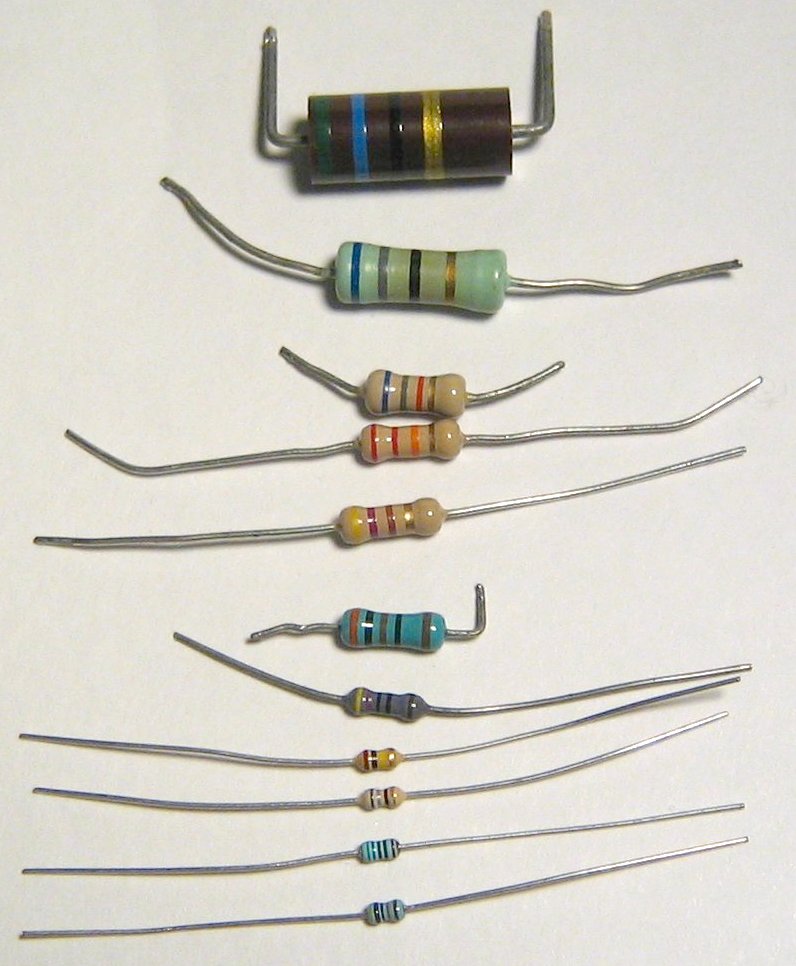
ResistorsAs I said earlier, I recently went to a BigIvyLeague University to give a talk, and I met with a group of young scientists – men and women – for lunch. The meeting turned into a mentoring meeting, as any meeting I have with young scientists tends too. As I said, there were two women postdocs, and we were discussing women’s issues. Another part of the conversation was about the impediments to advancement for women. Different people experienced the resistance at different stages, and this is normal since no two people’s trajectories will ever be exactly the same. Of the two women postdocs, one felt that she was being disregarded and put down even in graduate school. The other had a happy experience in graduate school, but was beginning to feel the resistance now as a postdoc. Of my WomanOfScience friends, many did not feel it until they got to a tenure-track job or even until after tenure. Myself, I had an 8th grade math teacher tell me that I could not advance more than a year in math. Perhaps my early exposure to the resistance is why I am so hyper-aware and intent on changing things.

Studies have shown that the glass ceiling for women in academia is at the full-professor level, as I describe and quoted primary research in this blog post. So, despite the onset age of the resistive load, the trend of the resistance, or other personal factors of each woman’s career, the highest resistance comes just at the precipice of really becoming a fully acting, voting, participating member of your department and college making similar wages as your colleagues. More on this issue in future posts, I think.

The main reason why I wanted to discuss the resistive load was because the meeting directly after the lunch, I met with a young, newly hired WhiteMale Assistant Professor. I had met this guy before at a small conference, and I knew he had been a postdoc at the same BigIvyLeague University where I was visiting, and where he was now tenure track. Some BigIvyLeague Universities do this, when the person is truly a superstar, so I assumed that this was the case, although I didn’t know his full record. This guy is young, and he was very open and honest when I asked him about his trajectory. He said that he had not had many other offers or even interviews, and that he was not, in fact, a superstar. The only places he had interviews were places where people already knew him. He said that this was because he had a low publication rate. Of course, BigIvyLeague University knew him, and his postdoc advisor was key to getting him this position. I consider this a gross case of “The Drift” where someone just continues to advance without any forethought or even any real effort. It is kinda like being in the lazy river at a water park. You get pushed forward.

I often see these people who appear to “Drift” in Second Generation Academics, whose parent(s) were also academics. Second Generation Academics are always typically extremely good at what they do, and in the meritocracy of academia  they advance seemingly effortlessly. In actuality, I think they just understand the game intuitively because they were raised in it, but they are good and working hard. Unlike a Second Gen Academic, this guy is an extreme version of a true Drift. He is literally coasting with no cogent plan. He isn’t applying to grants, or really trying to get students. He is trying to get a few more postdoc publications out because his publication record was reportedly slow.

The juxtaposition of this Drifter with the hard-working excellently bright, quick, and enormously put-down women of the lunch meeting was almost sickening to me. I was somewhat in shock as he told me his path and his non-existent plan. I would like to think that the system would weed this guy out, but given how far he has come, I cannot be sure. Being at a place like BigIvyLeagueU helps in so many areas, like getting good students and postdocs, getting grants, and having papers accepted based on BILU’s reputation. And the worst part was that I really couldn’t blame this guy. He is a nice guy. He is an open and honest scientist. So what if his publication record is slow? What boggles the mind is the system, the structure that promotes this guy and denies even better women and minorities the chance to  work in academia at SecondTierStateU without a hope of even getting to a place like BILU. Or, if you do get an offer at a BILU, they don’t have spousal accommodation, so you have to sacrifice other parts of your life for the benefits of BILU. Indeed, several women I met at BILU did just this.

This post has been long and rambling, so I apologize. These thoughts have been kicking around in my head, and I am not quite sure how to approach them to reconcile the fact that excellent women have so much resistive load against them. What do you think? When did you first feel the resistance to your forward progress? Do you know any female “Drifters”? Even the most excellent and well-promoted women I know really deserve it and still suffer from impostor syndrome, self-doubt, and are truly excellent yet still under-recognized. Post or comment here. Remember to hit +Follow for updates whenever I post. I hope to post more frequently now that classes have ended for the semester!

Back in the Saddle Again

Saddle

Saddle (Photo credit: Wikipedia)

All of us, for some reason or another, have to take a hiatus from traveling, networking, or some of the other parts of our jobs. Coming back can be a challenge. I think many women, especially if they have tenure, take a big reduction in traveling once they have kids. Sometimes it can be difficult to get back in the saddle of long-distance traveling after a long time away. Plus, being away from kids can be sad if it you haven’t been away from them much.

Here is one woman’s story of getting back in the saddle. Enjoy!

I was really divided over whether or not to come to an international meeting, because I didn’t know that many people on the schedule, and honestly I was a little scared. I think everyone thinks I am good at schmoozing, but I had cut down travel so much the last few years that I am out of practice. I haven’t been out of the US/Canada since 2005 — I forgot to bring a European power adapter, felt very stupid and had to buy one at the airport. I was tired and jet-lagged the whole time I was there. I was also feeling really shy — I feel that I look so much rounder in all my business clothes after having kids. I didn’t know that many people at the meeting, and it was mostly really old guard white guys. Many of the participants were from Europe and were used to a more hierarchical academic system, and I forgot that many of those kinds of guys treat me like an infant.

Even worse, I was missing the kids so much that I didn’t feel like talking about science much. I ended up talking about the kids a lot whenever I tried to schmooze.  One of the few people I knew at the conference was a guy of whom I think as a mid-career mover and shaker. I just assumed that he was very well-connected — he’s done well in his career, he’s very friendly and gregarious, he’s gotten some awards, and he’s already on some editorial boards. We ended up eating many meals together, and surprisingly, he told me that he does not like travel much. He usually just goes to society meetings, and has never been to a Gordon Conference. He also told me that he is not good with strangers, and that he was missing his family a lot, also.

So it got me thinking. Maybe not everyone is traveling and schmoozing as much as we imagine they are, while we stay at home turning down invitations and cleaning up baby vomit. And maybe things have changed enough that, once we are done cleaning up baby vomit and are ready to get back in the saddle again, we’ll find that people are more accepting than we think.

Another good thing came from this meeting. I got an invitation to be on an editorial board from the trip, and I think we will have an invited article out of it, also. So it’s been a real positive, even beyond the “international invited talk” on the CV.

My impression is that this WomanOfScience is very brave and good things resulted, so congratulations to her! Any stories of getting back out there? Fears, concerns, or stories of bravery and success? Comment or post.

Why So Negative?

So, I have a had a number of posts, and by now, you maybe could have realized

Thought Bubbles

Thought Bubbles (Photo credit: Michael Taggart Photography)

that I am a naturally positive person. Not only is the glass half full, but I can give you 2 reasons why you should be happy about it. I am also naturally energetic. These attributes make me very able to organize and lead not only my lab but other committees at both the department, college, and even national level. Yet, I am often faced with immediate negative opinions from my colleagues when I put out new ideas, discuss changes, or organize on the departmental level.

Sometimes, they have non-specific comments including, “We tried that 10 years ago, and it didn’t work.” Although this is non-specific and doesn’t give any hard evidence of the “not-working” nature, at least they claim to have tried something new. Other times, they just say, “That’s not how we do that,” without discussion of if it might make sense for us to even try. These attitudes seem unnecessarily negative.

Another place where I find people are negative is about trying to get awards. I recently asked to be put up for a BigAward. Is it a reach? Yes. Am I a shoo-in to win? No. But, again, being the positive sort of person I am, my thought is that your chances of winning are zero if you don’t even try. It’s not that I think I am so great that I will definitely win, it’s just that I see the benefits of trying. When you submit a strong nomination packet, even if you don’t make it to round two, some BigWig, smart people will have to read it. They might be impressed with you. They might remember your application. It might help you out in the long run – you never know. So, my thoughts are that it is worth the time to help your junior colleague get their name out there and support them.

Again, being positive, my take on these people is that they have taken the idea of “critical thinking” to an extreme. We are all taught to be critical thinkers in science. And criticism turns us to the right direction and is helpful. I am not against criticism. It has definitely helped me write better papers and write better grants. But, sometimes, I think that people are so fixated on the “critical” part that they forget about the “thinker” part. They become negative just to be negative for no good reason. Why? Do they do it with everyone? Or am I special because I am so positive? Sometimes these things get me down, and I start feeling bad and suffering from impostor syndrome due to all the negativity. Luckily, I am positive, and one good science interaction or pat on the back from a visitor makes me happy again, but it is disturbing how often the criticism becomes overpowering. If I was a less positive person, it could be crippling or debilitating.

So, what about you? Have you suffered from overpowering criticism? What is justified? Or unnecessarily over the top? How did it affect you, your science, and your attitude? Tell your story in a post or a comment.

Not Just in Academia

Us Highway System in 1926, Dept. Of Agriculture, US Government

Us Highway System in 1926, Dept. Of Agriculture, US Government

While recently at the wedding of my BestFriend, and fellow WomanOfScience turned OfficialWomanOfGovernment/Science, I ran into a number of women and men who I overlapped with in graduate school. It was great to reconnect, and surprising, since my BestFriend is  from my undergraduate years at SmallLiberalArtsSchool4Women. The FriendsFromGradSchool turned out to have been good friends with my BestFriend’s new HusbandOfGovernment/Science. It is interesting when networks reconnect and make a circle. And it reminds you how small the science community really is.

I took this opportunity to reconnect with these NiceGuysOfScience and these AmazingWomenOfScience, and rebuild some of my dilapidated career network. I see my career network as a lateral expanse, much like the road system of the United States. Sometimes, the roads can become a bit run-down, and when you get the opportunity, it is good to reconnect and make repairs.

I was very impressed with these WomenOfScience. They spanned all types of careers and many points along the career trajectory including some WomenPostdocsOfScience, ScienceWomenOfGovernment (some of whom were on a forced vacation), BigShots at PrivateUniversities, and WomanOfIndustrialScience. I have asked them, as I ask you every post, to help other WomenOfScience by posting to this blog. They all seemed very positive, so I hope to bring you some of their stories shortly.

I was most intrigued by WomanOfIndustrialScience. I am always looking for ways to branch my network into industry because you never know when it can help your work or help your student. I feel I am particularly bad at mentoring students who want to go into industrial jobs because I never pursued that path, and I do not have many friends/colleagues who went that route, either.

I was asking my reconnected friend about how it was to be a WomanOfIndustrialScience to get more information for me and students on that path. Maybe because I don’t have direct experience with industrial science, I had it in my mind that it could be better there for women(?).  In chatting, I realized that industrial science is fraught with just as much peril for women’s careers as academic science. On the bad side, it seems like science is difficult for women in either area – academia or industry. This is likely due to the fact that society as a whole does not think of science as women’s work.

On the good side: There does seem to be some advantages to industrial science jobs over academia. Most importantly, it seems that in industry you have the ability to remove yourself from bad situations more easily. Bad bosses could be reported to HR, be moved, be fired, or be sued. It seems like if they are bad bosses to women, they are often bad bosses to dude’s too, and they don’t last too long. From the outside, the option of litigation appears to be more prevalent and perhaps more effective, in industry than academia. Suing in academia certainly means losing your job and career because it is unlikely you will be hired by another school. While suing in industry may not preclude you from getting another job in industry.

But, most women in science are not so litigious. Another option: you can move. You could move laterally within a company or move to a new company. It seems much faster and more fluid in industry than in academia.  In academia, job applications take 12 months instead of 2, as they are in industry. So, even if you are trying to get away from a bad situation in academia, you often have to live with it for many months or even years while you are trying to move. If the bad guys know you are trying to move on, they can even sabotage you, and make your move impossible. Add on top the fact that, in academia, you will likely need to move to a new state and uproot your family, and you might need to resolve a TwoBodyProblem, and the thought of the endeavor could be paralyzing. So, it seems to me that industrial science jobs might be less stressful on these fronts.

Hopefully, we will get more posts from WomanOfIndustrialScience on these topics and more. Do you have something to add? Post or comment. As always, you can follow this blog by clicking the +Follow button. Hope to hear from you!

Tag Cloud