Helping the Minoritized Achieve in Academic Science

Archive for the ‘New Job’ Category

Don’t Say It

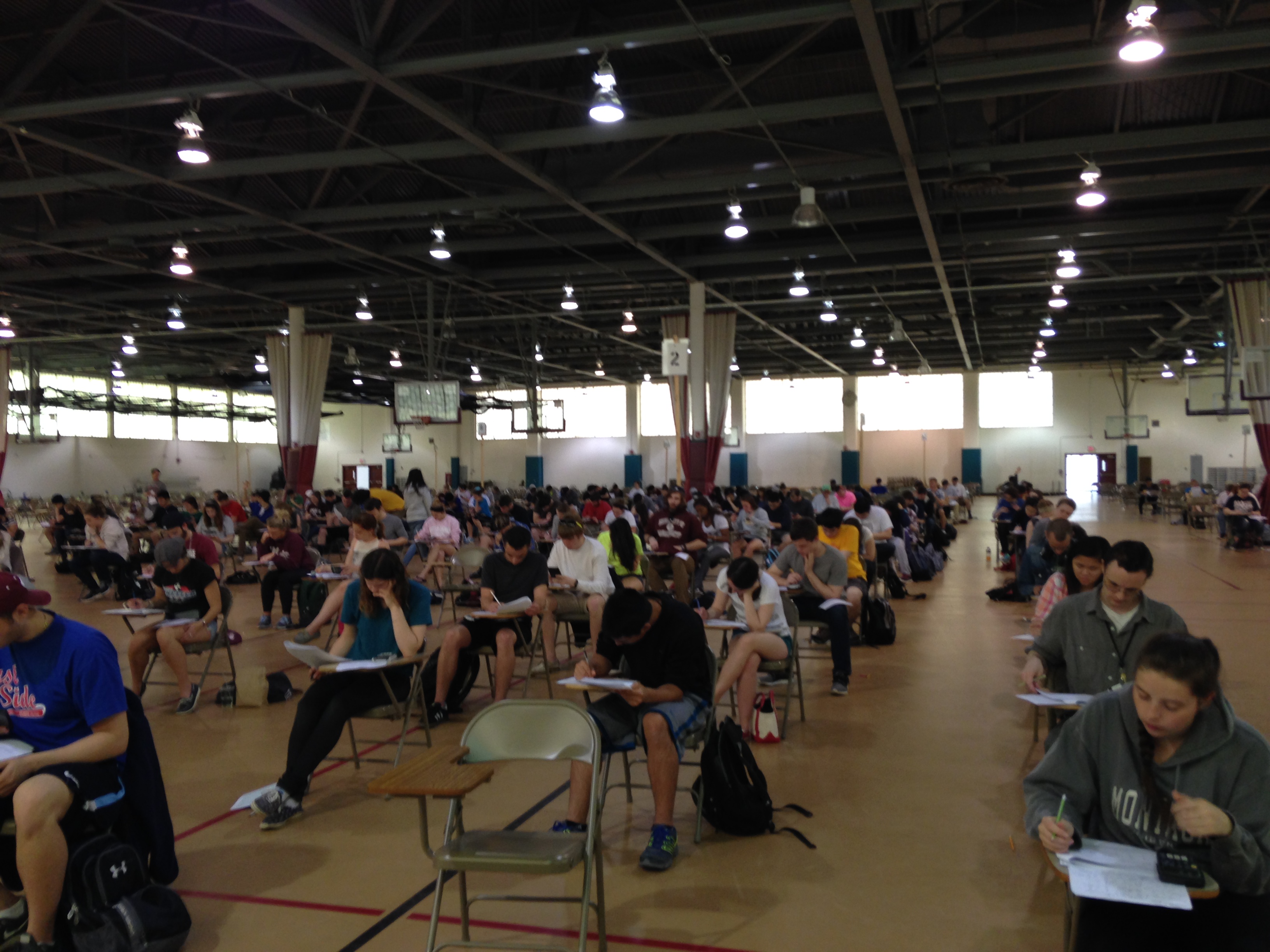
2014-05-08 13.36.39The end of classes is here or near – depending on your school. That means that course evaluations will be filled out, perhaps online or perhaps with paper and tiny pencils.  Although this may be coming too late for this term, the end of the semester/quarter is a good time to reflect upon how the course went, and maybe some of these things can be altered for next semester/quarter. Perhaps these are some of the 20% changes you can make for next time, as I have posted about in previous posts (here and here).

One big thing I have noticed with student evaluations is that they are parrots. They will parrot back in your course evaluations ANYTHING you have said to them. If you say, “I know this homework is hard, but it is for your own good.” You will get about 50% of the students commenting that the homework was hard in the course. If you say, “This book is not great, it isn’t my favorite.” They will say, “The book was terrible.” If you say, “This is my first time, and I am worried I might not do a good job.” They will say, “She didn’t do so great a job because it was her first time.” So my advice: Don’t say it. Don’t say anything negative to the class at all.

Is this dishonest? Let’s say it is the first time to teach a course, and it isn’t going great. The scientist who truly wants to be honest and report facts wants to share with the class. But RESIST the urge to share. It doesn’t make them feel better to know it isn’t going well. Yes, you are withholding information, but it is not important information that they need. They do not need to know that the course is veering off the rails. Since it doesn’t help them and doesn’t make them feel better, why say it?

Does it make you feel better? There might be some cathartic feeling of sharing a traumatic experience that is alleviated when you share with the students, but the negative impact it will have on your evaluations will leave you hurting in the long run. There is no way to explain away a course that is going poorly.  Even if you promise to do better next time, it won’t be with these students, so it doesn’t do them any good that you learned from this experience.

If the class is going so badly the students will know, won’t they be mad if you act like it is all rosy? Yes, they might, but at least you aren’t giving them ammunition to shoot you down. Make them come up with their own words for how crappy the course went. Their complaints about you will likely be less severe than your complaints about yourself. Further, you don’t have to act like it is perfect. You can make reasonable changes throughout the class that attempt to solve problems. The students will appreciate it, too, and your evaluations will probably be better if you try to course correct. What I am suggesting is not to act like you are perfect, but rather to not be so honest and blunt about your self-evaluation during the course, which is likely to be worse than they think and probably worse than you deserve (if you are like me…). As you make these reasonable changes, give credit to the students. You can say, “Several students have brought it to my attention that it would be better for you if we…” By stating it this way you, (1) give credit to the students, (2) don’t say the old way was bad – just this new way is better, (3) make a change that will be favorable, such as changing the homework due date for the class from Thursday to Friday or allow students to redo a question on an exam for half the points back, or whatever. Don’t point out that the old way wasn’t as good – it isn’t necessary!

As I write this, I am thinking, is this for others or for myself? I am so amazingly guilty of doing all the things that I just told you not to do. So, my NextSemesterResolution to change 20% is to try to not make any negative comments about my course. What do you think? Post or comment. You can get an email every time I post by pushing the +Follow button.

Industrial Story – Part 2

GoodSenseCorsetWaists1886page153And now the thrilling conclusion to the previous story…

A female Ph.D. friend in the company told me that if I wanted to escape from the anger (which was getting to be a regular experience) and the permanently low pay, I needed to switch managers.  She also explained that Dr. Jekyll had been removed from management roles in multiple companies because of his poor performance.  The fact that his only report (me) was trying to leave would be particularly upsetting to him.

It took me more than six months to act on my friend’s advice.  Leaving Dr. Jekyll’s team meant leaving research and development.  Opportunities for first-authoring a paper with exciting new results would pretty much disappear.  Returning to academia would be much harder.

On the other hand, the economy wasn’t in great shape at the time.  I didn’t know of any opportunities outside the company.  Plus, my field is quite small.  I wanted to “clear” my good name.

Note: I’ve since switched subfields.  I use the my science and knowledge from my “Dr. Jekyll” period but no longer interact with any of the people from this period in my career.  It would probably have been wiser to start fresh with a new team rather than sticking around to prove myself.

One day, Dr. Jekyll flat-out accused me of having a male colleague generate for me all of my results from the prior two weeks. I had worked long hours and weekends to get these results for an external deadline.

I finally relented to my friend’s recommendation that I go to Dr. Jekyll’s boss and request a transfer.   She also recommended I ask that Dr. Jekyll not be told of the transfer until right before.

Dr. Jekyll’s boss was understanding, but said that Dr. Jekyll should know about my request to leave his team.  “We’re all adults,” I thought, “Why not tell him I’ve asked for a transfer?”

I will never forget the next meeting with Dr. Jekyll. He said:

  1. I don’t think you belong at this company, but I can help you find another job elsewhere as your friend.
  2. You don’t belong in science and engineering as a career choice
  3. Have you just stuck with this engineering thing because your father is an engineer?

Unfortunately, this meeting was also my annual merit review.  I was told that because so many of our projects had been cancelled, I didn’t really “get anything done” that year.  What’s really crazy is that after this nasty meeting, he fought to keep me from transferring out of his team for months.  Yet he also continued to repeat to me that I didn’t belong in science and engineering as a career choice.  I was wise enough not to respond to most of his remarks.  I did, however, ask him point-blank to stop saying such unprofessional things to me.  He said no, that I needed to hear “the truth.”  I had to go above his head again and tell his peers and boss about his abusive words to get out of his team.

The worst part about all this was that I was so alone.  When I talked with other engineers about my work, Dr. Jekyll accused me of wasting their time “getting help.”  When I actually asked them for help, he said they were “doing my work for me.”  As a result of this and the lack of female peers, I had cultivated little in the way of a social network within my department.

Note: Gender is a stronger determinant of friendships in the corporate world than age, race, or ethnicity.  Having guy friends wasn’t as effortless as it was in grad school.  I’ve since taken initiative to develop friendships with my mostly older, married male colleagues, but I usually have to work harder at them.

It didn’t help that Dr. Jekyll was strikingly kind, witty, and personable in public.

I once stopped to chat with the head of HR moments after leaving a particularly unpleasant one-on-one with Dr. Jekyll.  “You work for the nicest man in the company!” she said to me as I blinked back tears.

I’ll never know how much my gender had to do with this experience.  Dr. Jekyll occasionally made sexist remarks.  He told me I was “no good with mechanical things” despite the fact that I had successes in projects involving complicated “mechanical things.”  One of the only times Dr. Jekyll praised me was with “women are such great communicators!”  He also tried to give me social event planning tasks I associated more with administrative assistant than engineering responsibilities.  But the sexism was never more overt than this.

Note: My next manager told me that my communication style was my greatest weakness, which seemed like a fair assessment.  To date, I’ve heard Dr. Jekyll utter more sexist remarks than all the other people I’ve met in corporate settings combined.

After my transfer, I suffered for a couple more years. My new team was very pleasantly surprised at how productive I was given what Dr. Jekyll had said about me.  However, because of the way the ranking and raise system worked, I continued to be paid and ranked less than what my new managers thought was fair.  I eventually had to get an external offer to get to salary parity.

Dr. Jekyll never got another direct report after I left his team.  Two years after I left, I finally got the top ranking in a department-wide performance review.  I started hearing Dr. Jekyll say to other managers around this time what a great engineer I’d always been.  I was stunned the first time I heard it – this was most certainly not what he had been saying about me when I reported to him.  It sounded to me like his mis-representing of my work may have become uncomfortably transparent to the rest of the department.

I later met another person who had worked for Dr. Jekyll before me.  I found out that this person, too, had been isolated from colleagues and then “sold up the river” by Dr. Jekyll to make himself look less bad.  Apparently Dr. Jekyll had told outright lies about this individual that could have lead to a termination.  I was relieved to  hear that I wasn’t alone, and it all really wasn’t my fault.

I’m now at a new company making over three times what I made as a new hire into industry.  I’m being paid well more than the average male Ph.D. with my level of experience.  I got the job mostly through studying material from grad school and rehearsing for months, and in small part through recommendations by college friends.

Conclusions:

    • Build your network:
      • I got my first industry job offer through a connection.
      • I thought I was trapped working for a bad boss because I didn’t know of other opportunities outside my company.
      • I got out of the bad boss situation through advice from a colleague.
      • I got a new job with a kick-ass salary mostly though hard work but partly through friends.
    • If you find out your boss is blaming you for big things that aren’t your fault, start looking for a new job ASAP.
    • If you encounter anger when asking for a raise, think about whether there isn’t some lower-hanging fruit elsewhere.
    • Don’t directly criticize your boss’ pet project, even if it’s doomed.
    • Be very cautious about publicizing plans to leave before the move is final.
    • Fantastic career advice on handling bad bosses and navigating the professional world in general can be found at manager-tools.com

Thanks so much for the story! I think I speak for everyone when I say, I am happy the ending was positive, because the last post was very sad and scary. So glad that this WomanOfScience got out of that horrible situation and was able to get the credit and pay she deserved! Post or comment! You can get an email every time there is a new post by pushing the +Follow button.

Industrial Story – Part 1

3514668147_061a386342_zThis story comes from a fellow WomanOfScience who is in Industry. This is a two-part story, and should be read as an anecdote to help those of you interested in going into industrial science, and what you should watch out for in that route. Some of these characters and situations are quite similar to the academic track, which is sad. I hope you enjoy the story and learn from it, as I have. Part 2 will come online shortly.

Part 1:

I graduated from one of the nation’s most exclusive tech universities with what was considered a very “hard” major and nearly straight A’s at age 19.  I got my Ph.D. at 24, again with near-perfect grades.  I thought my math and science abilities would always allow me to overcome the occasional unprofessional encounter.

Then I entered the corporate world.

I had wanted to be a professor.  I found out a week before my planned start date of my second post-doc that there were some serious problems with the position.  Fortunately, a grad school connection asked me to interview at the only company in the world with commercial success at what I had studied in grad school.  I decided to accept a job at this company.  I thought I’d be able to prioritize my work and benefits to eventually re-enter academia.  Many departments in my FieldOfEngineering value a couple years of industry experience.  Some even require it.  Things looked bright.  My new manager “Dr. Jekyll” was world-famous in my scientific niche.  The two of us would be the only ones in the department doing research.

At the time of the job offer, I knew I should try to negotiate something more.  My father, who has a background in Science and Engineering Management, warned me that it’s much easier to negotiate options or stock, followed by salary.  Conference attendance would be very hard to negotiate.  As the company was still a start-up, I was willing to accept the low pay.  Low salary with the expectation of a big reward from stock options is the norm at many startups.  It had been drilled into me that women often wind up with lower salaries and benefits because they don’t ask for as much.  Because I still hoped to return to academia someday, I naively asked for more conference attendance (3 conferences/yr , thinking that would keep in touch with academia).   Indeed, I was told that I could go to the conferences  already in the pipeline (those at which I already had papers/abstracts accepted), but after that no more than one conference per year.

Note: In reality the only way that I was able to manage even the one conference per year that I did was because I was a member of the technical committees at those conferences.  Most other industrial scientists/engineers didn’t go to conferences every year. The lesson: be skeptical of all promises that aren’t in writing.


So now I was yet another female engineer with low pay.  Six months later, when I checked on Glassdoor to see how my salary stacked up against my peers, I was shocked that I was being paid 30% less than my peers.  I had thought the low pay applied to everybody, not just me.

Earlier, I had read “Women Don’t Ask”, about women, salaries, and negotiation.  Based on this, I put together some slides on why I should be paid more. Now, to be clear, the book had emphasized that women sometimes get penalized for asking for raises.  In spite of this, I thought that the fact that I was being paid so much less than my peers meant that I couldn’t possibly be penalized much for asking.  Here I was, working nearly every weekend while the other engineers were not.  Meanwhile, it was just a coincidence that Dr. Jekyll’s projects kept getting canceled, right?  I was still doing good work and deserved commensurate compensation, didn’t I?

The first time I made my case for a raise, Dr. Jekyll seemed taken aback.  He said he didn’t think there was much he could do.  He said our company didn’t value the research-y work he and I were doing, and that both our jobs were at risk.  Indeed, the answer he claimed to have received from above was “no.”

At this point, I was spending about a third of my time on Dr. Jekyll’s pet project, “Frankenstein.”  It became clear to me that Frankenstein would never succeed.   In private I started to mention to Dr. Jekyll the reasons we should drop this project.  He kept saying things like “It has to succeed.”  Near the bitter end, he even yelled at me for my “negativity.”

Note: the project was eventually handed off to another team.  The new team quickly realized the project was hopeless and cancelled it.  The new team couldn’t understand why it hadn’t been killed years earlier, around the time I started vocalizing my concerns…

I asked for a raise about 6 months after my first request.  Dr. Jekyll got visibly angry and said no.  I didn’t understand how he could possibly be angry at me.  I was getting more done than most engineers in my department and being paid much less.  I assumed his anger wasn’t directed at me personally.  Big mistake.
I heard about an opportunity to join another team in need.  I thought, if my current team’s work isn’t being valued and I’m at risk of losing my job, why not join another team?  The hiring manager of the other team was optimistic about my potential contribution.  However, when I next met with Dr. Jekyll, his demeanor was that of an adult who had just caught a kid with her hand in the cookie jar.  “Didn’t you know I’d find out you’ve been looking at other teams?”, he said in fury, before I could say a word.  I didn’t understand what he was so angry about.  If we were at risk of losing our jobs, wouldn’t it be better for all of us if I left for a more stable team?  A few months later, another inquiry into another internal opening yielded a similar result.

So, what do you think? Comment or post! Follow the blog by pushing the +Follow button! Part 2 will be online soon.

Women’s Leadership Backlash

Woman_standing_next_to_a_wide_range_of_tire_sizes_required_by_military_aircraft._-_NARA_-_196199A wonderful post from a WomanOfScience friend on women’s leadership. In particular, women in academic administration. Choosing to go the administrator route may be an exit from the research track.

Enjoy!

I’ve always recognized the advantages of being a female faculty member in a male dominated field and try not to dwell on the instances of overt or subtle discrimination. For example, when I entered grad school (15-20 years ago), there were few women in my field that my gender alone made me memorable. Certainly I did good work, but also it was likely that a member of a faculty search committee was likely to remember me which no doubt helped my job search in a subtle way. When I was an assistant professor and gave birth to our first child, there were obviously some disapproving glares from some colleagues, but still I brought the 7 day old child into my office (in a cradle) and proved to my colleagues that this wasn’t disturbing to them and allowed me to maintain my productivity. Then the slippery slope began…

Some time ago, university administrators decided that one way to relatively painlessly reduce implicit bias was to have female faculty present on key committees (most importantly search committees, graduate admissions, and many policy setting committees). The result was that every female faculty member I knew was doing far more service than her male peers. The optimistic view, however, was that we made contacts and networks both within our home institutions and nationally that were far more expansive. Down the road a decade, we had far more administrative exposure and experience and were therefore ideal targets for administrative/leadership roles (at a time when many institutions would like to showcase their strong female leaders)… except that we were/are too young (many of us in our late 30s and early 40s). It is flattering to be asked to take over a high profile chair or deanship at a young age. And I wasn’t unique in this respect. Looking nationally, female chairs and deans are trendy.

This is where the glass is half full perspective ends… Our male peers are hitting their strides as full professors and racking up the high profile awards and kudos that will allow them to build their scientific reputations. While I was able to maintain this level of creativity and productivity through the births of my three children, there is no way to do the same in the face of the unrelenting distraction of running a large organization well. The inevitable result is to take the research hit in favor of building an administrative career. I am fully aware that I am complaining about an opportunity that women just 5-10 years older than me were denied simply for their genders. On the other hand, I worry that we’re complicit in self-imposing a glass ceiling. In my experience, great scientists look down on administrators that do not have scientific stature (I would contend that young female full professors have credibility, but not yet stature). Worst yet, one of my most creative, deeply thinking graduate students informed me she was leaving my group to join that of a male colleague. She said she joined my group because she loved the atmosphere of teamwork and close mentorship that I had a reputation for, but in the last couple of years (since she joined the group) she’s watched that decay exponentially as my administrative duties increased. I am deeply ashamed that I allowed the day to day fires of running this organization get in my way of educating my students! Worst yet, she cited my case as a reason to _not_ go into academia. That talented women get duties loaded on them until they drop the ball (she described it almost as a form of titration). I’ve sadly become the anti-role model.

This summer, my family and group will be uprooting to move to a new university. Everyone (my extended family included) keeps asking what job I will have there and I have been glorying in telling them that I will be “just” a professor again!

Thanks for that post! What do you think? Post or comment here. To follow this blog, push the +Follow button to get an email every time a new post appears.

Conference Thoughts

2475011402_bf70c92575_oAs I am sitting in a session at the world’s largest conference in MyFieldOfScience, I am thinking about conferences. I am thinking about how important they are for your career in a lot of ways. For those of you who recently joined the blog (thanks for following!), you may have missed some previous posts about networking. I had one about general networking and another on networking on campus, which are both super important for getting tenure, getting jobs and just good for your career. Conferences are key for networking, being seen, and building your mentoring and scientific connections vertically and horizontally. I have come to the realization that networking is basically “professional flirting.” You can chat about science, but most convos are about family, travel, weather, grants, clothes, students, jobs, or whatever. Academic life has other aspects that we can talk about too. I had a great conversation about teaching and how to teach 400+ effectively with a colleague from another university.

Another thing conferences are great for is energizing your science. When I was young, and I think this is the case for my students, I loved going to conferences because it gave me confidence that people were actually *interested* in my science. I was able to talk about my work, have some people listen, and get validation that what I was doing was of worth. Further, seeing the work of other people that was similar to my own made me feel like I had a community of scientists who were interested in the science. Conferences re-energized me and made me look forward to working on more science and getting my work published.

Now, my science gets energized, but in a different way. Now, I look around and say, “Oh crap, we are more behind than I thought! Everyone is doing the cool experiments I thought of but haven’t gotten off the ground yet!” This is both bad and good. First the bad. It is scary to compete with your science against other groups that are better funded, have more students, and might be ahead on the same ideas you have. Also, I am so so crappy at hiding my science. I cannot keep secrets about the cool stuff we are doing. In some fields, telling people what you are doing helps to mark your territory. In others, it can be giving them the keys to all your best ideas. I have to be careful, but I can’t help but be communicative, open, and excited about our newest stuff. It might hurt me sometimes, but in the long run, I would rather collaborate than compete.

Now the good. Much like when I was young, seeing all the great stuff my colleagues are doing that is similar to my own work can be energizing and maybe even light a fire under your ass to get going. Further, it helps you to focus. If you had an idea to do X experiment and you see it done (probably slightly differently) at a conference, you can refocus your idea to probe the still open questions. Another good thing about people working on similar stuff – it shows your work is hot, important, and in fashion. As in other realms (like fashion) styles change, but if you are hitting hot you have a better chance of getting high profile publications and getting noticed.

So, those were my thoughts about conferences. What do you think? Post or comment here!

Writing a Grant

Power of WordsWe had a nice post previously from Robin about the importance of grant writing. This post had some very good suggestions, and you can find it here. This post is more on the mechanics of writing  grant. Most importantly, you are staring at a blank screen, and you need to get some stuff out because the deadline in maybe a month away. Where do you start? What do you write? What needs to be in there and be included?

Apparently, there is big money to be made in answering these questions, because I get science spam at least once a day trying to sell me books, seminars, and webinars to address these questions. I actually do have one of these books – my university gave them out to us all at some point. I have to say that it was fairly useful because it listed all the parts of the grant that needs to be included. Obviously, if you don’t include a particular part of the grant, it is far less likely to get funded. But, so many people have these books now that the particular style described in these books has become a bit of a joke during review panels. Even so, it is better to follow one of those books and their format than to have no idea and do entirely the wrong thing.

When starting to write a grant, the first step is two fold: (1) read the call for proposals. Many calls, especially special calls, have specific required sections. ALSO, simultaneously (2) get some example proposals.  The last post on requesting proposals from others is a good guide on how to do this. It is best to get examples from the exact agency, division, and panel where you are going to submit.  Use these together to check come up with an outline for the components of the proposal.

Outline. Yes, outline. I know, it is boring and old fashioned to outline, and I am not suggesting anything too detailed. I am suggestions coming up with the headers for different sections of your proposal. To get you started, I am pasting in an outline I use (you can probably tell this is for proposals to the National Science Foundation):

Title

1. SIGNIFICANCE: Why is this important? You need to have the why before the what.

2. HYPOTHESIS: Not all divisions expect hypothesis-driven research. Get an example to see it this section is typical.

3. BACKGROUND:

4. APPROACH:

4.1 Experimental Methods and Preliminary Results: Here we outline our experimental approach and present preliminary results.

Experiment Type 1:

Experiment Type 2:

Experiment Type 3:

4.2 Simulation Methods and Preliminary Results: Here we outline our simulations/analytical approach and present preliminary results.

5. EXPERIMENTAL WORK PLAN:

Objective 1: State it here.

Rationale:  Why do we want to study this? Why is this objective important? Everyone needs a reminder.

Proposed Experiments for Objective 1: No methods. That is all described above. This is just the “what” experiments – not the “how” experiments.

Control Experiments and Alternative Methods for Objective 1: You must have something about controls and alternatives. They will look for it!

Significance of Expected Outcomes for Objective 1: This is where you drive it home why these experiments and results are important. Again.

Objective 2:

Rationale:

Proposed Experiments for Objective 2:

Control Experiments and Alternative Methods for Objective 2: 

Significance of Expected Outcomes for Objective 2:

Objective 3: This is the objective that can be a little more out there with less preliminary data.

Rationale: 

Proposed Experiments for Objective 3:

Control Experiments and Alternative Methods for Objective 3:

6. INTERDISCINPLINARITY, COLLABORATION WORK PLAN, AND TIMELINE:

6.1 Interdisciplinarity.

6.2 Collaboration Work Plan. I will do this. Collaborator will do that. I like to include a ven diagram figure that cartoons the roles of each person.

6.3 Timeline. You must have a timeline. I like to make a chart. Funding agencies requests it.

7. INTELLECTUAL MERIT AND TRANSFORMATIVE ASPECTS:

8. BROADER IMPACTS: Here is where I put grad student training, undergraduate student training, and any other outreach plans.

9. RESULTS FROM PRIOR SUPPORT: This has a specific format. Make sure you use it. If you don’t have prior support, you can remove this section.

10. SUMMARY. Reiterate the significance again.

Another secret to getting a grant done is to take advantage of the time you have. There will always be a time when you have time to work on the proposal, but not the drive to write. If that happens, use the time to work on the myriad of other things that need to be apart of the grant such as the Budget, Budget Justification, Your Biosketch (you the correct format!), your Current and Pending, your Facilities and Resources, your Postdoc Mentoring Plan, and other documents. These documents are pretty boiler plate with tweaks, so they don’t require a ton of thought, but you still need to do them. Or, just get your proposal started on the online submission system and input all the data.

So, this is my method. And, as far as grant writing goes, I have done a lot of it – almost a dozen per year. I might even be good at it. I am batting 1000 on my last 4 proposals. What do you do to actually write a proposal? Post or comment here. Click +Follow to get email updates when I write new posts.

The Best Way to get Copies of Funded Grants…and the Worst Way

PikiWiki_Israel_9290_Gan-Shmuel_-_girls_in_class_1952In the vein of writing, writing, writing, which is the quote on my office door for the past 4 weeks, I thought I would post a piece from another woman of science. This one is about the true first step in any writing process – getting examples. For writing manuscripts, getting examples is easy. You just read a lot of published papers and try to emulate their style (especially clear and nice papers). For other types of writing, getting examples can be more difficult, or downright hard. Perhaps one of the most important types of writing we do in academic science is grant writing.  My advice is always to get examples. Today’s guest post is about how to go about getting examples… and how not… Enjoy!

You’re a brand-new assistant professor, or you’re applying to agency to which you’ve never applied for funding. Where to start? Examples of successful applications are some of the best ways to figure out how to structure your application and to tailor your application to a particular agency or foundation. Where to get them?

Start with your formal and informal mentors. Ask them if they have examples of recent successful applications, or unsuccessful applications if they are willing to share them and to discuss why they think they were unsuccessful. Ask your collaborators and departmental colleagues if they have been funded by the organization you are targeting. Ask them if they know anyone else who has. If that fails, or in addition to those opportunities, most organizations post the names of those they have funded. I recommend looking at that list and finding anyone with whom you have a connection—you were both once at the same institution, you have friends or collaborators in common, anything. Then, contact those people one by one, pointing out your common links to help establish a connection. In addition to really recently funded projects, you might also want to target people who were funded a few years ago, especially if you don’t know them well. With such “older” projects, the work is likely to be well underway and the PI is less likely to feel vulnerable sharing their nascent work. When you send that cold email, state clearly and at the beginning why you are writing, point out your connection, and assure them that you understand that you are requesting a confidential document and you will not share it.

If you can’t find anyone with whom you have a connection, just try asking. You can say something like, “I am planning to apply to X organization. I am looking for examples of successful proposals to this organization and noticed that you are funded by them. Congratulations! Would you mind sharing a copy of your funded proposal or even just some sections of it with me? I understand that this is a confidential document and I will not share it with anyone else.” Sometimes what you really want is an example of a specific type of required abstract or section of the proposal, so just ask for that. Most people remember what it is like starting out in their academic careers or applying to a new agency and are willing to help. Most people are also flattered that you’ve noticed their funding success, which will likely make them more willing to respond to your request. However, everyone is busy and inundated with requests, so allow plenty of time and if you don’t hear anything, ask again in a week or two.

Proposals that have been funded by the federal government are available through the Freedom of Information Act (FOIA). This should be the last resort for obtaining a copy of a proposal. Exhaust your other options first, including cold-calling (emailing) multiple people. Just asking people for what you want will almost certainly yield results, and probably much faster than a FOIA request. When you submit a FOIA request, that request along with your name is sent to the PI. Science is a small world and like other professions, much of your professional success will depend on relationships you build with others. If you receive a FOIA request for one of your funded proposals, this will likely bring to mind several questions, like: why didn’t this person just ask me for the proposal? The proposal probably would have been shared and the requester would have received it faster than waiting for the FOIA request to be processed. The proposer might have removed some sections with personal information or work that is still preliminary, but they might at least attempt to do that anyway in responding to the FOIA request. Some personal information is removed automatically by the agency, too. Then one wonders, what is this person’s agenda? If the requester is another faculty member, are they intending to pursue research that I proposed? If the requester were a private individual, corporation, or certain type of foundation, those suspicions about an underlying agenda would have been even deeper. In general, if someone asks me directly for a copy of my proposals, I send the requested information and offer to read a draft of the requester’s own proposal to try to offer feedback. By submitting a request through a third-party, the requester likely misses an opportunity to build his/her professional network.

Good advice! What do you think? Share in a post or comment. You can follow this blog by pushing the +Follow button and typing your email address. I will try to get back on the blog-writing wagon as I come down from the manuscript/grant writing one.

Writing Letters of Recommendation

Power of WordsSorry for the delay in posting, but grading, the holiday, and trying to get a paper submitted caught up with me. I just had an email asking for mentoring on how to write letters of recommendation for graduate admissions and REUs and even a few for faculty jobs. After answering that email, I had a lot of fodder for a post, so here it is. Think of this as a possible outline for how to write a letter of recommendation. Hopefully it will help make sure we are including everything we should to give a complete picture of the student for the recommender. I am sure I am missing something from here, so please add any other suggestions for important parts or items by comment or post!

1. Use letterhead. Is this obvious? Maybe, but it is probably still worth mentioning. Best to make up a letterhead in Word or LaTex with the school seal and your information instead of trying to print onto letterhead. Also, it is good to have a scan of your signature to add to the bottom.

2. Introduction. Like other forms of writing letted of recommendation need an introduction. An obvious way to write is to introduce yourself and say you are excited to write this letter of recommendation for Student X. Then, you can say in what capacity you know student X: as the research advisor, as the student’s instructor in a course? as some other type of mentor or advisor? You should probably also say how long you have known the student in this capacity. Some of my research students were also students in the courses I have taught, so I  have to describe both.

If the student is from a class you taught, describe the class. Was it required for the major? Was it an advanced elective? Was it a lab course that would showcase research skills? What was the level of difficulty of the course?

If the student was a research student in your group, describe the research of your lab in general.

3. The student’s performance. In the second paragraph, I describe the performance of the student in the capacity that I know them. For a course, I list the student’s ranking in the course (i.e. “this student was in the top 3 of the 53 students in the course, earning 93% of the total points for the course”). For many of my students, I have interacted with them personally in class, in homework sessions (office hours), and outside of class activities. I describe the student’s  hard work, dedication, and scientific ability and intelligence, as I saw it from these interactions. I use specific examples to make my points and as evidence for my opinions. For instance, I might say, “Student Y had exceptional ability in the course, which I noticed during in class small group work and during homework sessions. In particular, Student Y was the first one to complete assignments and was often able to describe the solution clearly to her classmates to enable them to learn the material, as well.”

For a research student, I describe the student’s specific research project in the group in my words. The student should have also described their research in their own words, and these two descriptions should match up, more or less. The student’s description is often less precise than mine, but it is important that the person reading the recommendation has an idea of what the student was meant to accomplish. As for a student from a course, I describe the student’s work ethic, dedication, and scientific ability to do research using specific examples to back up my personal claims about the student. This is easy for a successful student who has a publication or has attended a national meeting and presented there, as there is direct evidence of success in research that is verifiable. For students who are not quite at that level, I use examples from the lab where I interacted with the student to demonstrate the student’s abilities. Why use examples? Our only way to assess future performance is based on past performance, at this point.

Interestingly, recent studies have shown that personality tests or “employment tests” can accurately assess a person’s ability to do a certain job (see recent story from NPR). As far as I know, these tests have not been tested for success in graduate school in science, but it would be an interesting thing to look at – maybe some Discipline Based Education Researcher should test this out? The benefit of these tests is that they remove inherent biases of “knowing someone who knows someone” and biases against certain genders and races. Kind of like when they started doing blind auditions for orchestras and realized that women and minorities can play just as well as white dudes. Also, these don’t have the same issues as Subject GREs, which are terrible for women, minorities, and people from SmallLiberalArtsColleges. Just FYI.

4. Personality and Social Skills. For each student, I try to describe the personality traits of the student that demonstrate an ability of the student for the position being applied for. I also point out the other non-scientific skills the student possess that will make him/her successful at the next level. Some important personality traits include: work ethic, perseverance and determination, follow-through (completing tasks), anxiety, niceness, etc. Some examples of important social skills include: ability to work in groups, ability to learn from mistakes, ability to take direction, ability to express oneself  in oral presentation, ability to write scientifically, ability to represent data graphically, ability to lead and mentor others. I know that some people shy away from discussing personality, or only discuss it for females and not males, but I include it for all because it is an important consideration when hiring or bringing in someone. If their personality is not a good fit, the person may ultimately  fail even if they are the smartest person in the application pool. Fit is important and social skills are important – not just if the person is a genius.

5. Personalization for each school. Some people think this is ultra important. But, if you are like me, and you have 4-5 students applying to 20 graduate schools each, that is way, way too much work. I might personalize a few if I particularly know people at the school, but for the most part, I just make it general. For faculty positions I always personalize every letter, and it takes forever, but you have to do it.

I am sure there is something I usually add, but haven’t included here. So what did I forget? Post or comment to fill in the gaps.

Writing, writing, writing

write-on-november-is-national-novel-writing-month-a5349cc216There is a lot of reading and writing in science. This is ironic for me, personally, because I went into science because I am a slow reader and I hated humanities classes where I had to read all day. I liked my math and science classes where I solved problems with pencil and paper. My professors delivered content, so I never read textbooks. It is true, despite the fact that I endorse active learning now where students have to read for themselves.

So, here I am, a tenured professor and all I do it read and write all day long. I rarely solve problems with pencil and paper, and I joy in the chance to do so for courses I teach or just snag some back-of-the-envelope time while reading a paper or writing up my own work. I also cannot get most of the content I need delivered, although I go to journal clubs and talks because I am a great auditory learner and I learn best that way. I even have to read papers to myself out loud. This is embarrassing, and I have to close my office door when I review manuscripts or proposals.

After writing that past post about how best to give presentations, I realize there a lot of aspects of this job that we can write how-to posts about. Writing has an seemingly unlimited supply, since we do so many types of writing. I think we will have a few posts (a theme, if you will) on writing. I am happy to entertain guest posts to describe your best practices for writing different things. I am going to list a few that come to mine, comment if you have more types of writing you can think of in addition to these.

  • Manuscripts
  • Proposals
  • Abstracts for posters/platform talks
  • Chapters
  • Books of research
  • Thesis
  • Textbooks
  • Lecture notes
  • Reviews of manuscripts for peer review
  • Reviews of proposals for peer review
  • Grant reports
  • Committee reports
  • Letters of Recommendation
  • Letters of Support
  • Job Application Materials for various stages and types of jobs
  • Published proceedings
  • Biosketches
  • Biographical Information
  • Webpages
  • Blog entries on science
  • Book reviews for publication
  • Articles for general audiences
  • Highlights of research articles
  • Annual personnel reports/highlights
  • Memoranda of understanding
  • Requests for waivers

OK, that is all I can think of. I have written almost all of these types of writing assignments over my career. I haven’t written a textbook, yet, but I really want to. I think I have worked out schemes for writing each of these types of things, and I will write a couple entries about some of the most prevalent ones (or you will). Do you have any advise to offer? Post or comment!

Application Season: Advice on the PUI

Science on a Sphere exhibitThanks for this post on Primarily Undergraduate Institutions (PUIs)  – what they are and how to apply from an excellent WomanOfScience:

In honor of the most recently passing holiday (Halloween), I thought I would try to demystify the application process for tenure-track appointments at Primarily Undergraduate Institutions (PUIs). Over 85% of professoriate jobs are at PUIs, so more than likely and right about now, you are weighing your options and trying to decide if that second or third postdoc is right for you. I know that some people have a misconception about what it means to be a professor at a PUI, and I’ll admit my family does too. They think that professors at small schools don’t do research, they only teach and that they only have to work for 9-10 months of the year. This is just not the case! We do teach, we do research and we perform extraordinary feats of service. We just can’t usually do research at the pace of a research one school, or like we did when we were postdocs. At PUIs, we usually don’t have access to graduate students, lab technicians, or postdocs to run our labs while we teach. There are at least three tiers of teaching institutions and maybe more depending on whom you ask. Here’s the skinny on what I know…

There are the elite liberal arts colleges, where one teaches on average two lecture courses per semester, about 8 contact hours. At these schools, one is definitely expected to conduct research with students. There’s the middle-tier school where one has about 12 contact hours per semester. A typical schedule maybe split over some combination of one to two lectures, along with the labs associated with that lecture course and an advanced majors lab type course. There is still an expectation that one will perform some student-centered research. Here’s an option which might be a nice bonus if you are at an institution or in a department where they built-in research release time into their teaching load. This is the case at my institution. And then there is the high-contact-hour liberal arts college department. At these schools one is in contact with students for about 12-15ish hours. At these schools, there is not the expectation of research. Some professors have even told me that they are even discouraged from doing research. Here’s some application material to think about in preparation…

You will need, at the least, a curriculum vitae, a teaching statement, and a research statement, all wrapped up in a cover letter. Some schools will ask for names and contacts of references to phone later, others will ask for formal letter. Some will also ask for student evaluation forms or course material, as well. If you are going to a place where you are expected to start a new class, you should feel free to submit your syllabus along with any course outline or material you may have on hand.

Although the vita is pretty much self-explanatory, I will share with you a few tips to adjust your vitae depending on type of teaching institution you are going for. First of all remember to highlight your teaching. You should probably not really change the order from highlighting the research first, especially if you are applying to the upper-tier liberal art institutions. Just remember, “This group of schools really want good researchers who can learn how to teach.” Move the teaching sections right below your educational background. If you don’t have any teaching, which is pretty much a must have for the middle and lower tier school, you should try to highlight any TAing or guest lecturing you’ve done in the past. If you have been associated with any outreach, perhaps it can be mentioned there or if you’ve lead any activities. The biggest difference for the two resumes for elite and middle is that the closer the institution is to the elite schools, the more they will be interested in your research and deciding if it fits into their department. For the lower tier school, they want to see that you can teach and that you can hit the ground running. So make your resume reflect that.

The teaching statement should reflect that you’ve given some thought to teaching. It should show that you are conscientious and care about your students and it should convey how you intend to get this point across to your students. It’s basically a statement of how you teach, what techniques you use in your teaching (pedagogy), how you reflect and improved in your teaching, and perhaps a summarized list of your courses taught throughout your teaching career. I also like to include some statement about how I also use my lab to mentor and train students in research. If you have been asked to teach a new class at the institution you are applying to, I would integrate that into my teaching statement as well. You can also add any teaching ideas you would like to introduce or classes on the books you would like to teach from. This will show your diversity.

The research statement should reflect projects that are student centered.  Then you should introduce the reader to your line of research and detail, without being jargonny or overwhelming, noting the fact that the reader has a Ph.D. in your general field, but perhaps not in your specific topic. Use the opportunity to teach them about your research. Being careful to convey how you would interact with a student in your research group. If you have supervised or mentored any students’ prior, you should highlight your achievements. You should convey how students can access your work and list specific projects they can work on in your group.

The cover letter should tie your application together. It should highlight your activities from you resume, research and teaching statements. And most of all remember it has to speak for you to the application reader.

So get your interview suit cleaned and get ready to start interviewing. Carpe diem!

Thanks for this great post! Do you have suggestions for applying to PUIs? Comment or send a post!

Tag Cloud