Helping the Minoritized Achieve in Academic Science

Archive for the ‘Research’ Category

Advice for International Students

chemistryTis the season for graduate admissions. Many of the applicants at UniversityofState (UState) where I am a faculty member are foreign. Some of these clearly have a lot of coaching and help, but others are clearly lacking. So, I have asked an International WomanOfScience for some advice on getting to US schools and ultimately an academic position from your CountryOfOrigin. Enjoy! (Remember, you can get email updates by pushing the +Follow button).

About me: I got my B.S. in Physics at a small-ish university in a warm foreign country. While an undergraduate, I participated in two summer research programs in the U.S., and I spent one year as an exchange student at a prestigious university in the midwest where I was also involved in undergraduate research. I attended graduate school in a very cold state, and I am now an Assistant Professor at a primarily undergraduate institution in the U.S.

As an international Science student, you should follow the same advice given to all students: keep up your grades and get involved in undergraduate research.

Two of the main challenges international students have in being admitted to graduate school in the U.S. are that the admissions committee may have a hard time judging the quality of the undergraduate institution you attended, and grades may be reported differently on transcripts. The best way to show the admissions committee that you can be a successful graduate student in the U.S. is to prove that you can be a successful undergraduate student in the U.S. Look for opportunities to come to the U.S. as an undergraduate for a summer or a semester. There are few summer research experiences open to non-U.S. citizens or residents, but they do exist. For example, there is the Internship for Physics Majors at Fermilab. Your home university may also have exchange programs, where you can spend a summer, a semester, or a year abroad. Even if you are part of a language program (like an ESL program) it may be possible to take a Science or Math class (it never hurts to ask!). If you do well in this class you will have demonstrated you are a capable student, and you could then ask the instructor for a letter of recommendation. A program like this has the added benefit of allowing you to figure out if you would enjoy living in the U.S. before you commit to coming here for 5 or more years.

PLAN AHEAD. It may take longer to gather all of the necessary materials for your application:

TranscriptsSome (most?) U.S. institutions will require an official translation of your transcript. At the university I attended, this took quite a long time (4 – 6 weeks).

The TOEFL, GRE and GRE subject tests: Depending on where you live, you may have to travel to a major city to take these tests, and they may not be offered very often. Thus, it is very important that you register early and plan your trip so that you can take the tests before the deadline for graduate school applications.

Paying for Application Processing:Some institutions in the U.S. charge an application fee and some do not. Most of the institutions that charge an application fee accept major credit cards. It is worth calling your bank and inquiring about the currency exchange rate and any extra fees for foreign transactions.

Other costs:In Science, most graduate schools will offer you a teaching assistantship, research assistantship, or fellowship, that will cover your tuition, health insurance, and provide a (small) salary. Make sure you understand exactly what each university is offering and how your salary compares to the cost of living. In addition to moving costs, you will probably have to put one or two month’s deposit down to rent an apartment, there might be university fees that are not covered as part of your “tuition,” and co-pays or a deductible on your health insurance. Also, some U.S. cities have very good public transportation, but others do not, which makes it difficult to live without a car.

VISA issues:These have been numerous in my case. It is probably best to contact the university’s International Student office and/or your local U.S. embassy. You should also try to understand as much about the system and the laws as possible – don’t trust that all of the advice you get is good, or even correct. Once you are in the U.S. make sure you take originals and copies of all relevant documents with you when you travel abroad.

The hidden curriculum:Your goal in graduate school should be not only to master a particular sub-field and conduct original research, but also to become a professional in your field. You need to think ahead to what you want to do after graduate school and look for opportunities that will help get you there. For example, if you want to go into industry, an internship could give you valuable experience and contacts. If you want to go into academia, your university might have a program that helps graduate students and post-docs explore and prepare for possible career paths (research institution vs. liberal arts vs. community college). You should try to regularly attend conferences, both locally (like your state’s Association of Science Teachers) and nationally. In any case, you will need letters of recommendation from several faculty members, so be well-prepared when it is your turn to present a seminar, be on-time for meetings and classes, and when you say you are going to do something, DO IT! In other words, treat graduate school like you would a job and behave professionally.

Culture Shock: There will certainly be differences between your own culture and american culture that you will need to be aware of, but there is also a culture to your particular field. What I found most helpful in graduate school in this regard was mentoring from other graduate students that were a few years ahead of me. If there is a graduate student group at your institution, make time to go to events and meetings, talk to the other students there about their experiences, and ask for advice.

What did I miss? Feel free to post questions in the comments.

I hope you found that post helpful! I am sure this WomenOfScience would be happy to answer questions in posts, so feel free to ask here. Thanks again for that insightful post.


Writing a Grant

Power of WordsWe had a nice post previously from Robin about the importance of grant writing. This post had some very good suggestions, and you can find it here. This post is more on the mechanics of writing  grant. Most importantly, you are staring at a blank screen, and you need to get some stuff out because the deadline in maybe a month away. Where do you start? What do you write? What needs to be in there and be included?

Apparently, there is big money to be made in answering these questions, because I get science spam at least once a day trying to sell me books, seminars, and webinars to address these questions. I actually do have one of these books – my university gave them out to us all at some point. I have to say that it was fairly useful because it listed all the parts of the grant that needs to be included. Obviously, if you don’t include a particular part of the grant, it is far less likely to get funded. But, so many people have these books now that the particular style described in these books has become a bit of a joke during review panels. Even so, it is better to follow one of those books and their format than to have no idea and do entirely the wrong thing.

When starting to write a grant, the first step is two fold: (1) read the call for proposals. Many calls, especially special calls, have specific required sections. ALSO, simultaneously (2) get some example proposals.  The last post on requesting proposals from others is a good guide on how to do this. It is best to get examples from the exact agency, division, and panel where you are going to submit.  Use these together to check come up with an outline for the components of the proposal.

Outline. Yes, outline. I know, it is boring and old fashioned to outline, and I am not suggesting anything too detailed. I am suggestions coming up with the headers for different sections of your proposal. To get you started, I am pasting in an outline I use (you can probably tell this is for proposals to the National Science Foundation):

Title

1. SIGNIFICANCE: Why is this important? You need to have the why before the what.

2. HYPOTHESIS: Not all divisions expect hypothesis-driven research. Get an example to see it this section is typical.

3. BACKGROUND:

4. APPROACH:

4.1 Experimental Methods and Preliminary Results: Here we outline our experimental approach and present preliminary results.

Experiment Type 1:

Experiment Type 2:

Experiment Type 3:

4.2 Simulation Methods and Preliminary Results: Here we outline our simulations/analytical approach and present preliminary results.

5. EXPERIMENTAL WORK PLAN:

Objective 1: State it here.

Rationale:  Why do we want to study this? Why is this objective important? Everyone needs a reminder.

Proposed Experiments for Objective 1: No methods. That is all described above. This is just the “what” experiments – not the “how” experiments.

Control Experiments and Alternative Methods for Objective 1: You must have something about controls and alternatives. They will look for it!

Significance of Expected Outcomes for Objective 1: This is where you drive it home why these experiments and results are important. Again.

Objective 2:

Rationale:

Proposed Experiments for Objective 2:

Control Experiments and Alternative Methods for Objective 2: 

Significance of Expected Outcomes for Objective 2:

Objective 3: This is the objective that can be a little more out there with less preliminary data.

Rationale: 

Proposed Experiments for Objective 3:

Control Experiments and Alternative Methods for Objective 3:

6. INTERDISCINPLINARITY, COLLABORATION WORK PLAN, AND TIMELINE:

6.1 Interdisciplinarity.

6.2 Collaboration Work Plan. I will do this. Collaborator will do that. I like to include a ven diagram figure that cartoons the roles of each person.

6.3 Timeline. You must have a timeline. I like to make a chart. Funding agencies requests it.

7. INTELLECTUAL MERIT AND TRANSFORMATIVE ASPECTS:

8. BROADER IMPACTS: Here is where I put grad student training, undergraduate student training, and any other outreach plans.

9. RESULTS FROM PRIOR SUPPORT: This has a specific format. Make sure you use it. If you don’t have prior support, you can remove this section.

10. SUMMARY. Reiterate the significance again.

Another secret to getting a grant done is to take advantage of the time you have. There will always be a time when you have time to work on the proposal, but not the drive to write. If that happens, use the time to work on the myriad of other things that need to be apart of the grant such as the Budget, Budget Justification, Your Biosketch (you the correct format!), your Current and Pending, your Facilities and Resources, your Postdoc Mentoring Plan, and other documents. These documents are pretty boiler plate with tweaks, so they don’t require a ton of thought, but you still need to do them. Or, just get your proposal started on the online submission system and input all the data.

So, this is my method. And, as far as grant writing goes, I have done a lot of it – almost a dozen per year. I might even be good at it. I am batting 1000 on my last 4 proposals. What do you do to actually write a proposal? Post or comment here. Click +Follow to get email updates when I write new posts.

The Best Way to get Copies of Funded Grants…and the Worst Way

PikiWiki_Israel_9290_Gan-Shmuel_-_girls_in_class_1952In the vein of writing, writing, writing, which is the quote on my office door for the past 4 weeks, I thought I would post a piece from another woman of science. This one is about the true first step in any writing process – getting examples. For writing manuscripts, getting examples is easy. You just read a lot of published papers and try to emulate their style (especially clear and nice papers). For other types of writing, getting examples can be more difficult, or downright hard. Perhaps one of the most important types of writing we do in academic science is grant writing.  My advice is always to get examples. Today’s guest post is about how to go about getting examples… and how not… Enjoy!

You’re a brand-new assistant professor, or you’re applying to agency to which you’ve never applied for funding. Where to start? Examples of successful applications are some of the best ways to figure out how to structure your application and to tailor your application to a particular agency or foundation. Where to get them?

Start with your formal and informal mentors. Ask them if they have examples of recent successful applications, or unsuccessful applications if they are willing to share them and to discuss why they think they were unsuccessful. Ask your collaborators and departmental colleagues if they have been funded by the organization you are targeting. Ask them if they know anyone else who has. If that fails, or in addition to those opportunities, most organizations post the names of those they have funded. I recommend looking at that list and finding anyone with whom you have a connection—you were both once at the same institution, you have friends or collaborators in common, anything. Then, contact those people one by one, pointing out your common links to help establish a connection. In addition to really recently funded projects, you might also want to target people who were funded a few years ago, especially if you don’t know them well. With such “older” projects, the work is likely to be well underway and the PI is less likely to feel vulnerable sharing their nascent work. When you send that cold email, state clearly and at the beginning why you are writing, point out your connection, and assure them that you understand that you are requesting a confidential document and you will not share it.

If you can’t find anyone with whom you have a connection, just try asking. You can say something like, “I am planning to apply to X organization. I am looking for examples of successful proposals to this organization and noticed that you are funded by them. Congratulations! Would you mind sharing a copy of your funded proposal or even just some sections of it with me? I understand that this is a confidential document and I will not share it with anyone else.” Sometimes what you really want is an example of a specific type of required abstract or section of the proposal, so just ask for that. Most people remember what it is like starting out in their academic careers or applying to a new agency and are willing to help. Most people are also flattered that you’ve noticed their funding success, which will likely make them more willing to respond to your request. However, everyone is busy and inundated with requests, so allow plenty of time and if you don’t hear anything, ask again in a week or two.

Proposals that have been funded by the federal government are available through the Freedom of Information Act (FOIA). This should be the last resort for obtaining a copy of a proposal. Exhaust your other options first, including cold-calling (emailing) multiple people. Just asking people for what you want will almost certainly yield results, and probably much faster than a FOIA request. When you submit a FOIA request, that request along with your name is sent to the PI. Science is a small world and like other professions, much of your professional success will depend on relationships you build with others. If you receive a FOIA request for one of your funded proposals, this will likely bring to mind several questions, like: why didn’t this person just ask me for the proposal? The proposal probably would have been shared and the requester would have received it faster than waiting for the FOIA request to be processed. The proposer might have removed some sections with personal information or work that is still preliminary, but they might at least attempt to do that anyway in responding to the FOIA request. Some personal information is removed automatically by the agency, too. Then one wonders, what is this person’s agenda? If the requester is another faculty member, are they intending to pursue research that I proposed? If the requester were a private individual, corporation, or certain type of foundation, those suspicions about an underlying agenda would have been even deeper. In general, if someone asks me directly for a copy of my proposals, I send the requested information and offer to read a draft of the requester’s own proposal to try to offer feedback. By submitting a request through a third-party, the requester likely misses an opportunity to build his/her professional network.

Good advice! What do you think? Share in a post or comment. You can follow this blog by pushing the +Follow button and typing your email address. I will try to get back on the blog-writing wagon as I come down from the manuscript/grant writing one.

Writing a Draft Manuscript

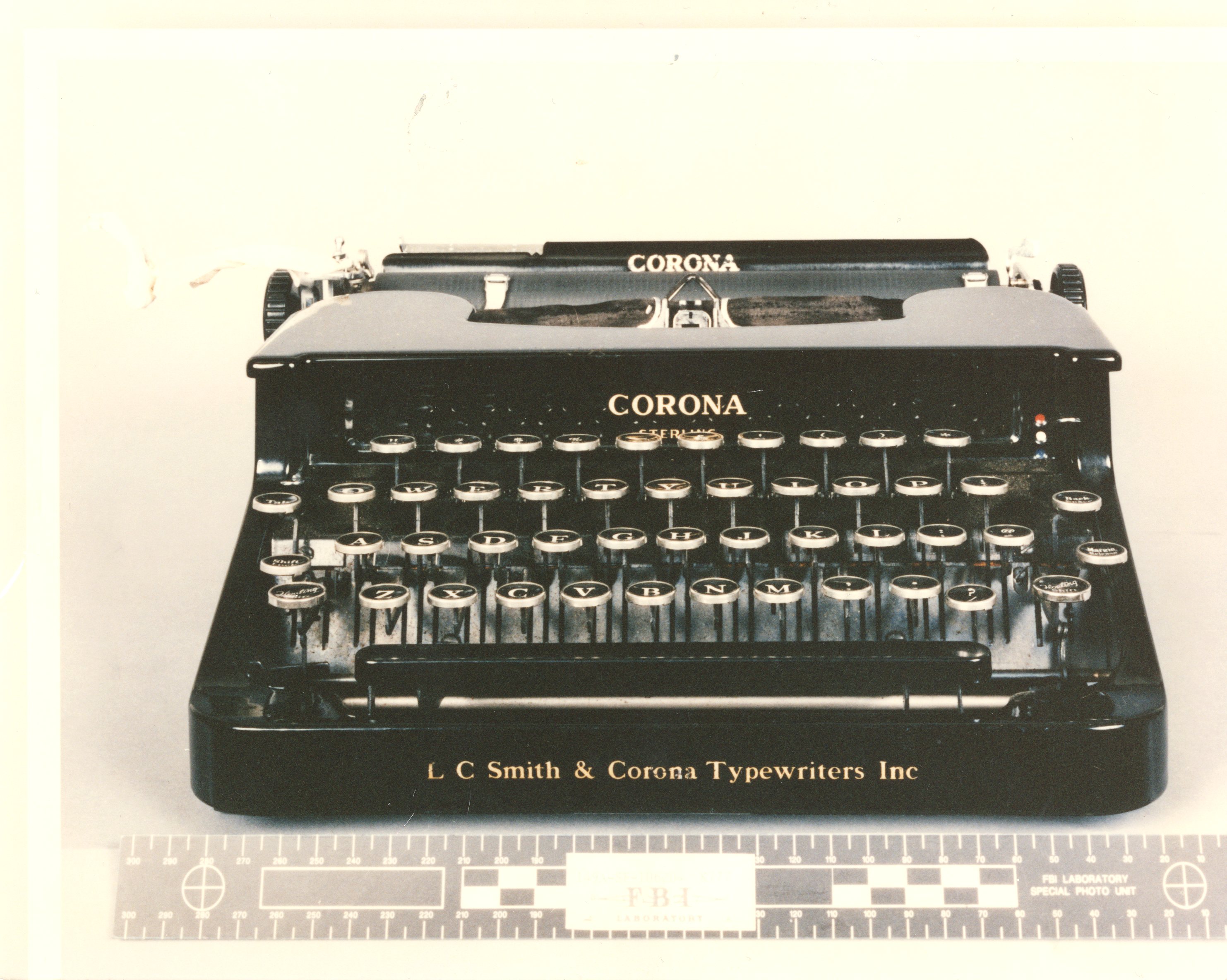
typewriterI have been working on a manuscript about some pretty nifty science. I have been working on it for some time, and I finally just submitted it last week. As part of the “how to write” series, I thought I would give my personal process for how to write a manuscript. I am sure there are as many ways to write a manuscript as there are manuscripts that have been written and published. This is my way, and it also how I instruct to my students to help them get over the hurtles of writing.

1. Make figures. Science is all about the data. The data is the story, so the first thing I do is make figures. This can be pretty challenging in and of itself. When working with students, I often have them make the figures – or at least the first draft of the figures. They often don’t know exactly what to do – even if they have presented some nice plots and graphs in group meetings. I usually sketch out the figures with them on the white board before I set them to work getting the data into figure form. Also, I try to get the students to think about the figures as they are taking the data. I usually sketch out plots when we discuss the experiments. If you are already thinking about your data in figure format as you take it, making the figures becomes much easier.

If you figures are missing data, if often become clear at this step. It is obvious that something – some data, some plot – is missing in the figures. We don’t go onto the next step until we have all the data in figure form.

Just FYI, I use Illustrator to make my figures. I hate Powerpoint. It does not allow very much control or good resolution. I know some people love Powerpoint for figures, but I think it is clumsy compared to Illustrator.

2. Long figure captions. After the figures are all made – with ALL the data – we write long figure captions. The figure captions include how we did the experiments, what the figure results show, and what the results mean. The point of a long figure caption is to have an easy way to move from the data to the rest of the manuscript. The “how we did it” becomes part of the materials and methods. The “what the figure results show” become the results section. The “what the results mean” becomes part of the discussion section. The point of the long figure captions is just to help students get over their fear of writing. It is much easier to write while you have a figure to look at and to write about.

3. Methods. I find that the methods are often one of the easier parts to write – especially for students. This is where they get to say what they did. One issue I find, especially when working with undergraduate authors, is that this section can be harder to write than it seems. Yes, it is just what you did, but it has a specific style. For instance, it is not helpful to describe the volumes used in your assays – it is important to describe the concentrations of the reagents. The experiment *should* work the same if you mix up 1 ml or 100 ml, as long as the concentrations are the same.  I have a few favorite papers of my own or from others that I think have particularly good methods sections. I often give these to students to read to help them get the style and tone in their heads before they write.

4. Results. I, personally, find the results easiest to write – especially if you have the figures made up already. Often, each figure is a section of the paper’s results section. Again, this is where one can just describe what the data says. I write as stream of conciousness from the images and describe the data. Doing it this way tends to make the paper a bit long-winded, and it needs a lot of editing, but it is better than to stare at a blank page. It is always easier to cut and edit than to come up with perfect words the first time. A lot of times, I end up writing implications or how the data relates to other work in this section. These ideas are really better suited for the discussion, but it is easier to write them here and move them, if they belong somewhere else.

5. Discussion. After writing the results, I write a discussion section. Sometimes, the results and discussion sections are melded together, and for each figure, I write results and then discussion/implications. If they are separate, I still often write discussion-like ideas in the results and just cut and paste them into the discussion afterwards. These are the starting point, and I expand the discussion from there. At this point, I often have to do additional reading of the literature in order to put my work into context. I add in the references as I think of them with some sort of demarkation that my citation software can recognize. I use {curly brackets} and author name and year. If I know I need a citation as I am writing, I might highlight {cite}, so I can go back and find it later.

6. Introduction. I write the introduction after the discussion. How else will I know what topics I need to introduce and background literature to ground the work until I know the results and implications. I often need to do more reading at this point to make sure I have good and correct references. I insert the citations as I describe above in the text as they come up in the introduction. I often have to read other introductions, especially if I am stuck for words. By this point, I have a good idea of where I am sending the manuscript, so I read introductions from published papers in the same journal to get the style in my head.

7. Abstract. After the paper is pretty much written, I then write the abstract. The abstract is difficult because you need to be brief, for some journals less than 150 words! But, you have to get all the information of why it is important, what you did, and why is matters to the field. Again, I often write something much longer and have to cut cut cut. I think of an abstract as an inverted pyramid – start broad and focus down. You also want to hook the reader – tell them why this work is important early on so they want to read the paper.

8. Other stuff. This stuff I kind of do when the whim hits me. If I am having a hard time writing, then I might write the Acknowledgements section. This takes looking up all the funding agencies and getting the numbers. I had it on a sticky note (an electronic one on computer – not an actual sticky note), but I started being more organized with it all in an excel spreadsheet. Something like the title might change as the paper is being written and different important parts come into view. I like it to represent the results or the implications – it depends on the journal. The authors and author order are usually obvious and depend on the amount of effort, type of person, and the field you are in.

9. Cover letter. The cover letter. I think this is very important, and I think I have been doing it wrong until recently. Once you know the story, the cover letter is the place where you sell it to the editor. The higher “impact” the journal, the more important the cover letter is. This is especially true if the scientific editors are professional science editors and not Principle Investigators acting as editors. You have to educate the editor about how important your field is and why your work is an important piece of the puzzle that was missing until now. You have to discuss what your results are in laymen’s terms – like when you write a proposal for generally educated scientists who might not be right in your field. It must be clear and convincing.  I hope my recent cover letter works. It is far superior to any cover letter I have even submitted before now.

10. References. This is the absolutely last thing I do. Many of the references are being inserted in {curly brackets} along the way, but some will still be missing. They will also be missing from my reference software, so I have to spend some time getting all the citations into that, too. I personally do not use EndNote, but many people do. I use a program called Sente. Either way, I have to get the references into this software system to get inserted at the end. Once my references are inserted in the journal’s style, I cannot modify them or add more, so this is why I wait until the very very last to insert them – otherwise, I am wasting my time.

Before putting in final references, I have my entire lab read and edit the paper. They edit for typos, grammar, spelling, and tell me if things are not clear or confusing.

After all these steps, then I spend a lot of time submitting. The submission processes online are actually easier now than when I was a graduate student, but they still take several hours of inputting names by hand and getting the figures, tables, and writing all uploaded. So, even when you are done with the manuscript, you aren’t quite done.

And there it is, now you have a submitted manuscript! Easy, right? No, but it works, and it is relatively painless – at least for me. So, what are your tricks for writing manuscripts? Comment or post here.

Writing, writing, writing

write-on-november-is-national-novel-writing-month-a5349cc216There is a lot of reading and writing in science. This is ironic for me, personally, because I went into science because I am a slow reader and I hated humanities classes where I had to read all day. I liked my math and science classes where I solved problems with pencil and paper. My professors delivered content, so I never read textbooks. It is true, despite the fact that I endorse active learning now where students have to read for themselves.

So, here I am, a tenured professor and all I do it read and write all day long. I rarely solve problems with pencil and paper, and I joy in the chance to do so for courses I teach or just snag some back-of-the-envelope time while reading a paper or writing up my own work. I also cannot get most of the content I need delivered, although I go to journal clubs and talks because I am a great auditory learner and I learn best that way. I even have to read papers to myself out loud. This is embarrassing, and I have to close my office door when I review manuscripts or proposals.

After writing that past post about how best to give presentations, I realize there a lot of aspects of this job that we can write how-to posts about. Writing has an seemingly unlimited supply, since we do so many types of writing. I think we will have a few posts (a theme, if you will) on writing. I am happy to entertain guest posts to describe your best practices for writing different things. I am going to list a few that come to mine, comment if you have more types of writing you can think of in addition to these.

  • Manuscripts
  • Proposals
  • Abstracts for posters/platform talks
  • Chapters
  • Books of research
  • Thesis
  • Textbooks
  • Lecture notes
  • Reviews of manuscripts for peer review
  • Reviews of proposals for peer review
  • Grant reports
  • Committee reports
  • Letters of Recommendation
  • Letters of Support
  • Job Application Materials for various stages and types of jobs
  • Published proceedings
  • Biosketches
  • Biographical Information
  • Webpages
  • Blog entries on science
  • Book reviews for publication
  • Articles for general audiences
  • Highlights of research articles
  • Annual personnel reports/highlights
  • Memoranda of understanding
  • Requests for waivers

OK, that is all I can think of. I have written almost all of these types of writing assignments over my career. I haven’t written a textbook, yet, but I really want to. I think I have worked out schemes for writing each of these types of things, and I will write a couple entries about some of the most prevalent ones (or you will). Do you have any advise to offer? Post or comment!

Uncomfortable Conversations

VibrationsOver the course of this semester, which is quickly careening to the end, I have had to have a series of difficult conversations with people. This is one of the toughest parts of running a research group, and it is a part of managerial skills that you do not get taught. So, how do you deal with these situations? I think these situations are somehow inflated for women managers. Is it because we are seen as mother-figures? Is it because we are supposed to be nicer than men? Are they, factually, the same for men and women, and women just inflate them in their minds?

Like many of us, I try to deal with these types of situations professionally and with kindness. One of the first times I had to have a truly uncomfortable situation was when I had to fire one of my first graduate students. This student was pretty much phoning it in. After leaving my lab, he joined another, bigger lab that could absorb this type of attitude. My small, nascent laboratory could not afford to have a lackadaisical researcher in the lab. After his first warning and subsequent failure to work properly, I had to let him go. The student was upset and actually cried. Yes, he was a man. Although I felt bad about having to fire someone, I am glad I did. It was the right decision for my laboratory. I was also to the point and clear with the student.

I want to be firm and not a bitch. I want to be caring, but not a push-over. It is a fine line. Also, I want my student to respect and listen to what I am telling them. Yet, because I am a woman and young-looking, I worry that sometimes they do not.

I find that these conversations go better when I am well-rested and clear-headed, but what if I am stressed out or, worse yet, hormonal? Once, when I was pregnant, I actually cried in front of a student while trying to have a difficult conversation. Embarrassing. But worse, I feel like it undercuts my authority. I don’t think it did in this case, but I was worried about it. I don’t think men have to worry about these things. It is particular to women.

So, do you have any tips for steeling yourself for difficult and uncomfortable situations? Please share them here!

Application Season: Advice on the PUI

Science on a Sphere exhibitThanks for this post on Primarily Undergraduate Institutions (PUIs)  – what they are and how to apply from an excellent WomanOfScience:

In honor of the most recently passing holiday (Halloween), I thought I would try to demystify the application process for tenure-track appointments at Primarily Undergraduate Institutions (PUIs). Over 85% of professoriate jobs are at PUIs, so more than likely and right about now, you are weighing your options and trying to decide if that second or third postdoc is right for you. I know that some people have a misconception about what it means to be a professor at a PUI, and I’ll admit my family does too. They think that professors at small schools don’t do research, they only teach and that they only have to work for 9-10 months of the year. This is just not the case! We do teach, we do research and we perform extraordinary feats of service. We just can’t usually do research at the pace of a research one school, or like we did when we were postdocs. At PUIs, we usually don’t have access to graduate students, lab technicians, or postdocs to run our labs while we teach. There are at least three tiers of teaching institutions and maybe more depending on whom you ask. Here’s the skinny on what I know…

There are the elite liberal arts colleges, where one teaches on average two lecture courses per semester, about 8 contact hours. At these schools, one is definitely expected to conduct research with students. There’s the middle-tier school where one has about 12 contact hours per semester. A typical schedule maybe split over some combination of one to two lectures, along with the labs associated with that lecture course and an advanced majors lab type course. There is still an expectation that one will perform some student-centered research. Here’s an option which might be a nice bonus if you are at an institution or in a department where they built-in research release time into their teaching load. This is the case at my institution. And then there is the high-contact-hour liberal arts college department. At these schools one is in contact with students for about 12-15ish hours. At these schools, there is not the expectation of research. Some professors have even told me that they are even discouraged from doing research. Here’s some application material to think about in preparation…

You will need, at the least, a curriculum vitae, a teaching statement, and a research statement, all wrapped up in a cover letter. Some schools will ask for names and contacts of references to phone later, others will ask for formal letter. Some will also ask for student evaluation forms or course material, as well. If you are going to a place where you are expected to start a new class, you should feel free to submit your syllabus along with any course outline or material you may have on hand.

Although the vita is pretty much self-explanatory, I will share with you a few tips to adjust your vitae depending on type of teaching institution you are going for. First of all remember to highlight your teaching. You should probably not really change the order from highlighting the research first, especially if you are applying to the upper-tier liberal art institutions. Just remember, “This group of schools really want good researchers who can learn how to teach.” Move the teaching sections right below your educational background. If you don’t have any teaching, which is pretty much a must have for the middle and lower tier school, you should try to highlight any TAing or guest lecturing you’ve done in the past. If you have been associated with any outreach, perhaps it can be mentioned there or if you’ve lead any activities. The biggest difference for the two resumes for elite and middle is that the closer the institution is to the elite schools, the more they will be interested in your research and deciding if it fits into their department. For the lower tier school, they want to see that you can teach and that you can hit the ground running. So make your resume reflect that.

The teaching statement should reflect that you’ve given some thought to teaching. It should show that you are conscientious and care about your students and it should convey how you intend to get this point across to your students. It’s basically a statement of how you teach, what techniques you use in your teaching (pedagogy), how you reflect and improved in your teaching, and perhaps a summarized list of your courses taught throughout your teaching career. I also like to include some statement about how I also use my lab to mentor and train students in research. If you have been asked to teach a new class at the institution you are applying to, I would integrate that into my teaching statement as well. You can also add any teaching ideas you would like to introduce or classes on the books you would like to teach from. This will show your diversity.

The research statement should reflect projects that are student centered.  Then you should introduce the reader to your line of research and detail, without being jargonny or overwhelming, noting the fact that the reader has a Ph.D. in your general field, but perhaps not in your specific topic. Use the opportunity to teach them about your research. Being careful to convey how you would interact with a student in your research group. If you have supervised or mentored any students’ prior, you should highlight your achievements. You should convey how students can access your work and list specific projects they can work on in your group.

The cover letter should tie your application together. It should highlight your activities from you resume, research and teaching statements. And most of all remember it has to speak for you to the application reader.

So get your interview suit cleaned and get ready to start interviewing. Carpe diem!

Thanks for this great post! Do you have suggestions for applying to PUIs? Comment or send a post!

Organizing Your Group: Lab Rules

The presence of some species, like this crusta...

The presence of some species, like this crustacean, may be used as an environmental health indicator. (Photo credit: Wikipedia)

Does your research group or lab have rules? Codes of conduct? Specific ways you need students to do things, so that science happen faster and things do not get broken? How do these rules or codes get relayed to your students?

When I first started my lab, the codes of conduct for the lab were haphazardly passed from me to student A to student B. But, much like the telephone game, I started noticing things sounding funny out the other end. People didn’t seem to know how to wash dishes or run the autoclave. I started training people with a BootCamp (more on that in another post), and that was helpful to get everyone on the same starting page. But there were still other things that would come up, occur, or happen that made me realize that not all was covered.

I talked to other young faculty about the issue, and one ManOfScience told me that he just made a list of rules and requires everyone to read it. I was intrigued, but not convinced because this seemed very formal for a lab. I wasn’t against increased formality, but the idea of having explicit rules seemed counter to the rebellious and outsider nature of experimental lab work. Does that make sense? You may have felt that way when you read the title. I am sure most people don’t have “rules” for their labs, but I hope this post convinces you that it might be worthwhile.

Here is what convinced me: During our conversation, this ManOfScience told me what sold him on having explicit rules. At some point someone carelessly, accidentally started a fire in the lab. The fire was in the back of the lab, and other people were working in the front of the lab. The person in the back, knew there was a fire, ran out, and called 911 from afar. But, they never told the other people working in the front of the lab! This seems appalling, but panic can do crazy things. You think that you should not have to tell someone to tell the entire lab to evacuate when their is a fire, yet this story says that even the most obvious-seeming things may not be obvious to all people. To this ManOfScience, and to me, it is not worth losing your lab over something you could have easily told to your students. It isn’t worth losing a piece of equipment or a person. All labs have specialized equipment and facilities. You need to clearly tell students how to you these facilities and how to treat the equipment, the strains, cell lines, animals, human subjects. Some of these issues are covered in Environmental Health and Safety courses, but it is still worth reminding.

The following are specific sections that can go in your rules:

  • Personnel issues, work hours, vacation policy, and expectations
  • Group organization
  • Group meetings, seminars, journal clubs, and semester reports
  • Reagent preparation, sterilization, storage, and disposal
  • Freezer and refrigerator storage
  • Ordering and receiveing
  • Data collection and archiving
  • Lab safety and environmental health
  • Computers
  • BIg Equipment
  • Other equipment

At the end of the rules, I have a signature page. They have to sign and return the last page to me to verify that they read the rules. If they break the rules, this signature holds them accountable. I have them read and sign 3 times a year. I update the rules when I need to, and periodically review it myself. The rules are great for new people to get up to speed on how the lab works quickly. Most students appreciate being told directly what to expect and what the rules are. Students that don’t like it also don’t last long in the lab.

How about you? Any other rules or categories I missed? How do you tell people what’s up in the lab?

Organizing Your Group – State of the Lab Address

I was just visiting with my former postdoc at her new tenure-track job to give a couple talks. I had the opportunity to talk withchemistry-glassware a few other relatively new female faculty members, and I was giving them a laundry lists of things that I figured out to do with my lab to make training students, setting expectations, and overall communication a bit smoother. Mostly, these are things that I didn’t start doing right away, but eventually figured out and they work pretty well. As always, if you have any suggestions of organizing tactics for your lab, please post or comment. To get updates from this blog, push the +Follow button. Today, I will describe an orientation I do twice a year in the lab, called the “State of the Lab Address.”

Frequency:  I give this talk twice a year to reinforce and to orient new people, mainly undergraduates, who start in the lab.

Social Orientation: I first go through a sort of social orientation for new lab members. I name and describe all the types of people in the lab: professors, postdocs, grad students, undergrads, high school students, high school teachers, technicians, or whomever. It depends on who is in the lab at the time.  For each type of person, I list the expected behaviors and tasks that they are supposed to do. I even do this for me, the professor. There is a chapter in the book “At the Bench” that goes through some of this. Remember that many young students have no idea the trajectory of an academic professor. By educating them, you can help people get along with each other and show each other the proper respect they deserve for achieving the level of education they worked hard to achieve. I set social expectations for respect to each other in the lab.

Lab as the Small Business: I relate the environment and structure of the lab to something they hear more about in the media – the small business. I state that we are shareholders of a small business called, “WomanOfScience Lab,” and we create knew knowledge and smart people who go off to do other great things. I say that I am the Principle Investigator (PI) of the lab, but my role is that of CEO. I have to make sure there is money to pay you, but it is also my job to promote the lab and make us all look good. So, I write lots of proposals for grants to pay people, and I go to give lots of talks to promote our work, so it is easier to get grants. They are the shareholders, and they need to work hard, so I can have something good to say to the grant agencies. Here, I set up expectations for professional behavior. Call in when you are sick, so we know not to expect you. Turn in assignments on time. Do you work in a timely manner. Make time for lab work (undergraduates need help with this).

Job Expectations: I specifically outline the expectations for each level of person in the lab. I make it very specific about how I spend my time (writing proposals, writing papers, traveling and giving talks, teaching to education people and recruit good, new shareholders). I find that, as a woman, people see you sitting in your office, and they automatically think you are goofing off, and not working. So, I make it really clear that, if I am here, I am working. It helps them understand all that goes into the job of being a professor, in case they are thinking of going the academic route.  I also describe all their jobs and expectations. For instance, I say that it is the job of undergraduates to try to learn, try to do experiments, and make sure that the work is fun, and you want to stay with science. Our goal is a paper, conference abstract and presentation either off-campus or on campus, and likely a capstone/thesis report. I also make it clear that their classes come first, and there are always times when you have 3 midterms, and can’t make it to lab. I remind them that missing the lab for other things is fine, but they need to report in via email or phone, so no one is worried they got in a car accident. When you give this talk, you can make your own definitions for each position, as they should work in your lab. Just make sure you are clear on these expectations.

Science of the Lab: I do an overview of the science work in the lab. I try to tie it together with a broad introduction, as I might do in a talk to undergraduates. I specify each experiment, the progress made by people in the lab (SoAndSo is writing a paper on this now). This is the easy part, because it is the stuff you think about often. I try to update it, but don’t have to update the front matter. I also explicitly discuss the money situation of the lab. In this, I am showing my personal belief that students need to understand “how the sausage is made.” It does no good to protect them. I tell them straight out, “We have a grant for this from FederalFundingAgency for this amount, and this covers one graduate student’s salary for 3 years.” Or, “We ran out of funds for this line of research, and I am working really hard to get a grant to cover X’s thesis project.”  Again, I want them to respect the fact that getting funds is difficult, and I am working hard to fund our science.

Rules of the Group: At the end, I go through any rules of the lab. For instance, I have weekly group meetings. If people can attend (if they don’t have a class), I require everyone to present weekly and each person must have 1 slide with a picture/movie/figure that illustrates what they did over the past week and describes what they will do over the next week. I make it clear that participation is not optional, presentation is not optional. If they are present, but don’t have a slide, they must do an interpretive dance of their work. I also try to establish that they need to be respectful of the equipment, materials, and physical property of the lab. Again, I am not afraid to bring up money. I tell them how much stuff costs, and how much we spend on materials and supplies. I also tell them that I often go without pay in the summer. This opens their eyes. In following posts, I will discuss the Rules of the Group in detail, so stay tuned for more.

So, why do this? I find that this 1-hour presentation helps to avert problems in the future and helps everyone understand each other. This is a time-saving mechanism. Further, it helps to head off questions and misconceptions about expectations. This presentation does not cover research training on what we actually do in the group. I train students on research skills as a group in a “Bootcamp” setting, which I will describe in future talks.

My question for you, is what am I missing? I have developed this de novo, but what else should I include? Comment or post to discuss.

Managerial Solutions

In the last post, I gave some specific examples where communications and lack of policy led to annoying and awkward situations that had relatively large consequences (at least at the time). These issues are managerial. Leadership and management skills are a huge part of running a lab, and we are not taught how to do this at all. There is some idea that if you are a good and organized researcher who has had some smart people as your advisors in the past, you will just pick up all these things. Why should any of that be true? There is no guarantee that because you are good at science you are good at management or even that organized! And the idea that someone else who has been successful is also a good manager is laughable. A lot of leadership and management comes down to communication, but just saying things is not enough, because students don’t always listen (just think about lecturing in class!).

In this post, I want to give some solutions I came up with to tackle these issues. I hope if others have other creative and innovative solutions, they share them as well.

State of the Lab Address:   I realized a lot of the issues I was having with students came from cultural differences. I don’t mean cultural like a foreign country, although I have always had international students and postdocs, I mean that I expected the lab to have a certain culture, a certain work ethic, a certain civility and collegiality. If you lab is established, a new student can get a lot of this from cultural cues from the other people, but a new lab has no culture yet! Partly some of this stuff is out of your control and depends on the personalities in the lab, but actually a lot of the tone is set by you as the leader of the group, what you will tolerate, and what you will not. So, I decided to just spell it out and not leave it ambiguous.
The State of the Lab address is also an orientation talk for new people in the lab and a reminder to those who have been there for a while. The first pages go through lab culture stuff like Who is in the lab? What are graduate students and what are they supposed to do? What policies do they adhere to that are specific to them? What is expected from undergraduates? What is a postdoc and what are they supposed to do? Perhaps most importantly, what is a Principle Investigator (PI = you)? What are you doing all day when they don’t see you in the lab? Some immature students feel like they only need to be in the lab if the PI is there. I disabuse them of that idea early on and actually explain that I do a lot of lab work in my office writing grants and papers. The address changes based on changing lab policy, organization, and what is happening.
I couch all of this in an allegory of the lab as a small business. I tell them I am the CEO and my job is lead them to success. They are the shareholders and they should realize that the success of the lab depends on their success. The explain that our product from the lab is papers, presentations at meetings, and good students who can reason and think creatively. Unlike a real small business, we don’t make a profit and I can’t go to a bank to get a loan to pay them, so part of my job as CEO is to get the money. I do this by writing grants to the government and foundations. Without these sources of funding none of them would be able to do research in the lab. I also tell the students straight out what our financial situation looks like. I tell them how many grants we have and what it covers. I let them know if I am getting summer salary or working for free over the summer. I tell them how much certain equipment costs and remind them to be careful with it. I tell them how much money we spend on disposable lab supplies and reagents each month. I tell them what grants I am working on, how much we ask for, and the chances of getting it. I know a lot of people try to hide these sausage-making details from their students, but why? When you explain and they can understand the concerns of the lab, they go in with open eyes.
After these discussions, I spend some time on the individual projects of the lab members and how they should be spending their time, so there is no confusion about who is working on which project. We have very few issues with project ownership in the lab because I try to discuss it openly in a full lab meeting with all members present. I make these little presentations twice a year, so everyone is up to date on what is going on consistently.
Lab Rules: Although the State of the Lab really helped define lab culture and told policy, not every student can see that presentation right when they come into the lab. Further, there are a lot of other policies that the lab has, and they cannot all be covered in one meeting that has to address culture, too. So, based on my friend AfricanAmericanManOfScience’s own document that he came up with after the fire incident, I developed a set of Lab Rules.
The Lab Rules are an 8-page document that details all the policies of the lab. When a new policy arises, it goes in the document. Here are some topic headings I have in my Lab Rules document:
  1. Personal Issues, Work, and Work Hours
  2. Lab Organization
  3. Lab Meetings, Seminars, Journal Clubs, Semesterly Reports
  4. Reagent Preparation, Use, and Disposal
  5. Reagent Storage
  6. Ordering and Receiving
  7. Data Collection and Archiving
  8. Lab Safety and Environmental Health
  9. Computers
  10. Major Equipment Use and Maintenance
In order to ensure that the students read it, they must print, read, sign the document. I have them return the final signature page to me, which I keep on record and will use if something goes wrong. Having these rules spelled out, in print, and forcing them to read it has cut down a lot of incidents in my lab. This is especially useful in the summer when my lab balloons up with visiting student researchers.
Undergraduate Documents: I have a lot of undergraduates working in my lab over the summer and each semester. I found I was losing track of which ones were being paid, getting credit from which department, and communicating to them what the expectations were for them to be in the lab and do their work. I decided to make a couple of undergraduate-specific documents. The first was a UndergraduateApplication to work in the lab, an idea that came from a peer mentor colleague while discussing over lunch. I was getting a huge number of students asking to work in the lab, and he found that this simple barrier to making them fill out a form before he would meet with them cut down a lot of frivolous meetings with students who weren’t really interested. The Application is simple with their name, classes and grades, the names of 1-2 professors who can serve as a reference, and if they are in the honors college or interested in a thesis or capstone project.
After they fill out the application to work in the lab, we meet, and decide if they are going to join the lab. If they are joining the lab, we decide how many hours they will work and how they will be compensated (money, if available vs. credit vs. just volunteering). When that is settled, we fill out a contract. The contract has all the details of if they are getting paid or credit, which course they sign up for in which department. They sign and I sign, and we make a copy, so we are all on the same page. I keep it until the end of the semester, so I can keep track with which students need to have grades reported and which department to report the grades to. This system works much better than trying to remember for 6 different students.
Lab Fun: All this managerial stuff is boring, so I try to do some team building as well. We try to take lab trips at least once in the summer to the beach or a lake. I think a lot of people do this because it is fun, but it serves an important part of building lab morale and camaraderie. Another thing I do that is specific to my lab is to make wacky science videos. Unlike in other labs where the students self-organize behind the professor’s back, mine is professor-initiated and lab-sanctioned. We take a whole day in the summer, make costumes, work out shots and film. Someone has to take the film to edit it into a video. I did this at first, but I don’t have time anymore, so I rely on having at least one student with editing skills. When it is done, we watch it and post it to YouTube.
I am sure there are many other creative and innovative ways to manage a lab and cut down on silly miscommunications or other issues. Please comment or guest post (it can be anonymous), if you have more helpful hints!

Tag Cloud