Helping the Minoritized Achieve in Academic Science

Archive for the ‘Self-Promotion’ Category

Express Yourself: Giving Good Presentations
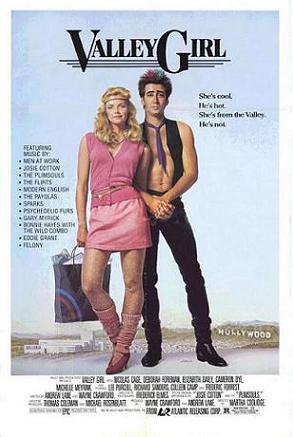
Valley_girl_posterI was recently apart of an interesting conversation about speaking styles. Robin, a frequent poster, mentioned that she mentors her students on speaking styles when they are practicing giving talks for conferences or for interviews. We were particularly discussing Up Talking. First, let’s define Up Talking. Up talking is when every sentence sounds like a question – even if it is a declarative sentence. Here is an example:

Regular declarative sentence: “The sum of the angles on a sphere is greater than 180 degrees.”

Now, restate the sentence with up talking: “The sum of the angles on a sphere is greater than 180 degrees?”

This speech pattern is often designated to young women – particularly teenagers. It is called up talking now, but when I was a kid, it was called a Valley Girl accent. In its native environment, it is often associated with a huge number of “ums” and likes,” as so, “Like, the sum of the angles on a, like, sphere, is um, like, greater than 180 degrees?”

Like Robin, I mentor my students about their presentation styles and specifically point out when they Up Talk. It is not just a plague of young women, I should note. I have met several male professors who Up Talk during regular conversations or during presentations. There are other things to keep in mind about presentations.

(1) Tone of voice. We just discussed Up Talking – don’t do it. Every fact should be declared, and the end of the sentence should go down in tone – not up like a question. You should also have a lower voice. Especially if you are in a male-dominated field – which is almost every field of science once you get to the professorial level – you need to speak with lower tones. Men have a harder time hearing higher tones. If your audience is mostly men, you want to be heard, so you should practice lowering your voice during speaking. Also, avoid too much “vocal fry,” the rasping vocalization that is now attributed to young women, too. I should note that some recent press has pointed that a little vocal fry helps women to lower their tones and be taken a bit more seriously. Hilary Clinton uses mild vocal fry to accentuate points with lower tones. If you are worried your voice will waver due to nerves, you just need to practice, practice, practice.

(2) Use of pointer. If you are nervous when speaking, your hands might shake. You should put two hands on the pointer to steady it. Also be careful not to point off the projection screen and not in the faces of the audience. Make sure you are pointing where you want the audience to look. If you cannot use the pointer well, it is better to not use it at all.

(3) Body movements and gestures. I am a really animated speaker. I gesticulate a lot with my hands and have been known to use my entire body to make a point about my science. I try to do at least one dance in each talk I give that illustrates my point. But, I try to not randomly pace back and forth. I try not to fidget too much. I want my gestures to have meaning for my presentation, and I try not to gesture for no reason.

Another good hint for presenting both in seminars and when teaching – go into the audience. I know it sounds strange, because there is this barrier between the speaker and the audience, but walking into the audience can connect you to the audience. It works very well during questions if you walk toward the person asking the question – into the audience if you can – it demonstrates a caring for their question and ideas. It shows warmth and respect, but you still command the presentation.

(4) Demonstrations and Active Learning. This sounds like I am talking exclusively about teaching, but I am not. If demonstrations and active learning can wake up an audience of students who might not want to even be there or listen to your lesson, think of how powerful it could be for a group of people already interested in the topic of your talk. At a recent SmallResearchConference, I gave a 20 minute invited talk. The 3rd of the day of 12 talks that ran from 8 am to 10 pm (with a long afternoon break). I used demonstrations and active learning techniques to engage the audience. I let them know what I was doing, and many loved the active learning aspects of the talk. I had a number of people ask me about best teaching practices afterward, and many loved the talk – even if they didn’t work on exactly what I did. One conference attendee came up to me and said, “I am from a SmallLiberalArtsCollege, and I use active learning in class. At first, I thought it was stupid to use it in a talk at a conference. But, you know what, I remember your talk better than any of the others. So, I think it is good to do.”

If you are giving a job talk, you should definitely do this. At many research universities, you don’t give an example teaching lecture, so your research talk must demonstrate how well you can teach as well as your past, present, and future research. Using demonstrations and active learning techniques will enable the interviewer faculty that you are good at presentation and will likely be a good teacher.

I am sure there are other things to consider, but this is what I thought of at first sitting. Post and comment to give more advice about best practices when presenting your work.


Sticking Up For Yourself

FEMEN_Calls_for_Sex-BoycottAs I have discussed in prior posts, academic science is full of criticism. Most of the time, the criticism is important and helps you to make your science better. Sometimes, not so much. I still contend that women take much more criticism than their equally-qualified (or less-qualified) male contemporaries, but I haven’t seen any specific studies on it. Have you?

Either way, part of what you have to do in academic science is to stick up for yourself. Whether criticism is constructive or mean, we all need to learn to stick up for ourselves against it. Here are a few places where you have to stick up for yourself and some advice on how to do it. Disclaimer: I am not perfect at this and would love comments or posts with more information from others.

Response to Reviewers of Manuscripts: Reviews on papers are a good place to start with this topic. You will get criticisms in reviews – even National Academy members have criticisms and must respond to them. Here is what I do to respond to reviewers. I find this method both cathartic and productive.

Step 1, I print the reviews. I have a harder time reading things on the screen – especially critiques. As I read the reviews, I write whatever the first response to come to my head is. Sometimes it is easy, like, “Cite this paper,” or, “Emphasize this more.” Sometimes they are more elaborate like, “We can do these experiments: one, two, three, and they will probably take 2 months.” Sometimes my responses are just plain rude, such as, “Did this reviewer even read the manuscript?” or even that old chestnut, “F*ck You!” Yes, I write these all on the paper – dirty words and all. They are my first responses – whatever pops into my head – and they are very useful.

Step 2, I meet with the research team, and we all go over the responses and what we need to do to fix up the manuscript. This is usually major issues, like new experiments. I have others give me their first responses, too, if they want to. We air out everything and figure out how to address all the critiques.

Step 3, I identify the locations in the paper that require correcting and updating and set to do it as soon as possible. This is revising the manuscript. This is the obvious step.

Step 4, I write a response to reviewers. The actual response is very different from the responses in Step 1. For each criticism, I write a point for point response. Sometimes it is easy, like, “We cited this paper to address this concern,” or “We re-wrote this section to emphasize this point and clarify our reasoning.” The hardest responses are ones where you need to rebut the reviewer. None of us is perfect, and sometimes we need to let the reviewer know that their point was actually not correct. No big deal, right? It happens. But, reviewers are in a power position over the authors, and you don’t want to rub them the wrong way. When I have to rebut the reviewer, I make my case very strong with a lot of evidence and references. I have even been known to consult other experts of the field to have conversations about these issues. This is important if the reasoning behind something is unpublished “common knowledge” of the field. Every field has this common knowledge, but most of the time it isn’t published nowhere you can point to easily. If the reviewer is not in the exact same field as you, they might not be aware, so you have to inform them. I don’t just ask them to take my word for it, but I reference real conversations with other experts of the field who I asked if I could name in the response. No other expert has ever said no. I have talked to others, and I think this approach is unusual. No editor or reviewer has ever said it was wrong, so I will keep doing it, if I need to.

Critiques on Grant Proposals: These are more difficult to stick up for yourself because you don’t get to respond to reviewers. But, if you are resubmitting the proposal, you need to go through the reviews and respond to them implicitly within the new proposal. I basically go through the same method of printing the reviews and responding. I also have had co-PIs do the same exercise in a multi-PI proposal, and many found it fun and helpful and emotionally de-stressing. Then, I identify the areas of the proposal that require the changes and re-write based on the reviews.

On my first panel where I served as a reviewer, one of the proposals I was reviewing actually quoted their prior reviews and directly responded in their proposal.  At the agency I was reviewing for, the panel changes every time, so the new reviewers (me) would have no idea that they were responding to critiques except by this method. It was very effective. I haven’t employed this myself, but I do respond to the critiques of prior reviewers.

Even if I am not resubmitting because they do not take resubmissions or the research fit is not right for that program, I still read and try to understand the critiques. Very rarely, I get a really rough review. My first year as an AssistantProfessor, I wrote a grant to a foundation for a young investigator award. One of the reviewers said, “It remains to be seen if [WomanOfScience] can even successfully start a research program.” Ouch! It was really harsh, but it was reality. It was my first year, and it did “remain to be seen,” but it wasn’t for the reviewer to judge in the proposal review. That is what the tenure evaluation is meant to judge. In order to stick up for myself, I called other near peers and had a conversation about it. Swapping stories of jerky reviewers on proposals always makes me feel better before I start the task of trying to make productive lemonade out of their nasty lemons. It also helps me to decide if I should try again at a certain funding agency with the certain idea, or if it is time to move on.

Letter Writers for Promotion: We hope that all our promotions will be wildly successful, and we will all sail over the bar to get tenure, become full, and all other evaluations. But, this really just isn’t the case all the time. These critiques can kill a career, so sticking up for yourself is imperative. Once you go up for tenure, that might be all she wrote, although I know several people who have come back from failing tenure and went back on the market after unsuccessful tenure bids, so it can be done. Most jobs have a “mini-tenure” review process, and this is the time to identify issues and address them. Much like the case against the reviewers of papers, you need to understand the issues, determine how best to address them, and build a case in your favor to make sure you do better at the next promotion evaluation. I suggest doing basically the same process as above.

Step 1 helps you to identify what went wrong and come up with gut instincts as to how to correct them. Step 2 should be done with a team – hopefully you have mentors who can help you. They do not have to be in your department or even at your college. In fact it might be better if they are away from you. It will help you to get an outside prospective from someone who will not also suffer if you do not get tenure and promotion. Your university invested heavily in you, and they want you to succeed. But that also puts pressure on them, and they can lose effectiveness as mentors under this pressure. Going to outside mentors takes bravery. You have to expose your soft under belly to your mentors to allow them to help you. You will have to be vulnerable. So, these are people you will have to trust to have your best interest at heart. Then you will have to go through step 3 – and make the changes and implement the solutions your team have come up with. There isn’t really an mandatory equivalent to step 4 – writing the response – but it may be important to do just that if you don’t get tenure. Having a clear, thoughtful response to critiques is important if you want to challenge the decision or to try for new positions at different institutions.

Other Places: Sometimes we experience critiques in other places such as in email exchanges, in person at faculty or committee meetings, when getting critiques on a proposal or a manuscript from colleagues in person, or even in blog posts 😉 My advice, which I certainly could use a reminder of frequently, is to try not to react immediately. I advise that your initial reactions to bad news, critiques, or even personal attacks should be private. This is often hard to do, but good off-the-cuff reactions take practice to get them right. Public reactions should be carefully planned, if possible. I feel like this is where I fail most. I am obviously much better if I am rested and not hormonal, similar to the uncomfortable conversations post. But, considering that these things can strike without warning, it is hard to always be in the perfect condition to absorb negative comments.

Sometimes the best course is to ignore things. Ignoring something might go against the title of this post which suggests that you should defend yourself, but sometimes it is the best thing. For instance, I recently got an email from a colleague who scolded me because I used a public space for a laboratory end-of-semester party. The public space is adjacent to office space where his students sit. When we went to have the party (all 13 of us), there were only two students (of an office that seats 8) in the office space. Both of these students were  wearing headphones, and it was the second to last day of exam period at 4pm. I didn’t think I was bothering them, and no one said anything at the time when I could have changed anything. Yet, in an email later, I was scolded and told that I needed to ask permission of the students in the office to have my event. I should also mention that I have had these events there previously without scolding, and no one ever said anything before. My first reaction was to write back and defend my actions, but I decided against it. I just ignored the email. I figured if it was really a big deal, he could talk to me in person. I also suspected he threw out the email without much thought. I saw him multiple times the next day without a mention of it from him and with his usual nice self. I think ignoring the situation was the right thing to do there. Sometimes ignoring something is a statement in and of itself. You are saying, “This is not worth my time.”

So, what about you? Do you have any helpful hints on how to respond to criticism. To stick up for yourself in a good way? Any comments or posts would be greatly appreciated! You can receive notice when a new post appears by pushing the +Follow button.

Should Personal Statements be “Personal”?

typewriter This topic came up recently on the Physics Forums site. A number of people responding said essentially what I have said here in the recent past in this post. You should make it about your research, but it should not be too personal about yourself. Online resources such as this one in The Guardian don’t make sense to me. I have a feeling that this is specifically for applying to undergraduate level in Europe and the UK. They have a very different situation – you must apply in your field, but you are also applying to undergraduate level, so they do want to know more about you. An undergraduate application essay is more personal because undergraduate admissions want to make interesting and well-rounded classes. Graduate schools in the US do not care to do that – except maybe trying to diversify with more women and minority students (hopefully).

As I said before, your application to graduate school is a professional application. Graduate school is a professional school.  It doesn’t matter so much to me when you got excited enough about science to want to do it for a living and go to graduate school. As one person writes on the Physics Forum, your interest in Prof. Proton as a child really has no baring on your success as a graduate student. Your success as a graduate student, and beyond grad school, are our only concern.

Here are some really good reasons why I don’t care about your personal reasons:

1. I should not care because it enters a bias. If one student says they have had a passion for science since they were 4 when they looked to the stars and wondered how many there were and how big the universe was, is that any meritorious than the person who didn’t realize it until high school? Or better yet, the person who entered college wanting to do history, fell in love with a science gen-ed course, changed tracks, took an  extra year to finish with a science major and now really wants to go to graduate school? The when you decided to devote your career and life to science does not matter. And it should not matter because I have no way to evaluate it objectively, so it isn’t even fair to put in. I usually just ignore it all together, trying to skip past until you get to the real information I need.

2. It wastes time and space you could be saying something real. By making your first 1 – 3 paragraphs about personal drivel that I cannot, by good standards of judgement, use to evaluate you for graduate school, you are wasting my time and your personal real estate in the statement. I have to spend time getting past it to the real information I need. You are wasting words from your word count to tell me things I don’t care about and cannot use.

3. Another indicator that it is not what you should do. In all my years serving on graduate admissions, no one has EVER said, “Well, this person has wanted to do science since they were in junior high, so we should accept him.” No one uses the information. In fact, it is often a source of negativity within the discussion. I have heard people say, “Not another one of these quotes! Did they at least quote a scientist this time?” or derisive comments about what the applicant writes. Again, this is not the best thing for YOU, the applicant, so why give them this information.

I hope this information is helpful to some of you preparing your applications to graduate school. I am serving on admissions again this year, so maybe I will read some of them myself. If I can even get one student to remove this useless personal information and give me what I really need, it will be worth it. Feel free to forward this post to your friends and colleagues. Make comments or post here or at the Physics Forum to continue the conversation.

Back in the Saddle Again

Saddle

Saddle (Photo credit: Wikipedia)

All of us, for some reason or another, have to take a hiatus from traveling, networking, or some of the other parts of our jobs. Coming back can be a challenge. I think many women, especially if they have tenure, take a big reduction in traveling once they have kids. Sometimes it can be difficult to get back in the saddle of long-distance traveling after a long time away. Plus, being away from kids can be sad if it you haven’t been away from them much.

Here is one woman’s story of getting back in the saddle. Enjoy!

I was really divided over whether or not to come to an international meeting, because I didn’t know that many people on the schedule, and honestly I was a little scared. I think everyone thinks I am good at schmoozing, but I had cut down travel so much the last few years that I am out of practice. I haven’t been out of the US/Canada since 2005 — I forgot to bring a European power adapter, felt very stupid and had to buy one at the airport. I was tired and jet-lagged the whole time I was there. I was also feeling really shy — I feel that I look so much rounder in all my business clothes after having kids. I didn’t know that many people at the meeting, and it was mostly really old guard white guys. Many of the participants were from Europe and were used to a more hierarchical academic system, and I forgot that many of those kinds of guys treat me like an infant.

Even worse, I was missing the kids so much that I didn’t feel like talking about science much. I ended up talking about the kids a lot whenever I tried to schmooze.  One of the few people I knew at the conference was a guy of whom I think as a mid-career mover and shaker. I just assumed that he was very well-connected — he’s done well in his career, he’s very friendly and gregarious, he’s gotten some awards, and he’s already on some editorial boards. We ended up eating many meals together, and surprisingly, he told me that he does not like travel much. He usually just goes to society meetings, and has never been to a Gordon Conference. He also told me that he is not good with strangers, and that he was missing his family a lot, also.

So it got me thinking. Maybe not everyone is traveling and schmoozing as much as we imagine they are, while we stay at home turning down invitations and cleaning up baby vomit. And maybe things have changed enough that, once we are done cleaning up baby vomit and are ready to get back in the saddle again, we’ll find that people are more accepting than we think.

Another good thing came from this meeting. I got an invitation to be on an editorial board from the trip, and I think we will have an invited article out of it, also. So it’s been a real positive, even beyond the “international invited talk” on the CV.

My impression is that this WomanOfScience is very brave and good things resulted, so congratulations to her! Any stories of getting back out there? Fears, concerns, or stories of bravery and success? Comment or post.

Why So Negative?

So, I have a had a number of posts, and by now, you maybe could have realized

Thought Bubbles

Thought Bubbles (Photo credit: Michael Taggart Photography)

that I am a naturally positive person. Not only is the glass half full, but I can give you 2 reasons why you should be happy about it. I am also naturally energetic. These attributes make me very able to organize and lead not only my lab but other committees at both the department, college, and even national level. Yet, I am often faced with immediate negative opinions from my colleagues when I put out new ideas, discuss changes, or organize on the departmental level.

Sometimes, they have non-specific comments including, “We tried that 10 years ago, and it didn’t work.” Although this is non-specific and doesn’t give any hard evidence of the “not-working” nature, at least they claim to have tried something new. Other times, they just say, “That’s not how we do that,” without discussion of if it might make sense for us to even try. These attitudes seem unnecessarily negative.

Another place where I find people are negative is about trying to get awards. I recently asked to be put up for a BigAward. Is it a reach? Yes. Am I a shoo-in to win? No. But, again, being the positive sort of person I am, my thought is that your chances of winning are zero if you don’t even try. It’s not that I think I am so great that I will definitely win, it’s just that I see the benefits of trying. When you submit a strong nomination packet, even if you don’t make it to round two, some BigWig, smart people will have to read it. They might be impressed with you. They might remember your application. It might help you out in the long run – you never know. So, my thoughts are that it is worth the time to help your junior colleague get their name out there and support them.

Again, being positive, my take on these people is that they have taken the idea of “critical thinking” to an extreme. We are all taught to be critical thinkers in science. And criticism turns us to the right direction and is helpful. I am not against criticism. It has definitely helped me write better papers and write better grants. But, sometimes, I think that people are so fixated on the “critical” part that they forget about the “thinker” part. They become negative just to be negative for no good reason. Why? Do they do it with everyone? Or am I special because I am so positive? Sometimes these things get me down, and I start feeling bad and suffering from impostor syndrome due to all the negativity. Luckily, I am positive, and one good science interaction or pat on the back from a visitor makes me happy again, but it is disturbing how often the criticism becomes overpowering. If I was a less positive person, it could be crippling or debilitating.

So, what about you? Have you suffered from overpowering criticism? What is justified? Or unnecessarily over the top? How did it affect you, your science, and your attitude? Tell your story in a post or a comment.

Advice for Grad School from AboutToBeDr

chemistry

This post is from an awesome amazing graduate student woman of color. She is successfully navigating graduate school, and is almost done with her thesis.  I asked her to share her wisdom for future, new, and current graduate students. Remember, you can follow this blog by clicking the +Follow button. You can also lead this blog by posting comments and your own posts, like this one. Enjoy!

Entering my first year of graduate school I knew that it was going to be different from my undergraduate experience, but I really had no idea what I was getting into.  There isn’t a “Graduate School 101” course to take to learn the ins and outs of this academic journey.  Here are 10 tips and wisdom that I have acquired going through my Ph.D. program.

  1. Forget about imposter syndrome.  This is better known as the “I am stupid and I do not deserve to be here” feeling. Many underrepresented minorities and women especially experience this feeling throughout their graduate school career.  Your admittance into the program was not by mistake.  You have earned where you are and though there are times where you will feel like you do not belong, just know that you do.
  2. Pick a supportive advisor. Picking an advisor is one of the most important decisions you will ever make in graduate school.  It really is a “match-making” experience.  They have expectations of you and you have expectation of them.  This person should care about your overall career goals and help you along the way to achieve them.  For example, my advisor understands my need for structured independence.  He empowers me to take control of my project and teaches the other graduate students  and me to be confident in our work.  I honestly believe I hit the jackpot in finding my advisor because we work well and understand each other. The relationship between advisor and advisee evolves along the way in graduate school.  So choose with your gut and if you feel like something is off with a particular person trust it.
  3. Surround yourself with mentor(s) from different fields of study. Your advisor can be your mentor, but should not be your only mentor.  I personally have about three mentors who help me with various situations.  For science and career advice I usually contact my undergraduate advisor.  For navigating life as a female of color, I have a former sociology professor I have known since I was 18.  You get the idea.  Each mentor knows different part of my life and they help me navigate my present dilemma or triumphs.
  4. Do well in your classes. Just because you have your Bachelors in whatever field you are going to graduate school for does not mean you are an expert.  Study!  Graduate school teaches you to think more in-depth about a subject.  It is an overall training to become a critical thinker.  College was about scratching the surface of your desired subject and graduate school will be a full immersion process.
  5. Be humble and open to new experiences. You will learn how to think and approach situations differently.  Learning is a collaborative process and with this collaboration, respect for others is essential.  In summary, do not be a “know-it-all” and shut people out.
  6. Take care of yourself. Take a break everyday to do something you love other than your studies.  Sometimes stepping away from something for even an hour can give you a new set of eyes the next time around.
  7. Every opportunity is a networking opportunity.  Talk to a faculty member or a student you do not know at a seminar or a department gathering.  Go to conferences and make it a goal to introduce yourself to someone prominent in your field.  You never know if that conversation would turn into an opportunity for future employment or collaboration.
  8. Be involved on your campus and/or in your department. Taking a leadership role in your department or on campus can be beneficial in your own social life personally and for your career.  Personally, if you are organizing gatherings for graduate students you will interact with people who are going through the same process as you.  This can be rather comforting and supportive during rough times.  Career-wise if you are organizing something like a departmental seminar series with other students you will interact with people in various fields and this could lead to future opportunities.
  9. Swallow your pride and ask for help.  I say this because I use to be the person that would try to learn at other people’s pace.  When I did not understand the material right away, I would be too embarrassed to ask questions and I would not learn it.  This was detrimental to my learning process and resulted in failing my first class in graduate school.  Ask as many questions as you can and do not be afraid to have meetings with professors outside of class to go over material.  Study groups with other students in your class are also very helpful.  Make a habit of swallowing your pride and admitting when you do not understand something.
  10. You are not alone. Graduate school is an emotional rollercoaster and more of an endurance race than anything.  The people before you and certainly after you will experience the same ups and downs.  Have a positive outlet or someone who will share in your achievements and your failures.

What do you think? Have other advise? Post or comment.

Applying for Postdocs

Although the Fall is traditional application season, applying for postdocs can occur at any time. Unlike other jobs in academia that have start dates that coincide with semesters, postdoc start dates start when the money and the person coincide. You still have to apply for postdocs.

In my experience from the application side and the hiring side, are that hiring postdocs are extremely flexible and somewhat informal. When I was looking for a postdoc, my husband already had a postdoc offer at FancyIvyLeagueUniversity. We didn’t want to be apart, and were both graduating with our Ph.D.s at the same time. So, I had a targeted place to go for my postdoc. I saw a FancyBigShotProfessor from FancyIvyLeagueUniversity at a conference, and I went up to him and told him that I needed a postdoc at his university. He invited me to give a talk at his group meeting. FancyIvyLeagueUniversity was across the country from UniversityofState where I was getting my Ph.D., so I bought a plane ticket and went up and down the coast giving the talk at a number of places set up by graduate student friends. By the time I gave the talk at FILU, I was very prepared. FancyBigShotProfessor invited two other FancyBigShotProfessors to my talk, and they offered me a position doing a joint project with them. I feel like this was all very fortuitous and lucky. Or was it shameless self-promotion and crazy networking at a conference?

From the other side, as a professor hiring postdoc, I am trying to figure out what I think about when hiring. First, I very carefully read the letters from the recommenders. I often even call the recommenders on the phone and ask very specific questions about what I need from a postdoc at that time. Next, if the application looks good, and the letters and recommenders gave me what I need to know, I will bring the person for an interview. In the interview, the person will give  talk on their research. Can he/she communicate science to a general audience? He/she will meet with me and other faculty members in the group close to my own research. Most importantly, the candidate will meet and possible have a meal with the members of the lab. This is a crucial part of the interview. I need to know if this person will get along with other people in the lab. Can he/she be a mentor to the younger members of the lab?

So, the basic application for a postdoc can be anything from virtually nothing, as in my case when I applied, to a true full-fledged application process, like how I hire postdocs. The full-fledged application involves your complete CV, a cover letter (can be an email), and 2-3 letters of recommendation from people who know your research well from your Ph.D. Some people just ask for the recommenders’ information, so the PI can call or ask for the letters via email.

Do you have advise or information on your postdoc application experience? If so, post, or write a comment!

Applying for Tenure-Track Jobs: Your Packet

I have talked about applying for jobs with a two-body problem previously (Two-BodyProblem Posts can be found in the Two-Body Problem Category, below). But, here, I am just going to focus on the mechanics of how to put together your packet and apply.

In General: First, off, as I have said before, ask other people for their successful examples. This means having a near peer mentor who has successfully landed a job. You might not have one of these, so you can ask your advisor for their packet, if they aren’t too old, they might still have it. Also, you can ask your advisor for advise, if they are a good advisor. If you are interdisciplinary and applying to a specific department, make sure you get a mentor in that type of department who can read the packet and give you advise. If you postdoc advisor isn’t in that type of department, seek out another mentor. For example, you are a chemical engineer currently working in a physics department, but want to go back to chemical engineering, you need to know how the game is played in chemical engineering. (I know chemical engineering is a particularly small group, and they have some weird rituals. If you are thinking of chemical engineering, you have to get a mentor to help guide you!) The goal of the packet is to get an interview, so make it work for you!

Cover Letter: The cover letter is a formality that makes sure the administrative assistant handling things knows which job you are applying to, and they know who to expect letter from, but the search committee will probably not read it. This is important to have the right information (which university/college, your name and full information, why search). You don’t want to go into the molecular biology search when you do evo/devo. Your cover letter should just be bare bones. Don’t make it too long. Don’t go into too many details. If you have a two body problem, don’t mention it in the cover letter (don’t give them a reason to not even interview you).

Your CV: I have had posts on your CV for getting tenure (CV), and the same basic stuff applies. It would be a full CV, with everything you did. You probably won’t have teaching or service sections. You probably won’t have mentoring or grants, but that is OK. Five pages is plenty.

Research Statement: All tenure-track jobs will ask for a research statement. This is a plan for what you want to do when you get to your new position. Depending on the type of science department, it will need to be more or less specific or look more or less like a grant proposal. It should only be about 3-5 pages long. Again, this is where you need to get examples. Mostly, you don’t want it to look too odd. Don’t write an NIH/R01 grant-style research statement for a department that is all NSF and DOE funded. The styles are very different. Don’t write a vague, sweeping and broadly open statement for a department that expects specific questions with specific techniques. Do use figures to illustrate your points. Do state the significance of the proposed work. Do point out places where the work you propose could intersect and collaborate with people in the department to which you are applying. Do say where you think you will be able to get funding (which agencies?). Don’t write the wrong school or department name! Each statement needs to be tailored to the school to which you are applying. In my experience on hiring committees the young faculty on the committee will read these statements with great interest and go into detail about what you propose. Make it exciting and sell it!

Teaching Statement: Not all tenure-track jobs will require a statement of teaching, but many will, especially small liberal arts colleges. Again, get examples from people who have successfully written these statements to land a job. At a research school, they are going to want something pretty standard. What types of classes are you interested in teaching? Will your use modern teaching techniques? Are there any specialty courses you are thinking of inventing for graduate students? Remember that mentoring in the lab is part of teaching, so you can mention what the composition of your lab will be like. How many graduate students do you think you will have? How many postdocs? Will you have a technician? Is that typical for your field? Will you take undergraduates? By mentioning mentoring, you will remind the committee of your research again. You can also mention that innovative teaching and student mentoring are important for broader impacts required by NSF proposals. Again, you are mentioning research in your teaching statement.

Letters of Recommendation: You will typically need 3-5 letters of recommendation from professors for your application packet. For most people, three letters is tough and five is a huge stretch! If you are applying to a tenure track job after your first postdoc, you will likely have had 2 advisors – your Ph.D. advisor and your postdoc advisor. The 3rd person is usually the weakest for most people. When you get to a postdoc, it is good to talk to other professors at your new place, so you will always have someone to act as that third writer. The letters of recommendation are the most important part of the packet for the older people on the hiring committee. Having big name letter writers is important for these guys, unfortunately. And this is one part of the packet you cannot control and also tends to favor men over women, since we know that scientists have significant gender bias.

Do you have suggestions for people going on the job market this fall? Post or comment!

Guest Post: Changing 20%

A couple weeks ago, I had a post that was related to teaching about how to better your teaching slowly, but making 20% Changes. From that post, I received this inspiring guest post on the topic of changing 20% from a PreTenure WomanOfScience, which I am posting here. She correctly realized that the 20% ChangeModel does not need to be limited to teaching or even to your career. I hope you enjoy it and remind you again that you can follow this blog by pressing the Follow Button, but you can also lead this blog, by guest posting or commenting. Consider doing both as we expand this blog over the next few years and hopefully open up a real dialogue to help women’s success in academic science. Here is the post:

The recent post on changing 20% in teaching inspired a sort of new year’s resolution list for me. The theme of the list is to change 20% in tasks in my work and life. Different from the usual new year’s resolutions that always seem to require drastic, or 100% changes, I am only aiming for small changes.

I am posting this because I feel that this is an entirely novel approach to self-improvement. It’s novel, because small changes are more doable. In some ways I suspect that we add extra pressure to ourselves to be perfect. The process of getting there can be overwhelming and stifling. I am convinced that this 20% change approach is not that different from laying out specific aims for the over-arching goal in a proposal.

Changing 20% in teaching:

  1. Use the half hour before each lecture as office hour.
  2. Use the last five minutes of each lecture as an open floor Q&A.

I teach a small class this semester, the students who take it are extremely motivated, because the class (new but super awesome) is not yet part of their graduation requirement. Even so, the first time I taught it, no one came to my office hour. Rather, I find them hanging out in the classroom for the half hour before class. So this year I will split my office hour into two half hour sections, held in the same classroom as the lecture. There is minimal effort required for either the students or me. We all have to go to class, and I have to hold office hours. I also find that not all students have the guts to ask questions after class. I speculate that designating 5 minutes of lecture time for open floor Q&A will force the students to verbalize questions that they might have. Both of my 20% changes probably only works for a small class, but that is okay.
Changing 20% in networking:

  1. Talk to 20% more people at a conference.
  2. Practice listening skills when talking to colleagues on campus.

This is a change that I have started to implement. Taking is incredibly difficult to me. It’s worse than squeezing that last dollop of toothpaste. (Awkward pause.) But, like most scientists, I’m obsessed about my project. So my change will focus on the science aspect. Instead of waiting passively for people to come to my poster at this conference, I identified and specifically invited those who will have important feedback to my work (not yet published). Everyone I reached out to came and I got a lot out of it. There was only one person who did not come by, but the invitation may have been better registered had it been a few beers earlier. The invitation process was pretty rocky for the most part: it’s odd to demand people’s time without giving a good reason. What seemed to work well, in particular for those who don’t know me, is to identify strange observations that they might care about in a quick sentence. Tying into project interest, my next goal is to practice listening skills when talking to colleagues on campus. Scientists are very specific and meticulous, if there is something they want to tell me, I want to stop being anxious and actually hear it.

Other: There are other tasks that no one will care about other than myself, such as folding 20% of my socks.

This post is obviously different, it’s more of a planned test run, rather than learned wisdom. The message that I want to send is not only that this blog impacts the reader (at least me), but also to verbalize that the pressure of being perfect or else is very annoying. Changing 20% at a time is much better!

Thanks so much for this post. I found it super inspirational. Hopefully, you will write again in a couple months to update your progress on this change model.

Do you have a story or anecdote you would like to share to help others? If so, please do guest post or comment.

Networking On Campus

Networking should not just be done off campus, at conferences and other professional gatherings. Your on-campus network is just as important (maybe more so) than your off campus. Most of us are tenure track at research or small schools where your department, college, dean, and provost will have a say on if you get to stay after your tenure decision. Make sure these people know who you are and have a positive opinion of you before your tenure case comes before them. Below are a few ways you can do them. Again, you can go the in your face, PublicityWhore route, or you can be subtle or discreet. Just don’t be too subtle that they don’t notice you.

Get a group. I don’t mean a scientific group, I mean an EveryOtherThursday Group. This is a group of like-minded women to whom you can talk openly and honestly about the challenges of this job and who will give you feedback and advise.  We have several of these on campus. My group has a number of very senior women, mid-career women, and junior women. Your group doesn’t have to be just women, but there are definitely issues that women face that men are oblivious to (too many to list here, and we will get to them – eventually). The group should be supportive and problem-solving – not just a bitch-session group, although that is useful too. The senior women in my group have helped immensely with navigating my early career, academic politics of the university, and they were supportive of my tenure case at the college-wide level in a number of ways.

Go to lunch. Invite random people to lunch routinely from within your department and outside. This is another part of that bonding over science and personal information to form friendships. This is called “being collegial,” and it makes you look like part of the team. If people in your department go running, biking, hiking, or to the gym together, join in with that. Be part of the team. Do not exclude yourself.

Go to lunch with senior faculty. The year before my tenure packet went in, I had a series of lunches with influential senior men in my department. Your know who they are. If you don’t – pay attention in faculty meetings: which members of the department do people always listen to or credit with ideas? Those are the people who are respected. If people roll their eyes when someone senior is talking, don’t go to them. When I invited them to lunch, I specifically told them that I wanted to talk about my tenure case with them, to make sure I was on the right track and would be fine. At lunch, I laid out the path to tenure as I saw it. I had 6-9 months left until my packet went in, I had this many papers out, this many in the pipeline to publication. I was working with this many students, postdocs, undergrads. I did not bring up negatives, but only positives. My goal: get these men on my side. They are the movers of the department, the wise elders that people listen to. I didn’t want there to be any surprises at tenure time, and I wanted any one of them to be able to present my case as if they knew it by heart.

Be seen at conferences. This is not about off-campus mentoring, so why am I brining up conferences? Well, when you go to a conference, you will likely have other people from your department, college, university at the same conference. Be visible to your institutional colleagues. Make sure they see you are giving a talk or a poster. Make sure they see you out and about at the meeting talking and networking. Much like going to lunch, this is also part of being collegial. I have seen someone not get tenure because someone in his department said, “I never saw him at that conference, so I assume he was just in his hotel room.” Of course that is irrational and stupid reason to destroy someone’s career, but it happens. Make sure it doesn’t happen to YOU.

Respond to emails. This is hard because we all get bogged down with stuff and can’t always respond right away, but when your on-campus collegaues send an email – respond!

Do your part. When working with others on non-service tasks, do a good job. For instance, if a big multi-PI grant is being assembled, and they assign you a task, do it well and in a timely manner. Yes, your chances of getting it may be slim, and it it may seem like a waste of time, but you need to be part of the team. If you are doing service, there are some times when you should work really hard and do a great job and other times when you should half-ass it. Of course, do your work that you are assigned, but don’t spend too much of your precious time. Example1: you are working on the admissions committee reviewing files. Do have all your files read and commented on by the deadline. Don’t spend 6 hours on 3 files – spend 20 minutes on each, giving your impressions. There will be a discussion, and you will have time to go back and re-evluate if your quick scan was too cursory. Example2: You are serving on a student’s qualifying committee with 2 senior people from other departments. Do respond to emails and be at the committee meeting for the student on time. Don’t be so hard to track down that the senior person heading the committee has to ask your senior colleagues if you are traveling. That makes you look bad both out of department and within.

Write lots of grants. At my university, every time I write a grant, my chair signs off and my dean signs off. That means that my dean sees my name about 5-10 times per year in the context of research and grant writing. This is a positive. My name is associated with grants and money and research – all positive. In this environment of no money, you shouldn’t ned much motivation to write lots of grants, but this added self-promotion may help you get a few more out and across people’s desks.

Are there other specific suggestions for networking on campus? It is a long-term thing, so start early – you can’t save it all for the last minute. Please guest post or comment!

Tag Cloud