Helping the Minoritized Achieve in Academic Science

Archive for the ‘Teaching’ Category

Daily Choices

GoodSenseCorsetWaists1886page153I read an interesting article from another science blogger, Rigoberto Hernandez, on his blog EveryWhereChemistry. He had a recent interesting blog entry about what to spend your time on daily, where he compared the choices to Horcruxes and Hallows. Please go to read it. But, it got me to thinking about the different types of tasks we have presented to us daily, and the choices we make. The specific tasks depend on what level you are at, but the fact that you have to make the choices never changes.

Graduate School: In graduate school the choices should be easier, but they still exist. Should you attend that friend’s defense, or work on your paper? Should you take more data today, or analyze the data you already got, but aren’t sure if it worked? Should you spend a few months learning how to program to make your data analysis automated, or should you analyze it by hand to get it out faster, and will it really be faster?

Postdoc: As a postdoc, you are still focusing mostly on research, and you might have similar daily decisions similar to graduate school. Presumably, you figured out which are the right choices to keep advancing. As a postdoc, especially if you are fairly good, you are probably offered the ability to work on multiple projects. This can be very good for your career and your training. Good for your career because you could possibly get more papers out faster, which you need to get grants and get a job. Good for your training because as a faculty member, you will have to manage multiple projects that your students will work on. On a daily basis, you will have to decide which project to work on. Maybe you already tackled this issue as a senior graduate student, but postdocs are usually given more responsibility and more projects than graduate students. With multiple projects comes all the same decisions as on individual graduate projects, except multiplied.

Pre-tenure: Starting this job is like jumping into cold water. Now you have to teach, manage, write/obtain grants, initiate new research, train students, and on and on. That makes your daily choices so much harder. Should you spend your time working on your new class, writing a review article, writing a grant, working on research, meeting with students? The myriad of choices are endless. I would often divide the days into halves or 2-hour chunks and work on one thing for a set time before moving on to the next thing.

Post-tenure: If you made it past tenure, presumably you spent your time doing the right thing to achieve tenure – congratulations. With tenure comes a relaxation of the pressure to do what you have to do in favor of being able to do what you want to do.  So, what will you do? What will you choose to do each day? Somedays I find myself just putting out fires – doing a lot of things that are urgent but not important. Other days, I opt to work in the lab with students when I probably should be writing that next grant. The daily choices are a bit harder when you don’t have the pressure or the excuse of looming tenure. It is harder to say no or to prioritize the way you did before. You often get piled upon with more service and larger teaching loads. Unlike at the other stages, when you are still trying to make it, there is less advise for this stage, so you try to do the best you can, but are you making the right choice? Should I work on that paper to resubmit it to a new journal, or write that new grant, or work with that new student in the group?

I don’t know if I have advise here, since we all navigate these waters alone. What do you think? Any good ways to keep your priorities straight after tenure? Post or comment here. Follow this blog but hitting the +Follow button.
Don’t Say It

2014-05-08 13.36.39The end of classes is here or near – depending on your school. That means that course evaluations will be filled out, perhaps online or perhaps with paper and tiny pencils.  Although this may be coming too late for this term, the end of the semester/quarter is a good time to reflect upon how the course went, and maybe some of these things can be altered for next semester/quarter. Perhaps these are some of the 20% changes you can make for next time, as I have posted about in previous posts (here and here).

One big thing I have noticed with student evaluations is that they are parrots. They will parrot back in your course evaluations ANYTHING you have said to them. If you say, “I know this homework is hard, but it is for your own good.” You will get about 50% of the students commenting that the homework was hard in the course. If you say, “This book is not great, it isn’t my favorite.” They will say, “The book was terrible.” If you say, “This is my first time, and I am worried I might not do a good job.” They will say, “She didn’t do so great a job because it was her first time.” So my advice: Don’t say it. Don’t say anything negative to the class at all.

Is this dishonest? Let’s say it is the first time to teach a course, and it isn’t going great. The scientist who truly wants to be honest and report facts wants to share with the class. But RESIST the urge to share. It doesn’t make them feel better to know it isn’t going well. Yes, you are withholding information, but it is not important information that they need. They do not need to know that the course is veering off the rails. Since it doesn’t help them and doesn’t make them feel better, why say it?

Does it make you feel better? There might be some cathartic feeling of sharing a traumatic experience that is alleviated when you share with the students, but the negative impact it will have on your evaluations will leave you hurting in the long run. There is no way to explain away a course that is going poorly.  Even if you promise to do better next time, it won’t be with these students, so it doesn’t do them any good that you learned from this experience.

If the class is going so badly the students will know, won’t they be mad if you act like it is all rosy? Yes, they might, but at least you aren’t giving them ammunition to shoot you down. Make them come up with their own words for how crappy the course went. Their complaints about you will likely be less severe than your complaints about yourself. Further, you don’t have to act like it is perfect. You can make reasonable changes throughout the class that attempt to solve problems. The students will appreciate it, too, and your evaluations will probably be better if you try to course correct. What I am suggesting is not to act like you are perfect, but rather to not be so honest and blunt about your self-evaluation during the course, which is likely to be worse than they think and probably worse than you deserve (if you are like me…). As you make these reasonable changes, give credit to the students. You can say, “Several students have brought it to my attention that it would be better for you if we…” By stating it this way you, (1) give credit to the students, (2) don’t say the old way was bad – just this new way is better, (3) make a change that will be favorable, such as changing the homework due date for the class from Thursday to Friday or allow students to redo a question on an exam for half the points back, or whatever. Don’t point out that the old way wasn’t as good – it isn’t necessary!

As I write this, I am thinking, is this for others or for myself? I am so amazingly guilty of doing all the things that I just told you not to do. So, my NextSemesterResolution to change 20% is to try to not make any negative comments about my course. What do you think? Post or comment. You can get an email every time I post by pushing the +Follow button.

Getting It All Done

TimeManagementv2In science, there is a lot to be done. When you are an undergraduate, you had problem sets, lab reports, maybe even a capstone to complete. You were maintaining your grades while having some fun and doing some extracurricular activities. As a graduates student, you passed classes, TAed, performed novel research, became the world’s expert in your exact experiments, perhaps organized some science-related on-campus activities, attended conferences, made posters and talks, wrote papers and a thesis, and got a postdoc. As a postdoc, you juggled multiple projects, learned new techniques, wrote proposals for fellowships, mentored graduate students and undergraduates, perhaps juggled multiple mentors, wrote papers, edited papers, edited theses, attended conferences, networked, gave talks, wrote papers, applied to jobs, interviewed, got a job, and wrote papers.

Now, as a faculty member, your job tripled because in addition to doing all the stuff above, you are now having to manage other people (posts), get enough funds to support other people (write grants, see post), teach courses (perhaps some that you never took yourself, see post), work on service for the department and college (post), and take on larger and larger service roles for your scientific community. Each of these has a huge number responsibilities and components to it, and could be a job unto itself. So, how do you do everything?

I have had some posts about starting a new job here and here, but at the beginning, the job isn’t as much. It definitely ramps up over time. I have one post that is good for helping to organize yourself over a yearly time frame, but there is also something to be said for a monthly or weekly schedule that is conducive to getting everything done. One extra issue with academia, is that your schedule changes throughout the year depending on when you are teaching, what you are teaching, who is in your lab, and other what naught. I will give some examples of weekly schedules that worked well for me over the years, in a hopes that they will help you to organize your schedule, too.

Example 1 – 10am class for 1 hour. Several semesters, I taught at around 10am for about an hour three days per week. This time slot was pretty close to ideal, which is probably why they are so popular in the schedule. The students were awake, I had time for last minute prep before class, and I took the entire morning for “teaching.” Here is how I actually arranged my schedule. On the days I was teaching, I got in around 9am and did some last minute psyching up for class, making sure I had demos, and my computer was set up. I would print off and make copies of anything needed for class. I would go 15 minutes early to the classroom to set up projectors and demos and also talk to students as they came into the lecture hall. After teaching, I would go to the gym for an hour to get exercise and decompress after teaching. After the gym, I would shower and go to lunch. I would spend the afternoon working on leftover class stuff, like scanning and posting my notes or homework solution sets, office hours, and meeting with students. On the other days, I would try to take the entire day for writing grants and papers. In the evening the day before I would teach, I would spend a couple hours in the evening re-writing my lectures.

Example 2 – afternoon lab course. Other semesters, I taught afternoon lab courses two times per week for several hours in the afternoon. Lab classes take less preparation because there are not lectures to make up. I usually try to keep all the teaching stuff on the same day, so any preparation, photocopying, or equipment set-up that I might need to do would be done in the morning. Again, the other days are reserved for research. I would also try to go to the gym first thing in the morning on research days before going into work but after getting the kids to school. Sometimes working out was a great way to kick my brain into gear and get it working for the rest of the days on research days.

The key to all of these ideas is to give myself the time I need to do what I need to do. I block out full days for research and I do not allow committee meetings to be made on those days. The days I teach classes, I put other meetings and office hours, so that it is all on the same day. Although I have been failing recently, I also try to get to the gym 3 days per week. Also, I eat lunch with friends almost every single day, and I try to sleep 7-8 hours per night.

Also, none of this includes any family stuff, which happens outside of 9-5. But, here is the key, by giving myself time for stuff like rest and the gym, I have some slack that I can take up with family stuff happens. The week when the baby has a fever and he has to stay home, I cut out gym and some other stuff so that I can still get the important stuff done take the time I need to be with the baby at home. (My spouse and I split days off with sick baby, and negotiate which days/times we can be home. We often don’t schedule important, non-rearrageable meetings at the same time not he same days, so we can do this. We have a joint-shared set of calendars.) If my time is already stretched to the breaking point, a sick kid or other family emergency will wipe me out. If I am giving up going to the gym for a week, so I can get more research done, it isn’t as bad.

So, what do you think? Do you have a way to arrange your time that enables you to get it all done? Post or comment. You can receive an email every time I post by pushing the +Follow button.

Bullying Backfire

bullyFor the past several years, the topic of bullying has been hot in the media. Most people, especially nerds, realize that bullies have always been there. Although academia is supposedly some liberal bastion of cushy touchy-feely softies who “can’t do,” so they teach, it is actually full of bullies. Those nerds who were bullied most as young people are the most likely to bully others in the future. It is a cycle of abuse that is disturbing. It doesn’t help that many of the people in academia are not good communicators and can often be stubborn and unyielding in their emotional ideas. All of these circumstances lead to a high amount of workplace bullying. In addition to sexual harassment that is still pervasive, the more subtle workplace bullying by chairmen, peers, or even students can make women and minorities feel bad about their job and abilities.

Currently, UState is requiring a workshop on Workplace Bullying. Based on what I discussed above, this would seem like a great idea, right? Ironically, these workshops appear to have a backfire effect. What I mean by this is that known bullies are coming out of the workshop convinced that they are being bullied themselves. Mostly, they are claiming to be bullied by the very people they are bullying! Why is this happening? Because the bullies and the bullied are in fact having a disagreement. Unfortunately, the inept abilities of most scientists to communicate mean that the more aggressive person comes across as a bully. The less aggressive person seeks relief, help, or just a chance to gripe, and they are branded as talking behind someone’s back, forging alliances against the other person, or just a troublemaker. In the new definitions of bullying, these defense mechanisms are also a form of bullying.

In talking to my female peer-mentors, it seems like most women coming out of the workshop think to themselves, “Oh no, I have been inadvertently bullying someone. I need to try to adjust my way of acting.” On the other hand, many men have come out saying, “OMG, I am being bullied by everyone.” I think it would be interesting to perform a follow up survey to see if it the reaction to the workshop aligns with gender. There are always exceptions, I am sure, but my hypothesis would be that women are more likely to be introspective about the workshop. This is what I mean by a “Bullying Backfire.” The bigger a bully someone is the less likely they are going to see themselves as the bully, and the more likely they are to see how everyone else is bullying them. In my opinion, this is part of the mentality of a bully – to blame others for your problems.

So, how do we respond to bullying? Once we identify it occurring, we can only change our own actions toward others. Is it possible to change the actions of others who are bullying us? It is worse when you are a graduate student being bullied by your advisor, or an assistant professor being bullied by a senior faculty member? Do you act like the “bigger man,” and just pretend it doesn’t affect you? That can backfire, too. Especially if your bully is trying to tear you down and make you feel bad on purpose.

Popular culture tells me to stand up to bullies, and I have been accused of being brave. I am not sure if I am brave or just really stupid, but surviving can be a sort of standing up for yourself. I certainly did stand up to bullies in high school, and I fought back. I was protected by my honor-student status against being sent to detention or being suspended. I was able to fight back immediately at the time, and move past my bullies.

Now, revenge may need to be placed on the back burner and served cold. Much like my honor-student status, one can always overcome and get back at your science bullies through your science-cred. See, in science, she who has the best publication track-record laughs last. At the end of the day, if you have better, more publications, you will get more respect than your bully. I have done this with several of my science bullies. It takes having a long-view, because it is not a quick solution. So, sometimes I just keep my head down and move my science forward and try to ignore my bullies. Obviously, this only works if your bully isn’t seeking you out to suck up your time.

All this being said, it is absolutely essential that you have a support network to help you handle these situations. You need a good partner to listen and offer sympathy. You need a peer network, or group, to offer advice, consolation, and cheer-leading about how great you are. Most people will not admit this, but you probably also need a therapist. In all the times when I had to deal with a bully, I sought out a therapist to talk to on a weekly, or every-other weekly basis. These people are not in science, necessarily, but they can give you can outlet to gripe, a confidential confidant, and someone to help with people-solutions.  I am not ashamed to say I have been in therapy numerous years over my life, and I am a more well-adjusted, and better person for having done it. Younger generations of people do not see it as a stigma, but as a means to help to deal with difficult people. Older generations often see it as a signal that you are “crazy,” but the only crazy thing is to not use every option in your reach to deal with these problems.

So, what do yo think? Are you being bullied? Is it persistent? Or sporadic? Comment or post. You can follow the blog by pushing the +Follow button.

Writing, writing, writing

write-on-november-is-national-novel-writing-month-a5349cc216There is a lot of reading and writing in science. This is ironic for me, personally, because I went into science because I am a slow reader and I hated humanities classes where I had to read all day. I liked my math and science classes where I solved problems with pencil and paper. My professors delivered content, so I never read textbooks. It is true, despite the fact that I endorse active learning now where students have to read for themselves.

So, here I am, a tenured professor and all I do it read and write all day long. I rarely solve problems with pencil and paper, and I joy in the chance to do so for courses I teach or just snag some back-of-the-envelope time while reading a paper or writing up my own work. I also cannot get most of the content I need delivered, although I go to journal clubs and talks because I am a great auditory learner and I learn best that way. I even have to read papers to myself out loud. This is embarrassing, and I have to close my office door when I review manuscripts or proposals.

After writing that past post about how best to give presentations, I realize there a lot of aspects of this job that we can write how-to posts about. Writing has an seemingly unlimited supply, since we do so many types of writing. I think we will have a few posts (a theme, if you will) on writing. I am happy to entertain guest posts to describe your best practices for writing different things. I am going to list a few that come to mine, comment if you have more types of writing you can think of in addition to these.

  • Manuscripts
  • Proposals
  • Abstracts for posters/platform talks
  • Chapters
  • Books of research
  • Thesis
  • Textbooks
  • Lecture notes
  • Reviews of manuscripts for peer review
  • Reviews of proposals for peer review
  • Grant reports
  • Committee reports
  • Letters of Recommendation
  • Letters of Support
  • Job Application Materials for various stages and types of jobs
  • Published proceedings
  • Biosketches
  • Biographical Information
  • Webpages
  • Blog entries on science
  • Book reviews for publication
  • Articles for general audiences
  • Highlights of research articles
  • Annual personnel reports/highlights
  • Memoranda of understanding
  • Requests for waivers

OK, that is all I can think of. I have written almost all of these types of writing assignments over my career. I haven’t written a textbook, yet, but I really want to. I think I have worked out schemes for writing each of these types of things, and I will write a couple entries about some of the most prevalent ones (or you will). Do you have any advise to offer? Post or comment!

Express Yourself: Giving Good Presentations

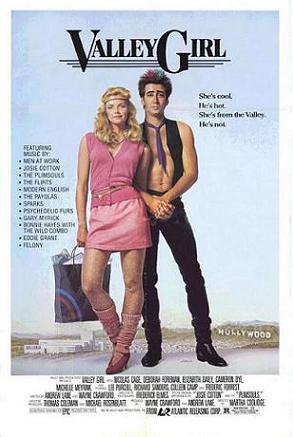
Valley_girl_posterI was recently apart of an interesting conversation about speaking styles. Robin, a frequent poster, mentioned that she mentors her students on speaking styles when they are practicing giving talks for conferences or for interviews. We were particularly discussing Up Talking. First, let’s define Up Talking. Up talking is when every sentence sounds like a question – even if it is a declarative sentence. Here is an example:

Regular declarative sentence: “The sum of the angles on a sphere is greater than 180 degrees.”

Now, restate the sentence with up talking: “The sum of the angles on a sphere is greater than 180 degrees?”

This speech pattern is often designated to young women – particularly teenagers. It is called up talking now, but when I was a kid, it was called a Valley Girl accent. In its native environment, it is often associated with a huge number of “ums” and likes,” as so, “Like, the sum of the angles on a, like, sphere, is um, like, greater than 180 degrees?”

Like Robin, I mentor my students about their presentation styles and specifically point out when they Up Talk. It is not just a plague of young women, I should note. I have met several male professors who Up Talk during regular conversations or during presentations. There are other things to keep in mind about presentations.

(1) Tone of voice. We just discussed Up Talking – don’t do it. Every fact should be declared, and the end of the sentence should go down in tone – not up like a question. You should also have a lower voice. Especially if you are in a male-dominated field – which is almost every field of science once you get to the professorial level – you need to speak with lower tones. Men have a harder time hearing higher tones. If your audience is mostly men, you want to be heard, so you should practice lowering your voice during speaking. Also, avoid too much “vocal fry,” the rasping vocalization that is now attributed to young women, too. I should note that some recent press has pointed that a little vocal fry helps women to lower their tones and be taken a bit more seriously. Hilary Clinton uses mild vocal fry to accentuate points with lower tones. If you are worried your voice will waver due to nerves, you just need to practice, practice, practice.

(2) Use of pointer. If you are nervous when speaking, your hands might shake. You should put two hands on the pointer to steady it. Also be careful not to point off the projection screen and not in the faces of the audience. Make sure you are pointing where you want the audience to look. If you cannot use the pointer well, it is better to not use it at all.

(3) Body movements and gestures. I am a really animated speaker. I gesticulate a lot with my hands and have been known to use my entire body to make a point about my science. I try to do at least one dance in each talk I give that illustrates my point. But, I try to not randomly pace back and forth. I try not to fidget too much. I want my gestures to have meaning for my presentation, and I try not to gesture for no reason.

Another good hint for presenting both in seminars and when teaching – go into the audience. I know it sounds strange, because there is this barrier between the speaker and the audience, but walking into the audience can connect you to the audience. It works very well during questions if you walk toward the person asking the question – into the audience if you can – it demonstrates a caring for their question and ideas. It shows warmth and respect, but you still command the presentation.

(4) Demonstrations and Active Learning. This sounds like I am talking exclusively about teaching, but I am not. If demonstrations and active learning can wake up an audience of students who might not want to even be there or listen to your lesson, think of how powerful it could be for a group of people already interested in the topic of your talk. At a recent SmallResearchConference, I gave a 20 minute invited talk. The 3rd of the day of 12 talks that ran from 8 am to 10 pm (with a long afternoon break). I used demonstrations and active learning techniques to engage the audience. I let them know what I was doing, and many loved the active learning aspects of the talk. I had a number of people ask me about best teaching practices afterward, and many loved the talk – even if they didn’t work on exactly what I did. One conference attendee came up to me and said, “I am from a SmallLiberalArtsCollege, and I use active learning in class. At first, I thought it was stupid to use it in a talk at a conference. But, you know what, I remember your talk better than any of the others. So, I think it is good to do.”

If you are giving a job talk, you should definitely do this. At many research universities, you don’t give an example teaching lecture, so your research talk must demonstrate how well you can teach as well as your past, present, and future research. Using demonstrations and active learning techniques will enable the interviewer faculty that you are good at presentation and will likely be a good teacher.

I am sure there are other things to consider, but this is what I thought of at first sitting. Post and comment to give more advice about best practices when presenting your work.

Uncomfortable Conversations

VibrationsOver the course of this semester, which is quickly careening to the end, I have had to have a series of difficult conversations with people. This is one of the toughest parts of running a research group, and it is a part of managerial skills that you do not get taught. So, how do you deal with these situations? I think these situations are somehow inflated for women managers. Is it because we are seen as mother-figures? Is it because we are supposed to be nicer than men? Are they, factually, the same for men and women, and women just inflate them in their minds?

Like many of us, I try to deal with these types of situations professionally and with kindness. One of the first times I had to have a truly uncomfortable situation was when I had to fire one of my first graduate students. This student was pretty much phoning it in. After leaving my lab, he joined another, bigger lab that could absorb this type of attitude. My small, nascent laboratory could not afford to have a lackadaisical researcher in the lab. After his first warning and subsequent failure to work properly, I had to let him go. The student was upset and actually cried. Yes, he was a man. Although I felt bad about having to fire someone, I am glad I did. It was the right decision for my laboratory. I was also to the point and clear with the student.

I want to be firm and not a bitch. I want to be caring, but not a push-over. It is a fine line. Also, I want my student to respect and listen to what I am telling them. Yet, because I am a woman and young-looking, I worry that sometimes they do not.

I find that these conversations go better when I am well-rested and clear-headed, but what if I am stressed out or, worse yet, hormonal? Once, when I was pregnant, I actually cried in front of a student while trying to have a difficult conversation. Embarrassing. But worse, I feel like it undercuts my authority. I don’t think it did in this case, but I was worried about it. I don’t think men have to worry about these things. It is particular to women.

So, do you have any tips for steeling yourself for difficult and uncomfortable situations? Please share them here!

Application Season: Advice on the PUI

Science on a Sphere exhibitThanks for this post on Primarily Undergraduate Institutions (PUIs)  – what they are and how to apply from an excellent WomanOfScience:

In honor of the most recently passing holiday (Halloween), I thought I would try to demystify the application process for tenure-track appointments at Primarily Undergraduate Institutions (PUIs). Over 85% of professoriate jobs are at PUIs, so more than likely and right about now, you are weighing your options and trying to decide if that second or third postdoc is right for you. I know that some people have a misconception about what it means to be a professor at a PUI, and I’ll admit my family does too. They think that professors at small schools don’t do research, they only teach and that they only have to work for 9-10 months of the year. This is just not the case! We do teach, we do research and we perform extraordinary feats of service. We just can’t usually do research at the pace of a research one school, or like we did when we were postdocs. At PUIs, we usually don’t have access to graduate students, lab technicians, or postdocs to run our labs while we teach. There are at least three tiers of teaching institutions and maybe more depending on whom you ask. Here’s the skinny on what I know…

There are the elite liberal arts colleges, where one teaches on average two lecture courses per semester, about 8 contact hours. At these schools, one is definitely expected to conduct research with students. There’s the middle-tier school where one has about 12 contact hours per semester. A typical schedule maybe split over some combination of one to two lectures, along with the labs associated with that lecture course and an advanced majors lab type course. There is still an expectation that one will perform some student-centered research. Here’s an option which might be a nice bonus if you are at an institution or in a department where they built-in research release time into their teaching load. This is the case at my institution. And then there is the high-contact-hour liberal arts college department. At these schools one is in contact with students for about 12-15ish hours. At these schools, there is not the expectation of research. Some professors have even told me that they are even discouraged from doing research. Here’s some application material to think about in preparation…

You will need, at the least, a curriculum vitae, a teaching statement, and a research statement, all wrapped up in a cover letter. Some schools will ask for names and contacts of references to phone later, others will ask for formal letter. Some will also ask for student evaluation forms or course material, as well. If you are going to a place where you are expected to start a new class, you should feel free to submit your syllabus along with any course outline or material you may have on hand.

Although the vita is pretty much self-explanatory, I will share with you a few tips to adjust your vitae depending on type of teaching institution you are going for. First of all remember to highlight your teaching. You should probably not really change the order from highlighting the research first, especially if you are applying to the upper-tier liberal art institutions. Just remember, “This group of schools really want good researchers who can learn how to teach.” Move the teaching sections right below your educational background. If you don’t have any teaching, which is pretty much a must have for the middle and lower tier school, you should try to highlight any TAing or guest lecturing you’ve done in the past. If you have been associated with any outreach, perhaps it can be mentioned there or if you’ve lead any activities. The biggest difference for the two resumes for elite and middle is that the closer the institution is to the elite schools, the more they will be interested in your research and deciding if it fits into their department. For the lower tier school, they want to see that you can teach and that you can hit the ground running. So make your resume reflect that.

The teaching statement should reflect that you’ve given some thought to teaching. It should show that you are conscientious and care about your students and it should convey how you intend to get this point across to your students. It’s basically a statement of how you teach, what techniques you use in your teaching (pedagogy), how you reflect and improved in your teaching, and perhaps a summarized list of your courses taught throughout your teaching career. I also like to include some statement about how I also use my lab to mentor and train students in research. If you have been asked to teach a new class at the institution you are applying to, I would integrate that into my teaching statement as well. You can also add any teaching ideas you would like to introduce or classes on the books you would like to teach from. This will show your diversity.

The research statement should reflect projects that are student centered.  Then you should introduce the reader to your line of research and detail, without being jargonny or overwhelming, noting the fact that the reader has a Ph.D. in your general field, but perhaps not in your specific topic. Use the opportunity to teach them about your research. Being careful to convey how you would interact with a student in your research group. If you have supervised or mentored any students’ prior, you should highlight your achievements. You should convey how students can access your work and list specific projects they can work on in your group.

The cover letter should tie your application together. It should highlight your activities from you resume, research and teaching statements. And most of all remember it has to speak for you to the application reader.

So get your interview suit cleaned and get ready to start interviewing. Carpe diem!

Thanks for this great post! Do you have suggestions for applying to PUIs? Comment or send a post!

Organizing Your Group: Training Students One at a Time is a Waste of Time

1114_universe-crop-500x416Earlier, I had some posts on organizing your research group (here and here) and mentoring students (here and here). I have mentioned that you can train students in a bootcamp setting.  Here, I will describe the general method of a bootcamp and the benefits of group training. I am happy to give our examples of specific topics I cover in my bootcamp, but you can probably think of your own for your own research group.

What is the Bootcamp? Each year, the same time of year that is convenient, I run a  5-day bootcamp to train students in all the activities of my lab (I do experiments, in case you couldn’t tell). The camp is set for 9am – 5pm Monday through Friday for one week. The number of contact hours in the week-long course in the same as those for a normal course for an entire semester. Thus, the students get a concentrated dose of lab training. We start with how to keep a lab notebook and go through all the important experimental techniques needed to work in the lab.

Some days end early, but others go late. No day is really 9am – 5pm. This is to teach them the lesson that science does not proceed 9-5. It is a strong lesson. The training includes basic bench work needed for the lab, performing certain routine tasks specific to our lab, and performing new experiments and data analysis.

Benefits to Students:  I train students in cohorts in the bootcamp – at least 3-6 at a time. This gives them a group of students who all went through the camp at the same time. I make it fun for them. I put them in groups. They work together in small groups to answer questions during morning “lectures”  and to perform experiments in hands-on afternoon “experiments.” I make t-shirts for each team. They typically have a theme – such as Scooby Doo – and each group is a different character and color. The over-sized t-shirts act as lab coats for the week.

After the students take the bootcamp, they are considered trained and ready to start their own research projects. They take off with a lot of confidence knowing how to work in the lab, who the people are who can help them, and having a set of students to turn to for simple questions (their cohort). The next year, students who are still around and took the camp already are welcome to join again, or serve as TAs to train the next cohort.

Benefits to Me: Saving time, saving money, saving effort. As the title says, training students one-at-a-time is a huge waste of time. By training many students at once, I save a lot of time. I found, when I first started my lab, that only 1 in 4 or 5 students would pan-out. Unfortunately, you never know who those students will be before you begin training. By training all the students at the same time, I make sure to train the good with the bad. I save money because I can properly and personally train the students, and don’t have to leave the training to others, who might miss things or miscommunicate. Sometimes the TAs say incorrect things, but I try to be around to correct them immediately, which teaches both the bootcampers and the TAs. I save money by not paying bad students who don’t want to stay and by having more-respectful students. Although, at first, only about 1 in 5 students stayed and was productive, I have found the bootcamp and the cohort to be a powerful tool for recruiting and retaining students in the lab. Students who weren’t sure about research in the lab, decided to stay after having a lot of fun in the bootcamp. Thus, I am actually able to recruit more and better students.

So, what about you? Are you still training students one-at-a-time? Is it hit-or-miss? Do you have additional activities or improvements to be added to the bootcamp idea? If so, post or comment!

Two Kids: One Pre-Tenure, One Post-Tenure

A story from another WomanOfScience. They are all different and illuminating. Why not share yours?

For me it worked well to have my children as a professor, one before tenure and one after tenure.

My HusbandOfScience and I lived together while I was in graduate school and he was a postdoc. Then he accepted a tenure-track position in a location where it was not possible for me to find a competitive postdoc, so I accepted a postdoc in another city and we lived separately for two years. If we had already had a child at that point (which we had considered doing), this would have reduced my postdoc options and limited my career (we would not have chosen to live separately after having a child). After two years of living apart, I started a tenure-track position in the same department as my husband.

It was difficult to decide when to have a child. I was already concerned about being viewed as a trailing spouse (I was the first woman hired into a tenure-track position by my department in 15 years). I waited a couple of years until I had a few students on track in my lab and I had been very successful at getting some grants and awards. I remember worrying about whether I would have morning sickness, since I was teaching an 8 am class, but luckily I had a very smooth pregnancy. At the time there was no maternity leave policy. My department head did not offer any help if the baby came before the end of the semester, and I was not confident enough to ask. I juggled childcare with my husband for the first few months, which reduced my research productivity for the summer. It would have been better for my career (and therefore for my department) to instead take this time from teaching, by giving me a teaching release in the following semester. My baby started fulltime in a great daycare center at 4 months, which was a huge relief from juggling too many responsibilities. An unexpected additional benefit was how much we enjoyed and learned from connecting with a community of young families.

I did not wait until after tenure to start trying to have a second child, but that’s how it turned out because it took a very long time to get pregnant. Since I almost did not succeed in having a second child, I think it’s important to tell people not to wait too long. Unfortunately, as far as I know, it’s impossible to predict how quickly your fertility will decline with age. There was still no maternity policy when my second child was born, but I had more confidence and a more understanding department head, so I negotiated a teaching release.  I’m pleased to report that my institution now has a generous maternity/paternity leave policy.

The disadvantage of having babies after being a professor was that the initial months before fulltime daycare were stressful, since I had professional responsibilities that could not stop (graduate students to mentor, etc). But there were great advantages – being able to afford high quality daycare that our babies/toddlers enjoyed, having a private office for breastfeeding and pumping, and having many job duties (writing grants or papers, preparing lectures) that could be scheduled at a time and place convenient for me.

Having children has certainly reduced the total time that I could spend on my career, but it has also been surprisingly compatible with being a professor. Perhaps I could have been more successful without this loss of time – or perhaps not, since I would not have been nearly as happy. I have no regrets about choosing to have children as a WomanOfScience.

Have a story to share?? Post or comment!

Tag Cloud