Helping the Minoritized Achieve in Academic Science

More than Resistance

A woman combatant in the French Resistance, ne...

A woman combatant in the French Resistance, near Chartres, in August 1944. (Photo credit: Wikipedia)

In my last post, I described a resistive load that women and minorities face in academia. I had two very interesting and insightful comments. Thanks for that. I would love for people to comment and keep the discussion going. Both commenters brought up something far worse than resistance to forward progress. They both mentioned sexual harassment and even abusive behavior.

Robin said:

The hardest thing for me to deal with in my faculty career, to be painfully honest, is not the occasional rejection of papers or proposals, not incompetent administrators or demands of unreasonable department chairs, not getting the cold shoulder from colleagues. It is facing the ugly reality that sexual harassment occurs on my campus. Even in the 21st century, older men too often attempt to use their power and authority to gain sexual access to younger women. I have seen with my own eyes the emotional and career damage that results and –even worse– the reluctance of the victims to report.

Women are not fragile flowers who need 24/7 body guards to keep us safe as we work alongside and under the supervision of men. But we do need a better means to stop the misbehavior of university faculty who misuse their power and authority in a way that threatens the well being of female students, postdocs and staff.

Perhaps this is not the kind of “resistance” you were thinking about, but I suspect that sexual harassment in the STEM workplace has affected more women than you might think.

Social Scientist said:

Needless to say, the system is deeply gendered and raced, and not unrelated to the sexual harassment that women continue to endure (see Robin’s comment). One of the eminent (male) faculty members in the BILU grad program I attended in the 70s actually invited a female classmate to join him and a group of male grad students in a gang bang (yes, his own words). Things are subtler now, but the attitudes of entitlement (and chauvinism, racism, misogyny, etc.) inherent in the system remain–in part because they’re shared by some of the non-white males who made it, because they’d rather try to feel like members of the club (even if they really aren’t, quite) than wannabes.

I would like to discuss strategies to deal with this type of thing. What do people recommend? I have recently written a post about harassment. And there was a good post of TenureSheWrote, too. Should female grad students and undergraduates to go to female faculty? That puts a lot of stress on the female faculty. What if the female faculty member is still pre-tenure and feels that she cannot speak freely without risking her career?  What is the faculty member is an older woman, but she is unwilling to listen? Are their organizations on campus that can assist? It would be helpful for readers to chime in with their ideas.

Oddly, just days after posting my original post about the SexualHarassingEmeritusFaculty, he died. Some senior members of the department decided to use faculty meeting time to have a reflection time for him. My HusbandOfScience emailed the entire faculty to ask how long the reflection time would take, because he would like to actively BOYCOTT the memorial service. I told several of my senior male colleagues that I would also be boycotting because of the Sexual Harassment this man imparted. So, I outed this harasser after death. It feels a bit unsatisfying, though. I should have done more.

Hope to hear from you. Post or comment! Click +Follow to get updates on this blog.
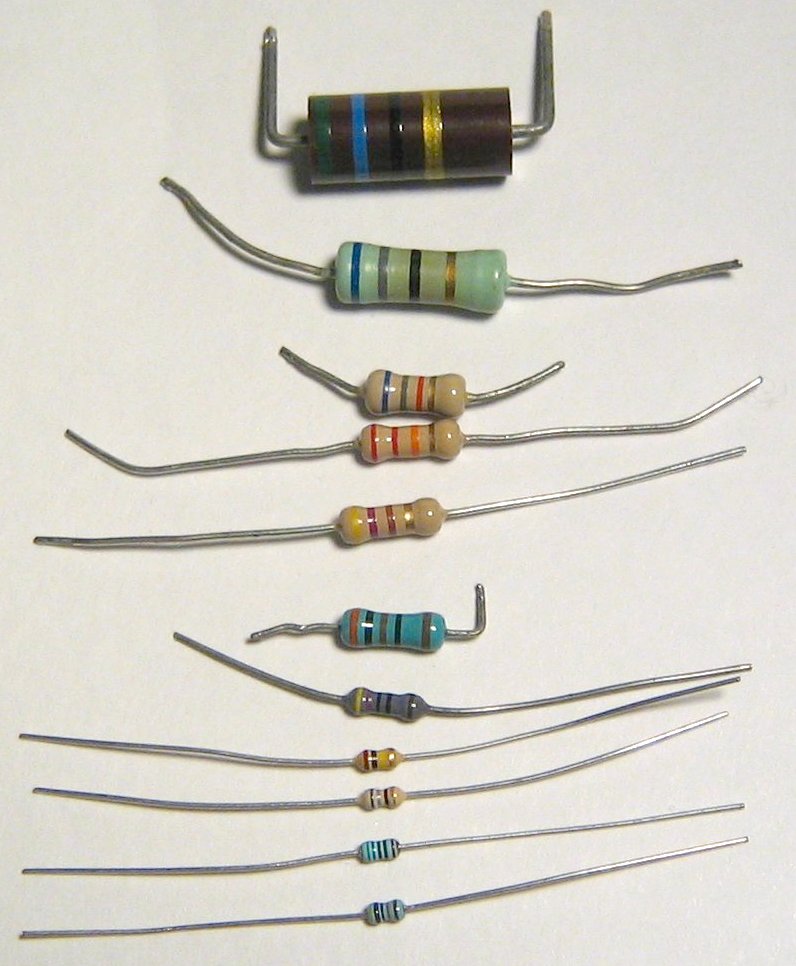
ResistorsAs I said earlier, I recently went to a BigIvyLeague University to give a talk, and I met with a group of young scientists – men and women – for lunch. The meeting turned into a mentoring meeting, as any meeting I have with young scientists tends too. As I said, there were two women postdocs, and we were discussing women’s issues. Another part of the conversation was about the impediments to advancement for women. Different people experienced the resistance at different stages, and this is normal since no two people’s trajectories will ever be exactly the same. Of the two women postdocs, one felt that she was being disregarded and put down even in graduate school. The other had a happy experience in graduate school, but was beginning to feel the resistance now as a postdoc. Of my WomanOfScience friends, many did not feel it until they got to a tenure-track job or even until after tenure. Myself, I had an 8th grade math teacher tell me that I could not advance more than a year in math. Perhaps my early exposure to the resistance is why I am so hyper-aware and intent on changing things.

Studies have shown that the glass ceiling for women in academia is at the full-professor level, as I describe and quoted primary research in this blog post. So, despite the onset age of the resistive load, the trend of the resistance, or other personal factors of each woman’s career, the highest resistance comes just at the precipice of really becoming a fully acting, voting, participating member of your department and college making similar wages as your colleagues. More on this issue in future posts, I think.

The main reason why I wanted to discuss the resistive load was because the meeting directly after the lunch, I met with a young, newly hired WhiteMale Assistant Professor. I had met this guy before at a small conference, and I knew he had been a postdoc at the same BigIvyLeague University where I was visiting, and where he was now tenure track. Some BigIvyLeague Universities do this, when the person is truly a superstar, so I assumed that this was the case, although I didn’t know his full record. This guy is young, and he was very open and honest when I asked him about his trajectory. He said that he had not had many other offers or even interviews, and that he was not, in fact, a superstar. The only places he had interviews were places where people already knew him. He said that this was because he had a low publication rate. Of course, BigIvyLeague University knew him, and his postdoc advisor was key to getting him this position. I consider this a gross case of “The Drift” where someone just continues to advance without any forethought or even any real effort. It is kinda like being in the lazy river at a water park. You get pushed forward.

I often see these people who appear to “Drift” in Second Generation Academics, whose parent(s) were also academics. Second Generation Academics are always typically extremely good at what they do, and in the meritocracy of academia  they advance seemingly effortlessly. In actuality, I think they just understand the game intuitively because they were raised in it, but they are good and working hard. Unlike a Second Gen Academic, this guy is an extreme version of a true Drift. He is literally coasting with no cogent plan. He isn’t applying to grants, or really trying to get students. He is trying to get a few more postdoc publications out because his publication record was reportedly slow.

The juxtaposition of this Drifter with the hard-working excellently bright, quick, and enormously put-down women of the lunch meeting was almost sickening to me. I was somewhat in shock as he told me his path and his non-existent plan. I would like to think that the system would weed this guy out, but given how far he has come, I cannot be sure. Being at a place like BigIvyLeagueU helps in so many areas, like getting good students and postdocs, getting grants, and having papers accepted based on BILU’s reputation. And the worst part was that I really couldn’t blame this guy. He is a nice guy. He is an open and honest scientist. So what if his publication record is slow? What boggles the mind is the system, the structure that promotes this guy and denies even better women and minorities the chance to  work in academia at SecondTierStateU without a hope of even getting to a place like BILU. Or, if you do get an offer at a BILU, they don’t have spousal accommodation, so you have to sacrifice other parts of your life for the benefits of BILU. Indeed, several women I met at BILU did just this.

This post has been long and rambling, so I apologize. These thoughts have been kicking around in my head, and I am not quite sure how to approach them to reconcile the fact that excellent women have so much resistive load against them. What do you think? When did you first feel the resistance to your forward progress? Do you know any female “Drifters”? Even the most excellent and well-promoted women I know really deserve it and still suffer from impostor syndrome, self-doubt, and are truly excellent yet still under-recognized. Post or comment here. Remember to hit +Follow for updates whenever I post. I hope to post more frequently now that classes have ended for the semester!

Better Self-Organization

2475011402_bf70c92575_o‘Tis the season… for writing a huge number of letters of recommendation. This is happy, but I am always worried that I will miss one and be the reason why some poor person didn’t get into UniversityOfTheirDreams. It is a big responsibility to be a letter writer, and I do not engage in this activity lightly.

Each student who asks me for a letter, I require them to send me a statement of their research and give me a CV or resume. This helps me to write a better, more informed letter. It is also the same as when I suggest that you prep your letter writers in previous post. You should always have a conversation and give them written information to help your letter writers.

I have also started something new this year to help keep myself organized: a list. This year, I am asking all  students who ask for letters to give me a list of the schools to which they are applying, so I can make sure I send them all. Most students were surprised that I asked for all this information. But, it is all part of my new leaf to be better organized.

My new organizational schemes have been working most of the semester, and I am happy to say. Another thing that I rehashed was to have a notebook I always have with to do lists and notes for work. Much like a lab notebook, which I was really excellent at retaining, this notebook has all my important information. This semester, I ticked off entire do lists. Sadly, as soon as one was complete, I was able to create a new list de novo from my memory entailing an entire page work of more “to dos.”

I have also started a spreadsheet for manuscripts to track their progress and what I still need to do. This idea came from another, very coordinated WomanOfScience. It is a little disheartening at first to see all the papers I need to work on laid out in their various states of incompleteness, but it is also good to see when they make progress. I am hoping to clear some into the submitted regime over winter break.

So, what about you? Any special organizational schemes to keep on top of your work? If so, please share.


Dear Sir

Power of WordsToday’s post is again about application season. It comes from another WomanOfScience, and discusses an issue of sexism that applications should consider when submitting materials for graduate studies, postdocs, or faculty jobs. Enjoy the post! Remember that you can follow this blog by clicking the +Follow button.

It’s academic job application season and search committees are busy poring over applications to find the best candidates. As a repeat member of my department search committees, I am always surprised at how many cover letters are addressed as, “Dear Sir,” or “Dear Sirs.” Is it so inconceivable that there are women on the search committee or should their input just be deliberately ignored? Does the idea of a woman evaluating your application fill you with revulsion or fear? This bad habit of addressing letters only to my male colleagues is especially ridiculous given the goal, or in some places, the mandate, of gender balance or proportional representation on search committees.

Do people write “Dear Sir” because it is tradition? There are many traditions we have abandoned because they are sexist or exclusionary, or just because there are better ways to do things. How many people addressing their cover letters with “Dear Sir” are still characterizing organic compounds with a continuous wave NMR? You perform up-to-date experiments and theory, why not update your attitude about letter writing?

You might say, well, how else to address a letter to a group of people who are unknown to you? Here are some options: Find out who the chair of the search committee is and address your letter to that person. Or address your letter as, “Dear Search Committee” or “Dear Colleagues.”

I regularly receive letters of application to work in my lab, which are addressed only to me, with the salutation “Dear Sir.” I am a woman. Those get deleted or recycled immediately. Why would I hire someone who is not observant enough to figure out I am female? That doesn’t exactly indicate future success in science. Furthermore, why would I hire someone so unprofessional as to address a letter clearly meant for one person, who is known, with a generic salutation like “Dear Sir”?

We have to stop thinking of the default scientist as male. To examine your own implicit biases, you can take the Harvard Implicit Bias test at: http://implicit.harvard.edu. We all have biases. To overcome them, we need to be aware of them.

I have colleagues who don’t read the cover letters, preferring only to count up publications and evaluate the research statement and reference letters. I read the cover letter first. Cover letters generally give the committee members a good sense of what the candidate is like as a person, what they value by what they choose to highlight and how they describe it. Unfortunately in the case of candidates addressing their cover letters as “Dear Sir,” the sense I get of them is easily summed up as: “sexist.”

So, what do you think?  Post or comment!

Mother holds Child

Mother holds Child (Photo credit: Wikipedia)

I was just visiting a nearby IvyLeageUniversity to give a seminar. I was asked to have lunch with students and sorta do a women’s mentoring lunch thing. I know some people find being asked to do these mentoring lunches strange or somehow unfair, but I don’t. There is no better way to change the social views of people than to convert the younger generations. We can talk more about this in other posts… but this post is about something that was brought up at the lunch.

Two of the lunchers were female postdocs who had children. They lamented that, even though they have husbands who could, and did, stay at home with their kids (awesome!) and/or their kids go to daycare, they feel *bad* about leaving their kids. I know exactly how they feel. In fact, just that morning, my child had a fever. I had already scheduled for several months to drive to IvyLeagueU, so I was not going to cancel. My HusbandOfScience took off the day to stay with our child – canceling all his meetings and getting someone to cover his class. My child was very sad when I left out the door. He was crying and wanted to hug me – a rare event since this child prefers Daddy. I felt very bad about having to leave and go to give this talk. Further, I also felt guilty about making my husband stay at home. I ended up leaving early to get back home – missing the opportunity to dine with my colleagues at ILU. This was an extreme circumstance, and has happened to male colleagues – in fact the man from ILU who invited me also left early when he came up to visit me at UofState. But, did he feel guilty about leaving early? Probably not.

In this post, I want to talk about why you should not feel bad about leaving your kids to have a career. In other posts, we can talk about the circumstances of having to stay home with sick kids and how you make those choices.

On a normal, daily basis, I don’t usually feel bad. I have several reasons or rationalizations to support my choice:

1. Daycare is better for my kids, personally. Just because you have kids and you are a smart person, say a Ph.D.-level scientist, does not mean you will be a good mother. Kids need different things at different stages of their development. I am not able to determine what I should be doing to educate my child at each of these stages. But, I send my child to a great daycare with awesome early-childhood educators that DO know what my child should be learning and working on. Thus, I feel like my children are better in the care of professional childcare experts, which I am not. Basically, the ability to have a child does not give you the power to be a great mom.

2. It is important to set an example. My mom worked full-time when I was a kid. I went to daycare, and I still knew my mom loved me and we had a lot of fun together. I know my mother felt guilty and bad about leaving us kids, but it turns out that she set a really great example for us. Because I knew she loved me and gave me a lot of attention, and was still able to have a career, I know I will be able to also be there for my children and also still have a career. In general, I feel like setting the example as a Career-Driven Mom is  important – especially for my own kids. I have a girl and a boy. For the girl, I hope to serve as an example for her personally. For the boy, I am hoping he brings home a significant other who is also a whole person.

3. Working moms are better for kids, in general. Recent studies have shown that children of working moms are just as emotionally healthy and capable as kids whose moms stay at home – if not more so (publicity with initial source material linked can be found here). I think these types of studies are important for women, who like my mom, felt a huge guilt about having a job. My mom made a lot more money than my dad and was in a technical field, although not an academic, so her working was essential for our family to have a good life – a house, cars that run, and the ability to move to neighborhoods that set us in good schools. By increasing the income level for our family, she set me up to have a better life – better access to education, which I fully utilized.

All choices in life require a cost-benefit analysis. For me, being a mom and having a career has way more benefits for my kids than costs. I spend time with my kids every day (as long as I am not traveling) and all weekend. The time is fun because I try to pay a lot of attention to them – and not work and especially not cleaning the house, etc… I hire people to clean the house and do the gardening, so I have more time with the family. We have more money to go on vacations and have a nice house in a good school district. I follow the principles set forth my by parents that the kids school and well-being takes precedent over my comfort. If I had to, I would drive 1 hour to work in order to live in a good school district. Luckily, I don’t have to.

So how do you feel? Do you feel guilty? Do you feel liberated? How can we all feel liberated? Post or comment.

Uncomfortable Conversations

VibrationsOver the course of this semester, which is quickly careening to the end, I have had to have a series of difficult conversations with people. This is one of the toughest parts of running a research group, and it is a part of managerial skills that you do not get taught. So, how do you deal with these situations? I think these situations are somehow inflated for women managers. Is it because we are seen as mother-figures? Is it because we are supposed to be nicer than men? Are they, factually, the same for men and women, and women just inflate them in their minds?

Like many of us, I try to deal with these types of situations professionally and with kindness. One of the first times I had to have a truly uncomfortable situation was when I had to fire one of my first graduate students. This student was pretty much phoning it in. After leaving my lab, he joined another, bigger lab that could absorb this type of attitude. My small, nascent laboratory could not afford to have a lackadaisical researcher in the lab. After his first warning and subsequent failure to work properly, I had to let him go. The student was upset and actually cried. Yes, he was a man. Although I felt bad about having to fire someone, I am glad I did. It was the right decision for my laboratory. I was also to the point and clear with the student.

I want to be firm and not a bitch. I want to be caring, but not a push-over. It is a fine line. Also, I want my student to respect and listen to what I am telling them. Yet, because I am a woman and young-looking, I worry that sometimes they do not.

I find that these conversations go better when I am well-rested and clear-headed, but what if I am stressed out or, worse yet, hormonal? Once, when I was pregnant, I actually cried in front of a student while trying to have a difficult conversation. Embarrassing. But worse, I feel like it undercuts my authority. I don’t think it did in this case, but I was worried about it. I don’t think men have to worry about these things. It is particular to women.

So, do you have any tips for steeling yourself for difficult and uncomfortable situations? Please share them here!

typewriter This topic came up recently on the Physics Forums site. A number of people responding said essentially what I have said here in the recent past in this post. You should make it about your research, but it should not be too personal about yourself. Online resources such as this one in The Guardian don’t make sense to me. I have a feeling that this is specifically for applying to undergraduate level in Europe and the UK. They have a very different situation – you must apply in your field, but you are also applying to undergraduate level, so they do want to know more about you. An undergraduate application essay is more personal because undergraduate admissions want to make interesting and well-rounded classes. Graduate schools in the US do not care to do that – except maybe trying to diversify with more women and minority students (hopefully).

As I said before, your application to graduate school is a professional application. Graduate school is a professional school.  It doesn’t matter so much to me when you got excited enough about science to want to do it for a living and go to graduate school. As one person writes on the Physics Forum, your interest in Prof. Proton as a child really has no baring on your success as a graduate student. Your success as a graduate student, and beyond grad school, are our only concern.

Here are some really good reasons why I don’t care about your personal reasons:

1. I should not care because it enters a bias. If one student says they have had a passion for science since they were 4 when they looked to the stars and wondered how many there were and how big the universe was, is that any meritorious than the person who didn’t realize it until high school? Or better yet, the person who entered college wanting to do history, fell in love with a science gen-ed course, changed tracks, took an  extra year to finish with a science major and now really wants to go to graduate school? The when you decided to devote your career and life to science does not matter. And it should not matter because I have no way to evaluate it objectively, so it isn’t even fair to put in. I usually just ignore it all together, trying to skip past until you get to the real information I need.

2. It wastes time and space you could be saying something real. By making your first 1 – 3 paragraphs about personal drivel that I cannot, by good standards of judgement, use to evaluate you for graduate school, you are wasting my time and your personal real estate in the statement. I have to spend time getting past it to the real information I need. You are wasting words from your word count to tell me things I don’t care about and cannot use.

3. Another indicator that it is not what you should do. In all my years serving on graduate admissions, no one has EVER said, “Well, this person has wanted to do science since they were in junior high, so we should accept him.” No one uses the information. In fact, it is often a source of negativity within the discussion. I have heard people say, “Not another one of these quotes! Did they at least quote a scientist this time?” or derisive comments about what the applicant writes. Again, this is not the best thing for YOU, the applicant, so why give them this information.

I hope this information is helpful to some of you preparing your applications to graduate school. I am serving on admissions again this year, so maybe I will read some of them myself. If I can even get one student to remove this useless personal information and give me what I really need, it will be worth it. Feel free to forward this post to your friends and colleagues. Make comments or post here or at the Physics Forum to continue the conversation.

Science on a Sphere exhibitThanks for this post on Primarily Undergraduate Institutions (PUIs)  – what they are and how to apply from an excellent WomanOfScience:

In honor of the most recently passing holiday (Halloween), I thought I would try to demystify the application process for tenure-track appointments at Primarily Undergraduate Institutions (PUIs). Over 85% of professoriate jobs are at PUIs, so more than likely and right about now, you are weighing your options and trying to decide if that second or third postdoc is right for you. I know that some people have a misconception about what it means to be a professor at a PUI, and I’ll admit my family does too. They think that professors at small schools don’t do research, they only teach and that they only have to work for 9-10 months of the year. This is just not the case! We do teach, we do research and we perform extraordinary feats of service. We just can’t usually do research at the pace of a research one school, or like we did when we were postdocs. At PUIs, we usually don’t have access to graduate students, lab technicians, or postdocs to run our labs while we teach. There are at least three tiers of teaching institutions and maybe more depending on whom you ask. Here’s the skinny on what I know…

There are the elite liberal arts colleges, where one teaches on average two lecture courses per semester, about 8 contact hours. At these schools, one is definitely expected to conduct research with students. There’s the middle-tier school where one has about 12 contact hours per semester. A typical schedule maybe split over some combination of one to two lectures, along with the labs associated with that lecture course and an advanced majors lab type course. There is still an expectation that one will perform some student-centered research. Here’s an option which might be a nice bonus if you are at an institution or in a department where they built-in research release time into their teaching load. This is the case at my institution. And then there is the high-contact-hour liberal arts college department. At these schools one is in contact with students for about 12-15ish hours. At these schools, there is not the expectation of research. Some professors have even told me that they are even discouraged from doing research. Here’s some application material to think about in preparation…

You will need, at the least, a curriculum vitae, a teaching statement, and a research statement, all wrapped up in a cover letter. Some schools will ask for names and contacts of references to phone later, others will ask for formal letter. Some will also ask for student evaluation forms or course material, as well. If you are going to a place where you are expected to start a new class, you should feel free to submit your syllabus along with any course outline or material you may have on hand.

Although the vita is pretty much self-explanatory, I will share with you a few tips to adjust your vitae depending on type of teaching institution you are going for. First of all remember to highlight your teaching. You should probably not really change the order from highlighting the research first, especially if you are applying to the upper-tier liberal art institutions. Just remember, “This group of schools really want good researchers who can learn how to teach.” Move the teaching sections right below your educational background. If you don’t have any teaching, which is pretty much a must have for the middle and lower tier school, you should try to highlight any TAing or guest lecturing you’ve done in the past. If you have been associated with any outreach, perhaps it can be mentioned there or if you’ve lead any activities. The biggest difference for the two resumes for elite and middle is that the closer the institution is to the elite schools, the more they will be interested in your research and deciding if it fits into their department. For the lower tier school, they want to see that you can teach and that you can hit the ground running. So make your resume reflect that.

The teaching statement should reflect that you’ve given some thought to teaching. It should show that you are conscientious and care about your students and it should convey how you intend to get this point across to your students. It’s basically a statement of how you teach, what techniques you use in your teaching (pedagogy), how you reflect and improved in your teaching, and perhaps a summarized list of your courses taught throughout your teaching career. I also like to include some statement about how I also use my lab to mentor and train students in research. If you have been asked to teach a new class at the institution you are applying to, I would integrate that into my teaching statement as well. You can also add any teaching ideas you would like to introduce or classes on the books you would like to teach from. This will show your diversity.

The research statement should reflect projects that are student centered.  Then you should introduce the reader to your line of research and detail, without being jargonny or overwhelming, noting the fact that the reader has a Ph.D. in your general field, but perhaps not in your specific topic. Use the opportunity to teach them about your research. Being careful to convey how you would interact with a student in your research group. If you have supervised or mentored any students’ prior, you should highlight your achievements. You should convey how students can access your work and list specific projects they can work on in your group.

The cover letter should tie your application together. It should highlight your activities from you resume, research and teaching statements. And most of all remember it has to speak for you to the application reader.

So get your interview suit cleaned and get ready to start interviewing. Carpe diem!

Thanks for this great post! Do you have suggestions for applying to PUIs? Comment or send a post!

1114_universe-crop-500x416Earlier, I had some posts on organizing your research group (here and here) and mentoring students (here and here). I have mentioned that you can train students in a bootcamp setting.  Here, I will describe the general method of a bootcamp and the benefits of group training. I am happy to give our examples of specific topics I cover in my bootcamp, but you can probably think of your own for your own research group.

What is the Bootcamp? Each year, the same time of year that is convenient, I run a  5-day bootcamp to train students in all the activities of my lab (I do experiments, in case you couldn’t tell). The camp is set for 9am – 5pm Monday through Friday for one week. The number of contact hours in the week-long course in the same as those for a normal course for an entire semester. Thus, the students get a concentrated dose of lab training. We start with how to keep a lab notebook and go through all the important experimental techniques needed to work in the lab.

Some days end early, but others go late. No day is really 9am – 5pm. This is to teach them the lesson that science does not proceed 9-5. It is a strong lesson. The training includes basic bench work needed for the lab, performing certain routine tasks specific to our lab, and performing new experiments and data analysis.

Benefits to Students:  I train students in cohorts in the bootcamp – at least 3-6 at a time. This gives them a group of students who all went through the camp at the same time. I make it fun for them. I put them in groups. They work together in small groups to answer questions during morning “lectures”  and to perform experiments in hands-on afternoon “experiments.” I make t-shirts for each team. They typically have a theme – such as Scooby Doo – and each group is a different character and color. The over-sized t-shirts act as lab coats for the week.

After the students take the bootcamp, they are considered trained and ready to start their own research projects. They take off with a lot of confidence knowing how to work in the lab, who the people are who can help them, and having a set of students to turn to for simple questions (their cohort). The next year, students who are still around and took the camp already are welcome to join again, or serve as TAs to train the next cohort.

Benefits to Me: Saving time, saving money, saving effort. As the title says, training students one-at-a-time is a huge waste of time. By training many students at once, I save a lot of time. I found, when I first started my lab, that only 1 in 4 or 5 students would pan-out. Unfortunately, you never know who those students will be before you begin training. By training all the students at the same time, I make sure to train the good with the bad. I save money because I can properly and personally train the students, and don’t have to leave the training to others, who might miss things or miscommunicate. Sometimes the TAs say incorrect things, but I try to be around to correct them immediately, which teaches both the bootcampers and the TAs. I save money by not paying bad students who don’t want to stay and by having more-respectful students. Although, at first, only about 1 in 5 students stayed and was productive, I have found the bootcamp and the cohort to be a powerful tool for recruiting and retaining students in the lab. Students who weren’t sure about research in the lab, decided to stay after having a lot of fun in the bootcamp. Thus, I am actually able to recruit more and better students.

So, what about you? Are you still training students one-at-a-time? Is it hit-or-miss? Do you have additional activities or improvements to be added to the bootcamp idea? If so, post or comment!

Back in the Saddle Again

Saddle

Saddle (Photo credit: Wikipedia)

All of us, for some reason or another, have to take a hiatus from traveling, networking, or some of the other parts of our jobs. Coming back can be a challenge. I think many women, especially if they have tenure, take a big reduction in traveling once they have kids. Sometimes it can be difficult to get back in the saddle of long-distance traveling after a long time away. Plus, being away from kids can be sad if it you haven’t been away from them much.

Here is one woman’s story of getting back in the saddle. Enjoy!

I was really divided over whether or not to come to an international meeting, because I didn’t know that many people on the schedule, and honestly I was a little scared. I think everyone thinks I am good at schmoozing, but I had cut down travel so much the last few years that I am out of practice. I haven’t been out of the US/Canada since 2005 — I forgot to bring a European power adapter, felt very stupid and had to buy one at the airport. I was tired and jet-lagged the whole time I was there. I was also feeling really shy — I feel that I look so much rounder in all my business clothes after having kids. I didn’t know that many people at the meeting, and it was mostly really old guard white guys. Many of the participants were from Europe and were used to a more hierarchical academic system, and I forgot that many of those kinds of guys treat me like an infant.

Even worse, I was missing the kids so much that I didn’t feel like talking about science much. I ended up talking about the kids a lot whenever I tried to schmooze.  One of the few people I knew at the conference was a guy of whom I think as a mid-career mover and shaker. I just assumed that he was very well-connected — he’s done well in his career, he’s very friendly and gregarious, he’s gotten some awards, and he’s already on some editorial boards. We ended up eating many meals together, and surprisingly, he told me that he does not like travel much. He usually just goes to society meetings, and has never been to a Gordon Conference. He also told me that he is not good with strangers, and that he was missing his family a lot, also.

So it got me thinking. Maybe not everyone is traveling and schmoozing as much as we imagine they are, while we stay at home turning down invitations and cleaning up baby vomit. And maybe things have changed enough that, once we are done cleaning up baby vomit and are ready to get back in the saddle again, we’ll find that people are more accepting than we think.

Another good thing came from this meeting. I got an invitation to be on an editorial board from the trip, and I think we will have an invited article out of it, also. So it’s been a real positive, even beyond the “international invited talk” on the CV.

My impression is that this WomanOfScience is very brave and good things resulted, so congratulations to her! Any stories of getting back out there? Fears, concerns, or stories of bravery and success? Comment or post.

Tag Cloud