Helping the Minoritized Achieve in Academic Science

Archive for the ‘Mentoring’ Category

Negotiations

NegotiationsA former student of a colleague was coming back to visit and brought some great news. He had landed a big fancy-named fellowship and a job offer. He started asking me questions that one has when put into a new situation – a rare situation – negotiations. He was at the negotiations stage. This is something that you don’t get to do very often, and thus, none of us are all that practiced at it. I have had a couple older posts about negotiating (Everything and Practice and StartUp).

One of the interesting things I noticed was that this student had not received much help from his advisors about how to go about the job search nor about negotiations. As I kept giving him advice on this and that, much of which was covered in the previous posts, he was very enthusiastically eating it up. It felt good to mentor this student to whom I thought I could have offered nothing.

As I was recently traveling, I had many conversations with other WomenOfScience that I do not usually get to interact with. One was a woman who did a particularly spectacular job at negotiating her first position, so we discussed some tactics and of negotiation. Although she negotiated everything from salary to office furniture, she warned against looking greedy and being too picky. She suggested that one strategy is to prioritize your request list. For instance, equipment for your experiments is likely to be crucial. Money for people is probably essential.

As I think back on my own original negotiations, I know I did things wrong the first time. I was very bad at negotiating my salary. I knew it was important, but I felt like I was negotiating my husband’s salary and his whole job, and I shouldn’t look too greedy (see previous post on solving the Two-Body Problem). I think not negotiating my salary at all was a mistake. Even starting a few $1000 ahead would have been better. I think this is very typical for women. Further, society tells us that women who ask for more money (even equal pay) are greedy and that is somehow less tolerable in women than in men. Men who ask for more money are not as likely to be thought of as greedy. There is some advice I have heard recently that I think is good to help overcome this: When you need to negotiate for more money – don’t think you are negotiating it for yourself, but rather for your family. You need more money so that your family has a better life. I think that would have helped me. Your salary is for your family to make sure they can live comfortably while you are busting your hump getting tenure – make sure you frame it that way in your mind.

I didn’t have any trouble negotiating for what I needed for my lab, because it was, in effect, not just for me, but also for the department and the lab, which is bigger than just me. If I could have framed some of the other aspects – salary and other personal needs – in a bigger context, I think I would have been more successful negotiating for those things.

What do you think? Any advice or suggestions to help others negotiate better? Post or comment. To get emails whenever I post, push the +Follow button.

Industrial Story – Part 2

GoodSenseCorsetWaists1886page153And now the thrilling conclusion to the previous story…

A female Ph.D. friend in the company told me that if I wanted to escape from the anger (which was getting to be a regular experience) and the permanently low pay, I needed to switch managers.  She also explained that Dr. Jekyll had been removed from management roles in multiple companies because of his poor performance.  The fact that his only report (me) was trying to leave would be particularly upsetting to him.

It took me more than six months to act on my friend’s advice.  Leaving Dr. Jekyll’s team meant leaving research and development.  Opportunities for first-authoring a paper with exciting new results would pretty much disappear.  Returning to academia would be much harder.

On the other hand, the economy wasn’t in great shape at the time.  I didn’t know of any opportunities outside the company.  Plus, my field is quite small.  I wanted to “clear” my good name.

Note: I’ve since switched subfields.  I use the my science and knowledge from my “Dr. Jekyll” period but no longer interact with any of the people from this period in my career.  It would probably have been wiser to start fresh with a new team rather than sticking around to prove myself.

One day, Dr. Jekyll flat-out accused me of having a male colleague generate for me all of my results from the prior two weeks. I had worked long hours and weekends to get these results for an external deadline.

I finally relented to my friend’s recommendation that I go to Dr. Jekyll’s boss and request a transfer.   She also recommended I ask that Dr. Jekyll not be told of the transfer until right before.

Dr. Jekyll’s boss was understanding, but said that Dr. Jekyll should know about my request to leave his team.  “We’re all adults,” I thought, “Why not tell him I’ve asked for a transfer?”

I will never forget the next meeting with Dr. Jekyll. He said:

  1. I don’t think you belong at this company, but I can help you find another job elsewhere as your friend.
  2. You don’t belong in science and engineering as a career choice
  3. Have you just stuck with this engineering thing because your father is an engineer?

Unfortunately, this meeting was also my annual merit review.  I was told that because so many of our projects had been cancelled, I didn’t really “get anything done” that year.  What’s really crazy is that after this nasty meeting, he fought to keep me from transferring out of his team for months.  Yet he also continued to repeat to me that I didn’t belong in science and engineering as a career choice.  I was wise enough not to respond to most of his remarks.  I did, however, ask him point-blank to stop saying such unprofessional things to me.  He said no, that I needed to hear “the truth.”  I had to go above his head again and tell his peers and boss about his abusive words to get out of his team.

The worst part about all this was that I was so alone.  When I talked with other engineers about my work, Dr. Jekyll accused me of wasting their time “getting help.”  When I actually asked them for help, he said they were “doing my work for me.”  As a result of this and the lack of female peers, I had cultivated little in the way of a social network within my department.

Note: Gender is a stronger determinant of friendships in the corporate world than age, race, or ethnicity.  Having guy friends wasn’t as effortless as it was in grad school.  I’ve since taken initiative to develop friendships with my mostly older, married male colleagues, but I usually have to work harder at them.

It didn’t help that Dr. Jekyll was strikingly kind, witty, and personable in public.

I once stopped to chat with the head of HR moments after leaving a particularly unpleasant one-on-one with Dr. Jekyll.  “You work for the nicest man in the company!” she said to me as I blinked back tears.

I’ll never know how much my gender had to do with this experience.  Dr. Jekyll occasionally made sexist remarks.  He told me I was “no good with mechanical things” despite the fact that I had successes in projects involving complicated “mechanical things.”  One of the only times Dr. Jekyll praised me was with “women are such great communicators!”  He also tried to give me social event planning tasks I associated more with administrative assistant than engineering responsibilities.  But the sexism was never more overt than this.

Note: My next manager told me that my communication style was my greatest weakness, which seemed like a fair assessment.  To date, I’ve heard Dr. Jekyll utter more sexist remarks than all the other people I’ve met in corporate settings combined.

After my transfer, I suffered for a couple more years. My new team was very pleasantly surprised at how productive I was given what Dr. Jekyll had said about me.  However, because of the way the ranking and raise system worked, I continued to be paid and ranked less than what my new managers thought was fair.  I eventually had to get an external offer to get to salary parity.

Dr. Jekyll never got another direct report after I left his team.  Two years after I left, I finally got the top ranking in a department-wide performance review.  I started hearing Dr. Jekyll say to other managers around this time what a great engineer I’d always been.  I was stunned the first time I heard it – this was most certainly not what he had been saying about me when I reported to him.  It sounded to me like his mis-representing of my work may have become uncomfortably transparent to the rest of the department.

I later met another person who had worked for Dr. Jekyll before me.  I found out that this person, too, had been isolated from colleagues and then “sold up the river” by Dr. Jekyll to make himself look less bad.  Apparently Dr. Jekyll had told outright lies about this individual that could have lead to a termination.  I was relieved to  hear that I wasn’t alone, and it all really wasn’t my fault.

I’m now at a new company making over three times what I made as a new hire into industry.  I’m being paid well more than the average male Ph.D. with my level of experience.  I got the job mostly through studying material from grad school and rehearsing for months, and in small part through recommendations by college friends.

Conclusions:

    • Build your network:
      • I got my first industry job offer through a connection.
      • I thought I was trapped working for a bad boss because I didn’t know of other opportunities outside my company.
      • I got out of the bad boss situation through advice from a colleague.
      • I got a new job with a kick-ass salary mostly though hard work but partly through friends.
    • If you find out your boss is blaming you for big things that aren’t your fault, start looking for a new job ASAP.
    • If you encounter anger when asking for a raise, think about whether there isn’t some lower-hanging fruit elsewhere.
    • Don’t directly criticize your boss’ pet project, even if it’s doomed.
    • Be very cautious about publicizing plans to leave before the move is final.
    • Fantastic career advice on handling bad bosses and navigating the professional world in general can be found at manager-tools.com

Thanks so much for the story! I think I speak for everyone when I say, I am happy the ending was positive, because the last post was very sad and scary. So glad that this WomanOfScience got out of that horrible situation and was able to get the credit and pay she deserved! Post or comment! You can get an email every time there is a new post by pushing the +Follow button.

Getting It All Done

TimeManagementv2In science, there is a lot to be done. When you are an undergraduate, you had problem sets, lab reports, maybe even a capstone to complete. You were maintaining your grades while having some fun and doing some extracurricular activities. As a graduates student, you passed classes, TAed, performed novel research, became the world’s expert in your exact experiments, perhaps organized some science-related on-campus activities, attended conferences, made posters and talks, wrote papers and a thesis, and got a postdoc. As a postdoc, you juggled multiple projects, learned new techniques, wrote proposals for fellowships, mentored graduate students and undergraduates, perhaps juggled multiple mentors, wrote papers, edited papers, edited theses, attended conferences, networked, gave talks, wrote papers, applied to jobs, interviewed, got a job, and wrote papers.

Now, as a faculty member, your job tripled because in addition to doing all the stuff above, you are now having to manage other people (posts), get enough funds to support other people (write grants, see post), teach courses (perhaps some that you never took yourself, see post), work on service for the department and college (post), and take on larger and larger service roles for your scientific community. Each of these has a huge number responsibilities and components to it, and could be a job unto itself. So, how do you do everything?

I have had some posts about starting a new job here and here, but at the beginning, the job isn’t as much. It definitely ramps up over time. I have one post that is good for helping to organize yourself over a yearly time frame, but there is also something to be said for a monthly or weekly schedule that is conducive to getting everything done. One extra issue with academia, is that your schedule changes throughout the year depending on when you are teaching, what you are teaching, who is in your lab, and other what naught. I will give some examples of weekly schedules that worked well for me over the years, in a hopes that they will help you to organize your schedule, too.

Example 1 – 10am class for 1 hour. Several semesters, I taught at around 10am for about an hour three days per week. This time slot was pretty close to ideal, which is probably why they are so popular in the schedule. The students were awake, I had time for last minute prep before class, and I took the entire morning for “teaching.” Here is how I actually arranged my schedule. On the days I was teaching, I got in around 9am and did some last minute psyching up for class, making sure I had demos, and my computer was set up. I would print off and make copies of anything needed for class. I would go 15 minutes early to the classroom to set up projectors and demos and also talk to students as they came into the lecture hall. After teaching, I would go to the gym for an hour to get exercise and decompress after teaching. After the gym, I would shower and go to lunch. I would spend the afternoon working on leftover class stuff, like scanning and posting my notes or homework solution sets, office hours, and meeting with students. On the other days, I would try to take the entire day for writing grants and papers. In the evening the day before I would teach, I would spend a couple hours in the evening re-writing my lectures.

Example 2 – afternoon lab course. Other semesters, I taught afternoon lab courses two times per week for several hours in the afternoon. Lab classes take less preparation because there are not lectures to make up. I usually try to keep all the teaching stuff on the same day, so any preparation, photocopying, or equipment set-up that I might need to do would be done in the morning. Again, the other days are reserved for research. I would also try to go to the gym first thing in the morning on research days before going into work but after getting the kids to school. Sometimes working out was a great way to kick my brain into gear and get it working for the rest of the days on research days.

The key to all of these ideas is to give myself the time I need to do what I need to do. I block out full days for research and I do not allow committee meetings to be made on those days. The days I teach classes, I put other meetings and office hours, so that it is all on the same day. Although I have been failing recently, I also try to get to the gym 3 days per week. Also, I eat lunch with friends almost every single day, and I try to sleep 7-8 hours per night.

Also, none of this includes any family stuff, which happens outside of 9-5. But, here is the key, by giving myself time for stuff like rest and the gym, I have some slack that I can take up with family stuff happens. The week when the baby has a fever and he has to stay home, I cut out gym and some other stuff so that I can still get the important stuff done take the time I need to be with the baby at home. (My spouse and I split days off with sick baby, and negotiate which days/times we can be home. We often don’t schedule important, non-rearrageable meetings at the same time not he same days, so we can do this. We have a joint-shared set of calendars.) If my time is already stretched to the breaking point, a sick kid or other family emergency will wipe me out. If I am giving up going to the gym for a week, so I can get more research done, it isn’t as bad.

So, what do you think? Do you have a way to arrange your time that enables you to get it all done? Post or comment. You can receive an email every time I post by pushing the +Follow button.

Bullying Backfire

bullyFor the past several years, the topic of bullying has been hot in the media. Most people, especially nerds, realize that bullies have always been there. Although academia is supposedly some liberal bastion of cushy touchy-feely softies who “can’t do,” so they teach, it is actually full of bullies. Those nerds who were bullied most as young people are the most likely to bully others in the future. It is a cycle of abuse that is disturbing. It doesn’t help that many of the people in academia are not good communicators and can often be stubborn and unyielding in their emotional ideas. All of these circumstances lead to a high amount of workplace bullying. In addition to sexual harassment that is still pervasive, the more subtle workplace bullying by chairmen, peers, or even students can make women and minorities feel bad about their job and abilities.

Currently, UState is requiring a workshop on Workplace Bullying. Based on what I discussed above, this would seem like a great idea, right? Ironically, these workshops appear to have a backfire effect. What I mean by this is that known bullies are coming out of the workshop convinced that they are being bullied themselves. Mostly, they are claiming to be bullied by the very people they are bullying! Why is this happening? Because the bullies and the bullied are in fact having a disagreement. Unfortunately, the inept abilities of most scientists to communicate mean that the more aggressive person comes across as a bully. The less aggressive person seeks relief, help, or just a chance to gripe, and they are branded as talking behind someone’s back, forging alliances against the other person, or just a troublemaker. In the new definitions of bullying, these defense mechanisms are also a form of bullying.

In talking to my female peer-mentors, it seems like most women coming out of the workshop think to themselves, “Oh no, I have been inadvertently bullying someone. I need to try to adjust my way of acting.” On the other hand, many men have come out saying, “OMG, I am being bullied by everyone.” I think it would be interesting to perform a follow up survey to see if it the reaction to the workshop aligns with gender. There are always exceptions, I am sure, but my hypothesis would be that women are more likely to be introspective about the workshop. This is what I mean by a “Bullying Backfire.” The bigger a bully someone is the less likely they are going to see themselves as the bully, and the more likely they are to see how everyone else is bullying them. In my opinion, this is part of the mentality of a bully – to blame others for your problems.

So, how do we respond to bullying? Once we identify it occurring, we can only change our own actions toward others. Is it possible to change the actions of others who are bullying us? It is worse when you are a graduate student being bullied by your advisor, or an assistant professor being bullied by a senior faculty member? Do you act like the “bigger man,” and just pretend it doesn’t affect you? That can backfire, too. Especially if your bully is trying to tear you down and make you feel bad on purpose.

Popular culture tells me to stand up to bullies, and I have been accused of being brave. I am not sure if I am brave or just really stupid, but surviving can be a sort of standing up for yourself. I certainly did stand up to bullies in high school, and I fought back. I was protected by my honor-student status against being sent to detention or being suspended. I was able to fight back immediately at the time, and move past my bullies.

Now, revenge may need to be placed on the back burner and served cold. Much like my honor-student status, one can always overcome and get back at your science bullies through your science-cred. See, in science, she who has the best publication track-record laughs last. At the end of the day, if you have better, more publications, you will get more respect than your bully. I have done this with several of my science bullies. It takes having a long-view, because it is not a quick solution. So, sometimes I just keep my head down and move my science forward and try to ignore my bullies. Obviously, this only works if your bully isn’t seeking you out to suck up your time.

All this being said, it is absolutely essential that you have a support network to help you handle these situations. You need a good partner to listen and offer sympathy. You need a peer network, or group, to offer advice, consolation, and cheer-leading about how great you are. Most people will not admit this, but you probably also need a therapist. In all the times when I had to deal with a bully, I sought out a therapist to talk to on a weekly, or every-other weekly basis. These people are not in science, necessarily, but they can give you can outlet to gripe, a confidential confidant, and someone to help with people-solutions.  I am not ashamed to say I have been in therapy numerous years over my life, and I am a more well-adjusted, and better person for having done it. Younger generations of people do not see it as a stigma, but as a means to help to deal with difficult people. Older generations often see it as a signal that you are “crazy,” but the only crazy thing is to not use every option in your reach to deal with these problems.

So, what do yo think? Are you being bullied? Is it persistent? Or sporadic? Comment or post. You can follow the blog by pushing the +Follow button.

Conference Thoughts

2475011402_bf70c92575_oAs I am sitting in a session at the world’s largest conference in MyFieldOfScience, I am thinking about conferences. I am thinking about how important they are for your career in a lot of ways. For those of you who recently joined the blog (thanks for following!), you may have missed some previous posts about networking. I had one about general networking and another on networking on campus, which are both super important for getting tenure, getting jobs and just good for your career. Conferences are key for networking, being seen, and building your mentoring and scientific connections vertically and horizontally. I have come to the realization that networking is basically “professional flirting.” You can chat about science, but most convos are about family, travel, weather, grants, clothes, students, jobs, or whatever. Academic life has other aspects that we can talk about too. I had a great conversation about teaching and how to teach 400+ effectively with a colleague from another university.

Another thing conferences are great for is energizing your science. When I was young, and I think this is the case for my students, I loved going to conferences because it gave me confidence that people were actually *interested* in my science. I was able to talk about my work, have some people listen, and get validation that what I was doing was of worth. Further, seeing the work of other people that was similar to my own made me feel like I had a community of scientists who were interested in the science. Conferences re-energized me and made me look forward to working on more science and getting my work published.

Now, my science gets energized, but in a different way. Now, I look around and say, “Oh crap, we are more behind than I thought! Everyone is doing the cool experiments I thought of but haven’t gotten off the ground yet!” This is both bad and good. First the bad. It is scary to compete with your science against other groups that are better funded, have more students, and might be ahead on the same ideas you have. Also, I am so so crappy at hiding my science. I cannot keep secrets about the cool stuff we are doing. In some fields, telling people what you are doing helps to mark your territory. In others, it can be giving them the keys to all your best ideas. I have to be careful, but I can’t help but be communicative, open, and excited about our newest stuff. It might hurt me sometimes, but in the long run, I would rather collaborate than compete.

Now the good. Much like when I was young, seeing all the great stuff my colleagues are doing that is similar to my own work can be energizing and maybe even light a fire under your ass to get going. Further, it helps you to focus. If you had an idea to do X experiment and you see it done (probably slightly differently) at a conference, you can refocus your idea to probe the still open questions. Another good thing about people working on similar stuff – it shows your work is hot, important, and in fashion. As in other realms (like fashion) styles change, but if you are hitting hot you have a better chance of getting high profile publications and getting noticed.

So, those were my thoughts about conferences. What do you think? Post or comment here!

Attributes of Scientists: Perseverance

Christabel_PankhurstI am currently at a fantastic meeting for Undergraduate Women of MyFieldOfScience. I was brought across the country for this event, and today I am giving a talk on my research with some background information on myself. I love these events! The undergraduate women, who are uber-underrepresented in MyFieldOfScience, are so excited to be here. Once you group 10-20 schools worth of women together, it is a lot. Women who are isolated or the only woman in their department can connect with their peers. It is wonderful, and I am excited and honored to serve as their mentor for this short time.

Throughout the meeting, there has been a theme that has clearly emerged to me. Several of the speakers and students have described their perseverance within science, or that perseverance is a key attribute they look for in applications to REUs or graduate school. I was thinking about it, and it is really true. Although, sometimes I might call it stubbornness or pigheadedness, and it can backfire in those forms resulting in close-mindedness. But perseverance is a better term and has a slightly different meaning. It reminds me of Madame Curie’s struggle to discover radium (for a funny post on Madame Curie from another Awesome WomanOfScience, go here).

So, here is one story from me about perseverance. It is about how I got to this meeting for undergraduate women in MyFieldOfScience. It is meant to be funny, and just be a silly example of the stuff scientists will put themselves through to fulfill a promise. Enjoy.

This story starts on Wednesday morning. It was like any other Wednesday morning except the baby was sleeping in. I have two kids – elementary age and toddler age – and we still call the toddler the baby, because he will likely always be the baby. Now, the baby doesn’t sleep in. In fact, the baby usually wakes up far before I want. But today, was different, and the brief reprieve of his late slumber was making our morning cyclone a bit calmer.

I almost was worried I would have to wake him, when I heard his lovely WAIL, and I made him a bottle and was bringing it to him. When I turned on the light, I realized he had puked all down the side of this crib as he was standing over the railing crying. This kicked the morning cyclone up a notch to Kansas Tornado that Brought Dorothy to Oz level. One of us was cleaning the baby and stripping him down while the other was stripping the bed and wiping it down.  And now we were worried. What was this puke about? Was he sick with a stomach bug? Or did he just cough too much and make himself throw up? Or did he swallow too much snot, the evidence of which was still sluggishly dripping from his cute little nose, and that upset his tummy. After the ruckus, he asked for a bottle, and kept it down, he had no fever, so we assumed something besides sickness had caused the puke. We took him to school and they admitted him, despite our story of puke. Hooray for our daycare service – they are the best!

Unbeknownst to us, the puke cleaning job was infecting us with a stomach bug that was biding its time to strike. On Thursday night, my husband got hit. He was up all night evacuating his insides. Most of this I had no idea of, because we have both learned to sleep through quite a bit of noise and motion with two kids.  I was set to fly across the country, and felt totally fine. I woke at 4am, showered, and got out the door for a day of flying and uninterrupted writing time (I love that you can work uninterrupted on airplanes – no meetings, no phone calls, just you and your computer).

During my 4 hour layover, it hit me. A nauseating feeling in my stomach. No, I thought, I can’t get sick. I am already traveling. The second flight offered me a much needed afternoon nap in the *most comfortable of positions* with my mouth drying out as it hung slack jawed while my head was jammed against the window. I woke to the upset stomach and started downing the antacids I always carry when I travel – just in case – and getting a ginger ale from the flight attendant. I was able to ignore the stomach ache while working, and got a bit done. I felt like Patrick Dempsey in Outbreak in the airplane scene (They didn’t have an internet picture of Patrick Dempsey with a sickly sheen and coughing, and I didn’t want to buy Outbreak, just so I could screen capture that image, so here he is playing with the monkey infected with the Ebola virus or whatever):
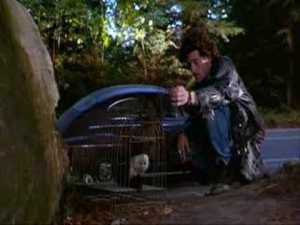
Dempsey

Luckily, I didn’t actually look like him. Nowadays they won’t let you on the plane if you are sick. Anyway, the stomach thing got worse, but I persevered. I went to dinner. I talked to students. I made jokes. I got into a playful argument with a ManOfScience over whether one should clean your own toilets, or pay someone else to do it, provided they have the money. He thought people should clean their own toilets, and I thought you should pay someone to do it, so you could spend more time with your family having fun. I wasn’t as upbeat as I usually am, but I put on a good face.

It all came down after I got back to my room. I slept upright trying not to puke all night. I felt strangely normal around midnight and was able to sleep for 5 hours when I was woken by my intestines bubbling back into my stomach making me queazy and burpy. These are ominous signs. At 7am, I puked. I puked hard. I have puked enough times to know by now that holding your hair is secondary to holding your nose when you puke. No one ever talks about it, but hard puking makes it spray out of your nose cavity, too, and you have to hold your nose to block that passage. (Helpful tips on puking from your local scientist.) I got puke all over my pajamas. It was nasty. I did feel a a lot better after puking up what looked like last night’s dinner and yesterday’s lunch from my layover airport. How does the body do that?

I bagged my puke clothes, showered, got dressed, and prepared for the day. I went to the hotel lobby, and worked with them to figure out how to get my clothes laundered. The hotel is run by students, and they were not sure it was possible, but after some pleading and creative problem solving on my part, they figured it out, so that I would have clean PJs by 7pm. Note to people who don’t yet travel too much:  Hotels can do lots of stuff. You have to ask, but they will often do it. It sometimes comes with a price. I was willing to pay as much as $50 to get this stuff laundered in a hurry. It ended up costing 15 minutes and $3.

Day 2 was much better, although I was still sick. I ate and kept it down. I mingled, I served on a panel about REU programs. I submitted some letters of recommendation and tweaked my talk based on the format others were presenting. I went to dinner. And this is how sickness spreads across the country. It was holding steady in my state and now I have brought it across the country to another state. I try to be good and wash my hands, but I cannot know who I infected. So I apologize, in advance, to the bright, motivated, young Women of MyFieldOfScience that I probably infected on this trip. Yet, I persevered, and you will too.

So, should I have canceled? Should I have turned around at my layover when it was clear where I was heading with this illness? It would have saved some other people a 24-hour bug, but I made a promise to be there, and I want to help mentor this lovely, bright, smart, wonderful generation of Women of Science. I would make the same choice again. What do you think? Post or comment. You can follow this blog by pushing the +Follow button, and you will get an email every time I write a new post.
The Best Way to get Copies of Funded Grants…and the Worst Way

PikiWiki_Israel_9290_Gan-Shmuel_-_girls_in_class_1952In the vein of writing, writing, writing, which is the quote on my office door for the past 4 weeks, I thought I would post a piece from another woman of science. This one is about the true first step in any writing process – getting examples. For writing manuscripts, getting examples is easy. You just read a lot of published papers and try to emulate their style (especially clear and nice papers). For other types of writing, getting examples can be more difficult, or downright hard. Perhaps one of the most important types of writing we do in academic science is grant writing.  My advice is always to get examples. Today’s guest post is about how to go about getting examples… and how not… Enjoy!

You’re a brand-new assistant professor, or you’re applying to agency to which you’ve never applied for funding. Where to start? Examples of successful applications are some of the best ways to figure out how to structure your application and to tailor your application to a particular agency or foundation. Where to get them?

Start with your formal and informal mentors. Ask them if they have examples of recent successful applications, or unsuccessful applications if they are willing to share them and to discuss why they think they were unsuccessful. Ask your collaborators and departmental colleagues if they have been funded by the organization you are targeting. Ask them if they know anyone else who has. If that fails, or in addition to those opportunities, most organizations post the names of those they have funded. I recommend looking at that list and finding anyone with whom you have a connection—you were both once at the same institution, you have friends or collaborators in common, anything. Then, contact those people one by one, pointing out your common links to help establish a connection. In addition to really recently funded projects, you might also want to target people who were funded a few years ago, especially if you don’t know them well. With such “older” projects, the work is likely to be well underway and the PI is less likely to feel vulnerable sharing their nascent work. When you send that cold email, state clearly and at the beginning why you are writing, point out your connection, and assure them that you understand that you are requesting a confidential document and you will not share it.

If you can’t find anyone with whom you have a connection, just try asking. You can say something like, “I am planning to apply to X organization. I am looking for examples of successful proposals to this organization and noticed that you are funded by them. Congratulations! Would you mind sharing a copy of your funded proposal or even just some sections of it with me? I understand that this is a confidential document and I will not share it with anyone else.” Sometimes what you really want is an example of a specific type of required abstract or section of the proposal, so just ask for that. Most people remember what it is like starting out in their academic careers or applying to a new agency and are willing to help. Most people are also flattered that you’ve noticed their funding success, which will likely make them more willing to respond to your request. However, everyone is busy and inundated with requests, so allow plenty of time and if you don’t hear anything, ask again in a week or two.

Proposals that have been funded by the federal government are available through the Freedom of Information Act (FOIA). This should be the last resort for obtaining a copy of a proposal. Exhaust your other options first, including cold-calling (emailing) multiple people. Just asking people for what you want will almost certainly yield results, and probably much faster than a FOIA request. When you submit a FOIA request, that request along with your name is sent to the PI. Science is a small world and like other professions, much of your professional success will depend on relationships you build with others. If you receive a FOIA request for one of your funded proposals, this will likely bring to mind several questions, like: why didn’t this person just ask me for the proposal? The proposal probably would have been shared and the requester would have received it faster than waiting for the FOIA request to be processed. The proposer might have removed some sections with personal information or work that is still preliminary, but they might at least attempt to do that anyway in responding to the FOIA request. Some personal information is removed automatically by the agency, too. Then one wonders, what is this person’s agenda? If the requester is another faculty member, are they intending to pursue research that I proposed? If the requester were a private individual, corporation, or certain type of foundation, those suspicions about an underlying agenda would have been even deeper. In general, if someone asks me directly for a copy of my proposals, I send the requested information and offer to read a draft of the requester’s own proposal to try to offer feedback. By submitting a request through a third-party, the requester likely misses an opportunity to build his/her professional network.

Good advice! What do you think? Share in a post or comment. You can follow this blog by pushing the +Follow button and typing your email address. I will try to get back on the blog-writing wagon as I come down from the manuscript/grant writing one.

Writing Letters of Recommendation

Power of WordsSorry for the delay in posting, but grading, the holiday, and trying to get a paper submitted caught up with me. I just had an email asking for mentoring on how to write letters of recommendation for graduate admissions and REUs and even a few for faculty jobs. After answering that email, I had a lot of fodder for a post, so here it is. Think of this as a possible outline for how to write a letter of recommendation. Hopefully it will help make sure we are including everything we should to give a complete picture of the student for the recommender. I am sure I am missing something from here, so please add any other suggestions for important parts or items by comment or post!

1. Use letterhead. Is this obvious? Maybe, but it is probably still worth mentioning. Best to make up a letterhead in Word or LaTex with the school seal and your information instead of trying to print onto letterhead. Also, it is good to have a scan of your signature to add to the bottom.

2. Introduction. Like other forms of writing letted of recommendation need an introduction. An obvious way to write is to introduce yourself and say you are excited to write this letter of recommendation for Student X. Then, you can say in what capacity you know student X: as the research advisor, as the student’s instructor in a course? as some other type of mentor or advisor? You should probably also say how long you have known the student in this capacity. Some of my research students were also students in the courses I have taught, so I  have to describe both.

If the student is from a class you taught, describe the class. Was it required for the major? Was it an advanced elective? Was it a lab course that would showcase research skills? What was the level of difficulty of the course?

If the student was a research student in your group, describe the research of your lab in general.

3. The student’s performance. In the second paragraph, I describe the performance of the student in the capacity that I know them. For a course, I list the student’s ranking in the course (i.e. “this student was in the top 3 of the 53 students in the course, earning 93% of the total points for the course”). For many of my students, I have interacted with them personally in class, in homework sessions (office hours), and outside of class activities. I describe the student’s  hard work, dedication, and scientific ability and intelligence, as I saw it from these interactions. I use specific examples to make my points and as evidence for my opinions. For instance, I might say, “Student Y had exceptional ability in the course, which I noticed during in class small group work and during homework sessions. In particular, Student Y was the first one to complete assignments and was often able to describe the solution clearly to her classmates to enable them to learn the material, as well.”

For a research student, I describe the student’s specific research project in the group in my words. The student should have also described their research in their own words, and these two descriptions should match up, more or less. The student’s description is often less precise than mine, but it is important that the person reading the recommendation has an idea of what the student was meant to accomplish. As for a student from a course, I describe the student’s work ethic, dedication, and scientific ability to do research using specific examples to back up my personal claims about the student. This is easy for a successful student who has a publication or has attended a national meeting and presented there, as there is direct evidence of success in research that is verifiable. For students who are not quite at that level, I use examples from the lab where I interacted with the student to demonstrate the student’s abilities. Why use examples? Our only way to assess future performance is based on past performance, at this point.

Interestingly, recent studies have shown that personality tests or “employment tests” can accurately assess a person’s ability to do a certain job (see recent story from NPR). As far as I know, these tests have not been tested for success in graduate school in science, but it would be an interesting thing to look at – maybe some Discipline Based Education Researcher should test this out? The benefit of these tests is that they remove inherent biases of “knowing someone who knows someone” and biases against certain genders and races. Kind of like when they started doing blind auditions for orchestras and realized that women and minorities can play just as well as white dudes. Also, these don’t have the same issues as Subject GREs, which are terrible for women, minorities, and people from SmallLiberalArtsColleges. Just FYI.

4. Personality and Social Skills. For each student, I try to describe the personality traits of the student that demonstrate an ability of the student for the position being applied for. I also point out the other non-scientific skills the student possess that will make him/her successful at the next level. Some important personality traits include: work ethic, perseverance and determination, follow-through (completing tasks), anxiety, niceness, etc. Some examples of important social skills include: ability to work in groups, ability to learn from mistakes, ability to take direction, ability to express oneself  in oral presentation, ability to write scientifically, ability to represent data graphically, ability to lead and mentor others. I know that some people shy away from discussing personality, or only discuss it for females and not males, but I include it for all because it is an important consideration when hiring or bringing in someone. If their personality is not a good fit, the person may ultimately  fail even if they are the smartest person in the application pool. Fit is important and social skills are important – not just if the person is a genius.

5. Personalization for each school. Some people think this is ultra important. But, if you are like me, and you have 4-5 students applying to 20 graduate schools each, that is way, way too much work. I might personalize a few if I particularly know people at the school, but for the most part, I just make it general. For faculty positions I always personalize every letter, and it takes forever, but you have to do it.

I am sure there is something I usually add, but haven’t included here. So what did I forget? Post or comment to fill in the gaps.

Express Yourself: Giving Good Presentations

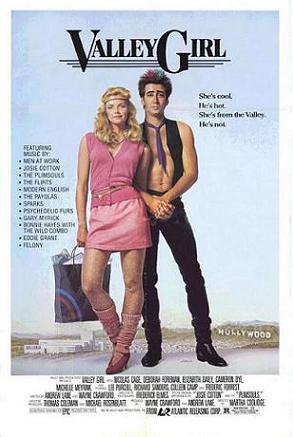
Valley_girl_posterI was recently apart of an interesting conversation about speaking styles. Robin, a frequent poster, mentioned that she mentors her students on speaking styles when they are practicing giving talks for conferences or for interviews. We were particularly discussing Up Talking. First, let’s define Up Talking. Up talking is when every sentence sounds like a question – even if it is a declarative sentence. Here is an example:

Regular declarative sentence: “The sum of the angles on a sphere is greater than 180 degrees.”

Now, restate the sentence with up talking: “The sum of the angles on a sphere is greater than 180 degrees?”

This speech pattern is often designated to young women – particularly teenagers. It is called up talking now, but when I was a kid, it was called a Valley Girl accent. In its native environment, it is often associated with a huge number of “ums” and likes,” as so, “Like, the sum of the angles on a, like, sphere, is um, like, greater than 180 degrees?”

Like Robin, I mentor my students about their presentation styles and specifically point out when they Up Talk. It is not just a plague of young women, I should note. I have met several male professors who Up Talk during regular conversations or during presentations. There are other things to keep in mind about presentations.

(1) Tone of voice. We just discussed Up Talking – don’t do it. Every fact should be declared, and the end of the sentence should go down in tone – not up like a question. You should also have a lower voice. Especially if you are in a male-dominated field – which is almost every field of science once you get to the professorial level – you need to speak with lower tones. Men have a harder time hearing higher tones. If your audience is mostly men, you want to be heard, so you should practice lowering your voice during speaking. Also, avoid too much “vocal fry,” the rasping vocalization that is now attributed to young women, too. I should note that some recent press has pointed that a little vocal fry helps women to lower their tones and be taken a bit more seriously. Hilary Clinton uses mild vocal fry to accentuate points with lower tones. If you are worried your voice will waver due to nerves, you just need to practice, practice, practice.

(2) Use of pointer. If you are nervous when speaking, your hands might shake. You should put two hands on the pointer to steady it. Also be careful not to point off the projection screen and not in the faces of the audience. Make sure you are pointing where you want the audience to look. If you cannot use the pointer well, it is better to not use it at all.

(3) Body movements and gestures. I am a really animated speaker. I gesticulate a lot with my hands and have been known to use my entire body to make a point about my science. I try to do at least one dance in each talk I give that illustrates my point. But, I try to not randomly pace back and forth. I try not to fidget too much. I want my gestures to have meaning for my presentation, and I try not to gesture for no reason.

Another good hint for presenting both in seminars and when teaching – go into the audience. I know it sounds strange, because there is this barrier between the speaker and the audience, but walking into the audience can connect you to the audience. It works very well during questions if you walk toward the person asking the question – into the audience if you can – it demonstrates a caring for their question and ideas. It shows warmth and respect, but you still command the presentation.

(4) Demonstrations and Active Learning. This sounds like I am talking exclusively about teaching, but I am not. If demonstrations and active learning can wake up an audience of students who might not want to even be there or listen to your lesson, think of how powerful it could be for a group of people already interested in the topic of your talk. At a recent SmallResearchConference, I gave a 20 minute invited talk. The 3rd of the day of 12 talks that ran from 8 am to 10 pm (with a long afternoon break). I used demonstrations and active learning techniques to engage the audience. I let them know what I was doing, and many loved the active learning aspects of the talk. I had a number of people ask me about best teaching practices afterward, and many loved the talk – even if they didn’t work on exactly what I did. One conference attendee came up to me and said, “I am from a SmallLiberalArtsCollege, and I use active learning in class. At first, I thought it was stupid to use it in a talk at a conference. But, you know what, I remember your talk better than any of the others. So, I think it is good to do.”

If you are giving a job talk, you should definitely do this. At many research universities, you don’t give an example teaching lecture, so your research talk must demonstrate how well you can teach as well as your past, present, and future research. Using demonstrations and active learning techniques will enable the interviewer faculty that you are good at presentation and will likely be a good teacher.

I am sure there are other things to consider, but this is what I thought of at first sitting. Post and comment to give more advice about best practices when presenting your work.

The Resistive Load vs. the Drift

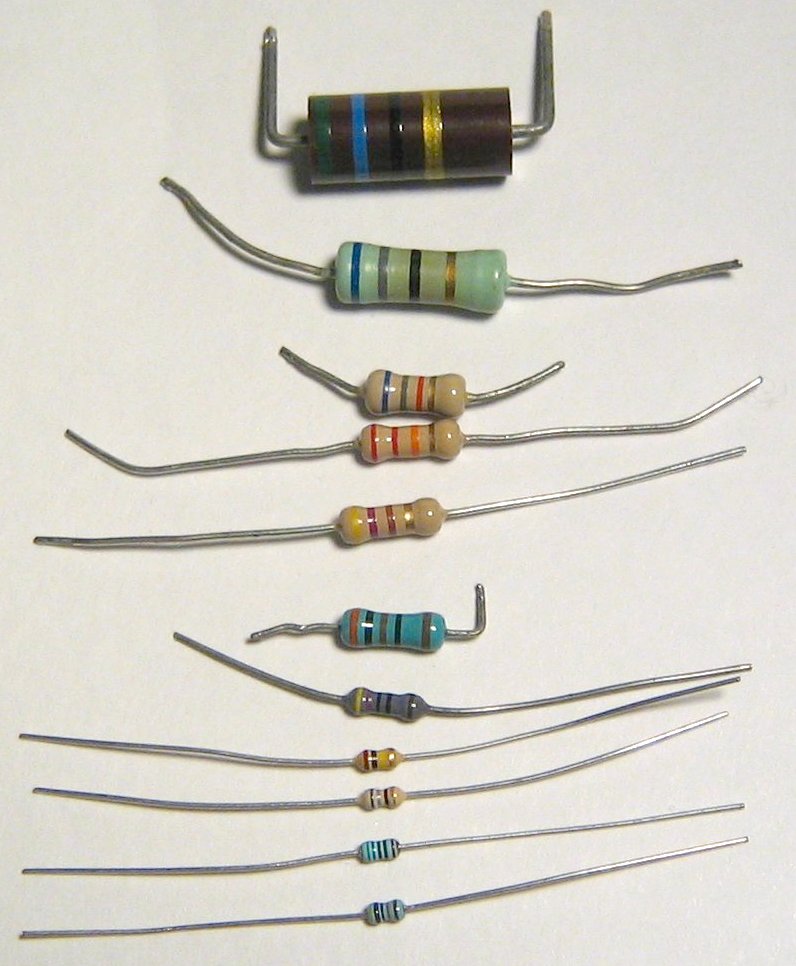
ResistorsAs I said earlier, I recently went to a BigIvyLeague University to give a talk, and I met with a group of young scientists – men and women – for lunch. The meeting turned into a mentoring meeting, as any meeting I have with young scientists tends too. As I said, there were two women postdocs, and we were discussing women’s issues. Another part of the conversation was about the impediments to advancement for women. Different people experienced the resistance at different stages, and this is normal since no two people’s trajectories will ever be exactly the same. Of the two women postdocs, one felt that she was being disregarded and put down even in graduate school. The other had a happy experience in graduate school, but was beginning to feel the resistance now as a postdoc. Of my WomanOfScience friends, many did not feel it until they got to a tenure-track job or even until after tenure. Myself, I had an 8th grade math teacher tell me that I could not advance more than a year in math. Perhaps my early exposure to the resistance is why I am so hyper-aware and intent on changing things.

Studies have shown that the glass ceiling for women in academia is at the full-professor level, as I describe and quoted primary research in this blog post. So, despite the onset age of the resistive load, the trend of the resistance, or other personal factors of each woman’s career, the highest resistance comes just at the precipice of really becoming a fully acting, voting, participating member of your department and college making similar wages as your colleagues. More on this issue in future posts, I think.

The main reason why I wanted to discuss the resistive load was because the meeting directly after the lunch, I met with a young, newly hired WhiteMale Assistant Professor. I had met this guy before at a small conference, and I knew he had been a postdoc at the same BigIvyLeague University where I was visiting, and where he was now tenure track. Some BigIvyLeague Universities do this, when the person is truly a superstar, so I assumed that this was the case, although I didn’t know his full record. This guy is young, and he was very open and honest when I asked him about his trajectory. He said that he had not had many other offers or even interviews, and that he was not, in fact, a superstar. The only places he had interviews were places where people already knew him. He said that this was because he had a low publication rate. Of course, BigIvyLeague University knew him, and his postdoc advisor was key to getting him this position. I consider this a gross case of “The Drift” where someone just continues to advance without any forethought or even any real effort. It is kinda like being in the lazy river at a water park. You get pushed forward.

I often see these people who appear to “Drift” in Second Generation Academics, whose parent(s) were also academics. Second Generation Academics are always typically extremely good at what they do, and in the meritocracy of academia  they advance seemingly effortlessly. In actuality, I think they just understand the game intuitively because they were raised in it, but they are good and working hard. Unlike a Second Gen Academic, this guy is an extreme version of a true Drift. He is literally coasting with no cogent plan. He isn’t applying to grants, or really trying to get students. He is trying to get a few more postdoc publications out because his publication record was reportedly slow.

The juxtaposition of this Drifter with the hard-working excellently bright, quick, and enormously put-down women of the lunch meeting was almost sickening to me. I was somewhat in shock as he told me his path and his non-existent plan. I would like to think that the system would weed this guy out, but given how far he has come, I cannot be sure. Being at a place like BigIvyLeagueU helps in so many areas, like getting good students and postdocs, getting grants, and having papers accepted based on BILU’s reputation. And the worst part was that I really couldn’t blame this guy. He is a nice guy. He is an open and honest scientist. So what if his publication record is slow? What boggles the mind is the system, the structure that promotes this guy and denies even better women and minorities the chance to  work in academia at SecondTierStateU without a hope of even getting to a place like BILU. Or, if you do get an offer at a BILU, they don’t have spousal accommodation, so you have to sacrifice other parts of your life for the benefits of BILU. Indeed, several women I met at BILU did just this.

This post has been long and rambling, so I apologize. These thoughts have been kicking around in my head, and I am not quite sure how to approach them to reconcile the fact that excellent women have so much resistive load against them. What do you think? When did you first feel the resistance to your forward progress? Do you know any female “Drifters”? Even the most excellent and well-promoted women I know really deserve it and still suffer from impostor syndrome, self-doubt, and are truly excellent yet still under-recognized. Post or comment here. Remember to hit +Follow for updates whenever I post. I hope to post more frequently now that classes have ended for the semester!

Tag Cloud