Helping the Minoritized Achieve in Academic Science

Archive for the ‘Career’ Category

How to Write About How Awesome You Are

1160px-Eleanor_Roosevelt_receiving_the_Mary_McLeod_Bethune_Human_Rights_Award_from_Dorothy_Height,_president_of_the_National..._-_NARA_-_196283I have said previously (a long time ago now, actually) that awards are important and publicity in general is essential (awardspublicitypublicity). When I wrote those original posts, I have recently gone through the tenure process. I was thinking about how you needed to publicize yourself to ensure that your letter writers can speak well about you. But, as you go along and get older, publicity is still important. Remember, being a PI is like being a pop star (PI Pop Star), you need to stay relevant and go on world tour to make sure your science is being heard. In that vein, getting awards is still important. Unfortunately, as I have said previously, once you get tenure, mentoring seems to more or less end (end of mentoring). That means that you probably have to try even harder to get nominated for awards. Further, since you no longer need mentoring or support, many people won’t even bother to write you their own letters. You will likely have someone request that you draft the nomination letter or letter of support for the award. This is for two reasons: (1) People are busy and we are getting busier every year, so providing the letter is essential. (2) You actually know all the great stuff about yourself way way better than anyone else. When people ask you to write your own letter, they often are thinking it will be better for you – especially if they are someone you do not know all that well. I recently did this to someone. I felt bad, but the letter this awesome WomanOfScience provided was way way better than anything i could have written.

So, the question remains: How do you write a letter about yourself? How do you nominate yourself for an award? What is you have to write letters from multiple people and make sure they are different enough? Obviously, you expect people to edit the letters, but in case they don’t?? Below, I give my advise:

Drink alcohol and get a bit tipsy before you start. This will help to lower your inhibitions about things, especially about talking about yourself. OK, I get that not everyone drinks, but what I am really saying is try to get to a less inhibited state. Our self-inhibitions make it really difficult to talk about ourselves in the awesome light you deserve. WARNING: Do not get drunk. You will get sleepy and actually do nothing. Just get tipsy.

Open your most recent and updated CV.  Do not use a biosketch! A biosketch is just that – a sketch – you should have a long CV. If you do not know what should be in your long CV, click here: Your CV. OK, now that you have your CV open (an updated) do the following:

Make a list of all your awesomeness in all categories: research, teaching, mentoring, service to field.  Now, what of these things would this person for whom you are writing the letter, know about? How would they know? What example can you provide that verifies the awesome attribute you are trying to write about? For instance, if you are trying to say you are creative, give an example of a particular time when someone could have observed your creativity. If you are trying to say that your work is paradigm-shifting, cite a particular paper or topic that is paradigm-shifting. What have you done for education or mentoring that goes above and beyond?

Stick to important things. I would not discuss how hardworking you are. You are not trying to get into grad school or a postdoc. You are trying to get an award. Awards are given for being smart – a genius even. I KNOW! This is so hard! Because (1) society tells us that women cannot be geniuses, (2) what does it even mean to be a genius?, and (3) even geniuses probably don’t think they are geniuses. Presumably as soon as you think you are a genius, you probably stop pushing yourself. That is why winning the Nobel Prize of Field’s Medal too early in your career is the kiss of death for your career. Think about someone in your field who you think is awesome. What would you write about them? Can you say anything similar about the same attributes about yourself?

Multiple letters. If you have to write multiple letters from multiple people:

(1) Pick a few things you think every single letter must highlight. Make sure that goes into all letters.
(2) Pick 1-2 important things that it would be reasonable for each of the people to know about you. For instance, if someone is from your home dept, they might know more about your teaching and mentoring activities. They could comment more on that. If another person is a big mucky-muck in your field, they should stress your research and your service to the field. More than one person can talk about these extras, but make sure it is reasonable. For instance, a big muckety-muck in your field won’t know about your mentoring per se. But, they might know you taught at a cool summer school or something that is higher profile teaching.

Have someone who is good at promoting others read it after you. Hopefully the person you are giving the letter to can do this. But, just in case, see if someone else can read it and help out.

Submission. When you send the letter to the person who is supposed to have written it, also send your complete CV. If they want to pick and choose a few extras, they can. They will have to submit the letter themselves, or the nominator will, so make sure they have all the information they need about how and when to submit it. You don’t want to lose out because they didn’t push the button in time!

Try again and again. Will you win every award? No. You do not get every grant awarded, and you will not win every award. But, your chances of winning are zero if you do not get nominated. There is NO DOWNSIDE to being nominated! People see your CV. They see people care enough about you and your work to nominate you. People will get to know your name. Even being nominated is actually great. Plus, awards committees often complain that very few qualified and excellent women are nominated. This is code for ZERO women who are qualified for the award are nominated. Yes, we have an uphill battle to win awards – especially awards where we are competing with men. Study after study show that women are always seen as less competent. Yet, we have to keep pushing and trying. We have to put ourselves out there. If enough of us are nominated (more than one woman), they will have a very hard time justifying only giving awards to men. When only one woman is nominated, it is easy to write her off. But, if 20, 30, 50% of the nominees are women, they will have to give it to a woman more often!

What do you think? Are there any more helpful hints about how to do this? If so, post or comment here. To get an email every time I post, push the +Follow button.
Criticism – Take it

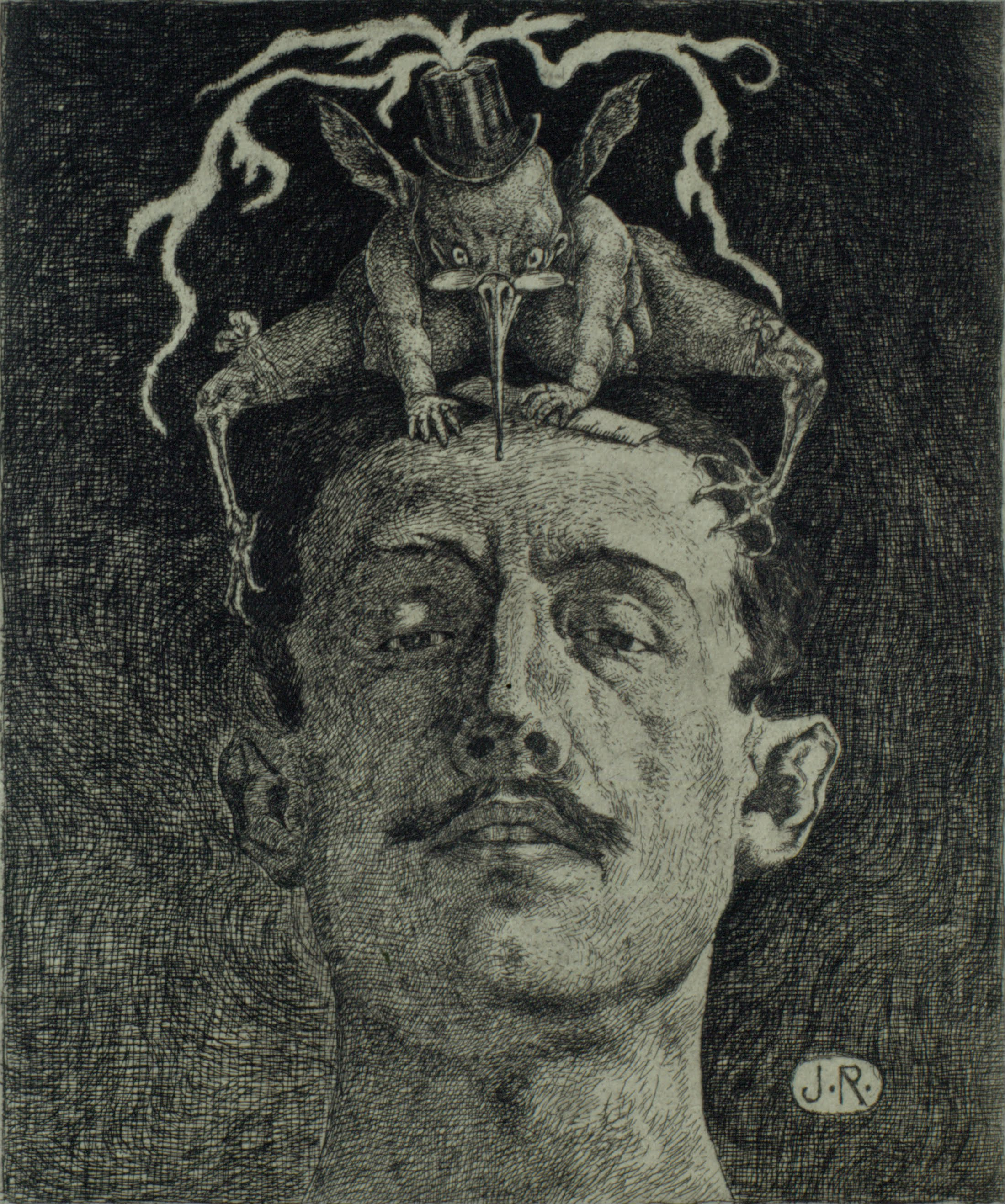
Julio_Ruelas_-_Criticism_-_Google_Art_ProjectI was chatting a few months ago to a AllyManOfScience who complimented me by saying he uses a lot of the laboratory organizational ideas I present here to organize his lab. (Lab organizational stuff can be found here, here, here, here.) I asked if he had anything to add or modify from what I said, and he added something very interesting. He said that he prefers to hire students who have had some background as an athlete or musician at a high level. He said that people who have done sports or music at a high level are very comfortable with criticism. They have an inherent understanding that even a good performance can still be made better and that critiques are not personal. Critiques are made to make their performance better. I started thinking about it, and I realized that a lot of scientists I know did do sports or music. I was a gymnast who competed at a fairly high level and worked out 24 hours per week to hone my skills. I wasn’t Olympic level, but high enough to be getting a lot of criticism after each routine on a regular basis. HusbandOfScience was a band nerd who taught himself guitar. He spent hours practicing guitar in high school. If you have a good musical ear, you can self-correct, and do not need others to tell you you did it wrong. Other WomenOfScience friends were cheerleaders, synchronized swimmers, and even champion dog show groomers/runners. All of these sports take skills and practice and involve getting criticism.

Science is full of criticism. You have to take it and say thank you. Then ask for more if you want to make it. You do an experiment – you get criticism. You make a figure – you get criticism. You give a talk – you get criticism. You make a poster – you get criticism. You write a paper – you get criticism. You apply for a grant – you get criticism. Over and over and over. It doesn’t stop. It won’t stop. The most famous people in science still get criticism when they submit a paper or a grant – even if they get the paper accepted or grant money a lot easier than you.

If you have a hard time taking criticism, I say practice and get better at it, or leave. You can get better at getting criticism. The first time I got a paper review as a graduate student, I cried. We made the changes and the paper got in. The second time I got a paper review as a graduate student, I cried… OK, so I didn’t learn how to take criticism over night. By the time I was a postdoc, I didn’t cry. I was learning how to take criticism. As a professor, my first couple grant rejections got to me, but after writing 10 proposals and finally getting one funded, I didn’t get so bummed when I didn’t get funded.

Reviews can be too harsh. Sometimes reviews are too harsh, too emotional, or just plain mean. And this sucks. But, your job as a logical scientist is to try to see through the crazy and find the truth in the words. Of course, you are entitled to be pissed off at a mean review or overly harsh or unhelpful critique. But, after you have cooled down, try to figure out what is actually wrong with what you did. Perhaps nothing. Perhaps they misread something that was perfectly clear…but perhaps you could make it clearer. Even bat sh*t crazy reviewer number 3 probably has some point.

There are bad reviews. I don’t want to say that all reviews are equal. I am on the editorial board for a journal, and I serve to find the reviewers and make the editorial decisions. Some reviews are, frankly, emotional. As an editor, I don’t want to see, nor do I care about, your emotions as a reviewer. I also don’t care about your personal opinions about science. I care about facts. Your reviews should be full of science facts. If you think that cats can fly, and that is your scientific opinion, you need to back that up with some references. I am OK with your opinions about the style of the writing as long as you make helpful suggestions to make it a better paper. If your review is emotional and not helpful, I’m not going to take it seriously. You are reviewing a scientific paper – not TROLLING your favorite blog.

So, what do you think? Add your two cents here in a comment, or send me a post. To get an email every time I post, push the +Follow button.

Networking at Grant Panels

WomanNetworkNetworking is so very important!! I cannot stress this enough. This is true at all levels. At early levels (student), it helps you to establish connections and can even get you a job (see this post). Pretenure, it is essential to get the word out that you exist and are doing things that people should pay attention to. You gotta go to conferences (old post) and network on campus (recent post). When you are senior, lack of travel and often result in lack of recognition, and getting back out there can be essential to re-starting after a long absence due to childcare or other issue (see this awesome post).

When you are a professor, another important place to network is on grant panels. Serving on grant panels is so important for so many reasons:

  1. You get to read grants. Good grants, crap grants, many in between grants. When I read grants, I not only try to evaluate the science, but I also use the time to think about how best to write grants. Of course, you have to get rid of the grants afterward, but you can think and even write down what was good about the writing, the style, the format. All these things matter to writing a great grant that gets funded.
  2. You get to meet other scientists. On grant panels, you spend an intimate 1-4 days with a group of scientists talking about science that can be funded, using your expertise, learning new things you never knew before, and basically interacting. You are also together at meals where you spend time talking about your family, your pets, your house, and all the other lifestyle stuff. Scientists have similar lifestyles no matter if you are from California, Texas, or Michigan. This is the networking. This is the close kind of network that you often only find at very small meetings. Grant panels are the smallest of meetings.
  3. You get to meet program officers. In addition to working with other scientists who may or may not be in your field, you also get to work with the program officers who will presumably have the opportunity to fund your research. You can figure out what types of science they like to find and how they like to interact with scientists. Different program officers like to hear more about motivation or technical stuff or diversity impacts. Plus, if you are already at a funding agency, you might be able to visit other program officers while you are there.

What is a grant panel like? I have a lot more experience serving on NSF panels and foundation proposal review panels, so that is what I will describe. If you have information about NIH, DOD, DOE, or other, please comment here! At NSF you have to come prepared and be early. Most program officers want you to have all your evaluations uploaded over a day early, so they can prioritize the discussion list. Be prepared – it takes over an hour to review a single proposal and write a review, so make sure you start early enough.

At the panel. The program officer will start with a little background or information you need for the panel. Good ones will describe implicit bias and how it is important to be aware of biases, so that you can avoid them.

Reviewing. The panel will begin to review each grant. Some panels prioritize the grants so that the obvious ones (all highly rated or all low rated) are discussed first and taken care of. Sometimes the bottom ones are completely triaged – not discussed at all. Most program officers will try to keep you on track by giving you only 12-15 minutes to discuss the proposal. One person will be the “lead” discussant and describe the strengths and weaknesses of the proposal. The second and possibly third reviewers will describe and additional and not previously described issues. Typically, a third or fourth assigned reviewer will serve as the scribe who will record what is said at the panel to give some inside information about what was said in the room and write up the panel summary that also goes to the proposers.

Serving as a virtual panelist. In a recent panel, I served as a virtual panelist. In this, I used my computer camera to interact with the panel. Frankly, I didn’t like it. It was harder to interact and network with others. I felt like it was also more difficult to be convincing. Most of the other virtual panelists had cameras, but not everyone, so I couldn’t use facial cues to help me be more convincing. Also, I realize that I typically use these meetings for networking – specifically with the women scientists on the panel. I am not sure if I will be a virtual panelist again.

Anything else I missed? Post or comment here. To get an email every time I post, push the +Follow button.

Pop Star PI

buckaroo-banzai-movie-poster-phantom-city-creativeI have been thinking recently about how being a research-intensive academic in science (I will qualify with many fields, but realize not all are like this) is like being a pop music star. Now, you may be scoffing and getting ready to stop reading this post, or you may immediately think of Buckaroo Banzai, so hear me out. I think that this analogy can go pretty far and actually has merit. Further, I hope that by making this analogy, I can help some of you come to terms with different aspects of this career path. For instance, if you are part of the postdoc army and thinking you want to be a faculty member, thinking about being a research-intensive academic in this light might help you to position yourself better to become a professor.

  1. Scientists and Musicians are both creative. I know it is obvious that pop stars and musicians are creative because they make up new lyrics and guitar rifts that are catchy and moving. But, scientists are inherently creative, too. Our entire job is to solve new problems that have never been tackled before. We invent new techniques to observe, analyze, model, and describe the phenomena of the world around us. I think that there is some idea that what we do is not creative because it is often opaque, uses math, and results in facts and new knowledge. On that note, there is another issue, too. By the time we present our results (perhaps on NPR, if we are cool), we are telling you some new facts. But, we don’t capture and retell all the creative moments it took us to get to these new facts. We don’t advertise very well that science is creative.
  2. Scientists and Musicians are influenced by the past and present of the field. In music, it is clear that there are trends in sound (remember auto-tuning?) and rehashing of old sounds to make them new again (sampling and covers). Scientists need to be pushing forward while constantly keeping the literature of the past and present in mind. Previous experiments and results help us to find the path on our future experiments. Referencing the literature is the first thing we do in journal articles. Further, some of our intellectual work is in the form of review articles where we completely rehash the literature in new ways, trying to make connections between what has come before with what is happening in a field now. Finally, every now and then, a field will “rediscover” a whole type of experiments or model that was basically ignored or dead to completely revive these ideas to have significant impacts on a field.
  3. Scientists and Musicians both have to re-invent themselves every couple of years. Part of being creative is pushing yourself to be creative about new things. Musicians come out with new albums every few years. Many times the sound is new and they even re-invent themselves. If they are good at it, a pop star can have a 30 – 40 year career or longer (think about Madonna or the Rolling Stones). A typical tenured and continuously active (see below) scientist will have at least 30 years of productivity in their career. Over 30 years, there is no way to continue to do the exact same thing. A scientist must re-invent themselves every few years to continue to come out with new ideas, results, and papers. So, it is not enough to have an idea of what the next experiment is, you must think about what the next big idea that will result in 5-10 or 20 papers. Then you must give it up and move on to the next, next big thing. To be truly excellent, you should be inventing fields that hit and riding the wave of popularity – not following it. Of course, there is merit to studying one thing really well, but even in that, you should be applying new techniques and learning about new avenues, or else there will be nothing new to study.
  4. Scientists and Musicians have a public face and profile to maintain. In my “state of the lab” address (post, post, post), I call myself the CEO of the lab. Much like a pop star, you have a public face that you present that needs to be maintained. In addition to being the “front-(wo)man” of the lab, I am also the manager. I maintain my lab website. I make sure that our great achievements are properly advertised. I make sure we are seen at all the right venues (parties for pop stars and conferences for scientists).
  5. Scientists and Musicians both have to go on tour. In order to both maintain their public profile and to promote their new work (album or results/papers), musicians and scientists both have to travel. Musicians can also make money on their travels because touring is the best way for musicians to make money these days. For scientists, some fields do pay honorariums for giving talks, but usually you just get your travel paid for (reimbursed). Around tenure time, many people go on a “tenure tour.” I am not an advocate of the tenure tour. In my mind, by that time, it is too late. You should be touring all the time to promote yourself, your work, and your personnel and students consistently.
  6. Scientists and Musicians often marry others in their field. Musicians often marry other musicians, artists, actors, or similar creative types. Scientists often marry other scientists. This can make touring and work-life balance difficult (see next item). At least musicians can make music wherever they want. To do science, you must be at a university or research institute. There are not an unlimited number of open slots at these locations. There are very few (I have met one only) self-employed scientists. There are many, many self-employed musicians, and you can live wherever you find inspiration, if you are self-employed. So, this ended up being a similarity that resulted in a huge difference.
  7. Scientists and Musicians have to juggle work and family. With all this touring and creating, it can be difficult for pop stars and scientists to have kids, juggle their jobs, and get to PTO meetings. Also, creative jobs are often all-consuming. Creative types, when engrossed in the creative process, often have a hard time putting their jobs to bed at night. This also makes work-life balance difficult.
  8. Scientists and Musicians are both mostly men and there is a glass ceiling. Many of the top pop stars are women, and certainly being a woman in music is more socially normal than being a woman in many scientific and engineering fields.  That being said, there are few women in the Rock-N-Roll Hall of Fame (salon). Beyonce is not remarked to be a marketing and musical genius (although I think she is) (Atlantic). How many women in rap can you name? (girl talk, smithsonian) I won’t rehash all the literature about the fact that there are very few women in STEM, but I’m just saying – women musicians and women scientists all live in the same male-dominated society and are fighting a lot harder for the recognition they deserve.
  9. Scientists and Musicians collaborate. Musicians naturally collaborate to make their music. Most obvious are musicians in bands, but even solo artists work with musicians, producers, and sound mixers. In science, very few papers are single-author. As a PI, I always have my students and technician on the paper. This is the equivalent to the band and support. In addition, the duet is making a comeback in pop music and people have always sung together with people in different bands. Similarly, scientific collaborations are common, frequent, and often changing. This is because working with new people can be intellectually invigorating and enable you to recharge your creative spirit.
  10. Scientists and Musicians set their own schedules daily, monthly, yearly, career-wide. Just like some pop artists are one-hit-wonders, there are a number of scientists out there who basically only did one thing. A pop artist with a one-hit-wonder might be able to live off the royalties for their whole lives (maybe not so much anymore with pirating music), just as a one-hit scientist can get tenure and hang around forever living off their singular accomplishment. In both science and music, one-hit-wonders are not well-respected… I’m just saying.
  11. Scientists and Musicians can both be “night people.” There are very few fields in the world where waking up late and working to the wee hours of the evening is a plus, but both musicians and scientists can definitely do this. For musicians where you might be taking the stage at 10pm, it is a must. For scientists, it isn’t a requirement, but seems to be very popular. In fact, as a morning person, I feel like a huge slacker compared to HusbandOfScience, who can work on real science all night. All I can do is write blog articles with millions of typos.

So, have I convinced you? Did I miss anything? Add it via a comment or send me a post of your own! If you want to be a tenure-track professor, are you thinking of the job in these terms? To get an email every time I post, push the +Follow button.

Tenure Tips

USAFbrochureI was recently visiting another school for a seminar (traveling again!). I was chatting about some of the strategies I had when coming up for tenure. I have blogged about this before, but more generally about networking (networking on campus).

Keep your eyes open to the politics of the department and college. Do you know who the senior people (usually men) in your subfield or in related subfields who are well-respected in the department? I am being perfectly frank here: not all full professors are equal. In my department, there are several men who are well-respected and always listened to. There are others who are seen as extremists – they are the Fox News of my department. They make outlandish over-statements, and they are not respected for it. In my department, the measured, considerate people are listened to and have power of persuasion. There are other types of full professors, too. There are some who are too new to be respected because they do not understand the culture or value system of the department. Relatively new senior hires are often like this.

Why am I talking about these types of politics? Because keeping this in mind will help you to determine which people you need to convince of your excellence at tenure time. This sounds very cynical, but I am not implying that you should “kiss up” or somehow play up to these people once you identify them. I am going to suggest that you make damn well sure that those people know what you are doing. The people in your department whose opinions matter most (and there are always some) must know what you are doing and why it is important before they see your packet, before they read the outside letters, before they go in the room to vote, long before the decision is being made. This is not sucking up, but it is being smart and savvy. I am sure you are doing excellent work, but if you department doesn’t realize it, they could make a mistake. If the wrong people know it, or the right people don’t know it, your career might be in jeopardy.

How can you make sure the right people know about your work? Once you have identified the right people to make sure know about your work, you have to go about making sure they know about your work. I am sure there are many methods to do this. Here is what I did. Over the year before putting in my tenure packet, I went to lunch with each of these influential people. At the lunch, I was blunt. I told them that I was coming up for tenure, and I wanted to make sure that they knew exactly what work I have done, the importance of the work. We talked about my science mostly, what papers I had published and which were underway. We also discussed teaching – my evaluation scores and how they got better and my teaching philosophy. For these lunches, I tried to go off campus or to the faculty club so that we wouldn’t be interrupted by others. These influential people actually seemed to be genuinely interested and happy to chat about my tenure packet. They appreciated having the heads up.

So, what do you think? Any other helpful tips from your personal experience of getting tenure? Post or comment here. To get an email every time I post, push the +Follow button.

Open Letter to Conference Organizers

Conference_de_londresDear Conference Organizers,

I love your conferences! They are in such wonderful locations. Many times I get to escape the cold or wet of my home institution to work on science with others in a warm, exotic or just plain different location. It is wonderful and really helps me to be creative and explore new areas of science that I might not be exposed to otherwise. It is great for my career to see and be seen, to talk to other scientists about not only science, but also management, mentoring, and other career issues.

I have a request, though.

  1. Can you maybe have at least one keynote speaker who is a woman? It really means a lot to me, personally, if one of the keynotes is not a macho, argumentative man, but rather a loud, bossy, argumentative woman. They are role models – still. I am surprised when this doesn’t happen.
  2. Can there be more than one woman in each room? I literally had to give someone the finger to get the point across that I wanted to speak in a session at a recent meeting. It was all in good fun, as I am notoriously PUNK ROCK but the point was clear: let me talk, too! I am still astonished that this continues to happen, and it is not your fault that another participant did this, but it is better when the room isn’t such a “sausage-fest.”
  3. Can we have bath tubs? I know not all women feel this way, so I will not speak for all, but I, personally, really want to have a bathtub. Here are my reasons:
    • I like taking baths. It is relaxing. I sit in there for a while, soaking, reading, unwinding. This is often especially important at meetings when relaxing and unwinding can give you time for your creativity to soar.
    • I like shaving my legs. No use being in an exotic, warm location and not being able to shave your legs. This is mostly a woman-only issue. Sure, I could shave in the shower, but I always miss spots, and I cannot see because I cannot wear my glasses in the shower. I guess I could not shave, but that is not really socially acceptable considering the hairiness level I allow my legs to approach when I am at home and always wearing pants. I suppose I could shave before coming, but I didn’t know there wouldn’t be a bath tub, and I used all my personal shaving time taking care of my children, getting my class ready for while I was away, and packing. I would love the opportunity to shave at the conference.

Overall, these functions are wonderful and fruitful for my career, and despite the drawbacks I listed, I would never stop going, participating, and working at your conferences. They are essential for my career development and maintenance.

Thank you for your attention,

WomanOfScience

To get an email every time I post, push the +Follow button. Post of comment as always!


What NOT to Wear – Academic Interview Edition

suit-blackOK, it is still interview season. We are having candidates come through, and frankly I am surprised sometimes at what people are wearing. BTW: This post is for the men. My field is male-dominated and most of our candidates are men (~1 token woman per short list). This year, I have seen some real bombs when it comes to what people are wearing to interviews. This is pretty ridiculous because it is SOOOOO easy for men. So, what should you wear?

A SUIT.

Just go buy a suit. Buy it at a good department store. Get it tailored. Yes, it is expensive. But, if you get a faculty job, you will make more money, and buying a good suit will have been worth the investment. Plus, you will have a suit to wear to weddings and such, so just buy a decent suit.

Wear the suit on the most important day (when you give your job talk). For the next day, get a sport jacket and slacks – they can be separates like a blue blazer and khaki pants.

Should you wear a tie? That depends. I am OK with or without a tie. Some older folks think a tie is more important. Some fields might think it weird if you wore a tie. It is your call. You still need a suit. Get the suit.

Do not wear:

  1. Jeans. I don’t care how nice they are or what designer. Don’t do it. NO! No jeans. It looks like you don’t even care.
  2. A sweatshirt, hoodie, or any other similar type of clothing article. This is worse than jeans.
  3. Tennis shoes. Do not do it. Wear loafers, leather shoes. They can be brown or black or something more flashy, if you have a personality. Especially do not wear white tennis shoes.
  4. White socks. Invest in dark colored socks. Don’t wear a dark suit with white socks.
  5. A t-shirt. Come on. DO I have to say it. t-shirts can be worn under button-up shirts or sweaters. No t-shirts and especially nothing with words.

For the women: I have never once seen a poorly dressed woman candidate. They wear pant suits (full suit or separates), suits with a skirt and nylons, button-down shirts, good shoes. We might be a bit obsessed with this because it is often harder for us to determine exactly what is right.

I have had people ask me, when I give this advice: Why does it matter what I wear? I’m a creative scientist. I should be able to wear whatever I want. 

My answer: Yes, when you are a faculty and have a job, you can mostly wear what you want. And, if it OK to show your personality on your interview. But, being a professor is NOT about doing whatever you want. You must be a team player and serve on committees. You must teach. You may have a set curriculum that you have to teach. You have to write grants and these have A LOT of RULES. Even submission of papers has rules. Showing that you understand social standards of how to dress when shows that you can follow social norms. You will be able to get along with others. You will be able to follow the rules. We do want someone creative – but not off the rails.

Other issues that are becoming more frequent:

  1. Tattoos. Older individuals see tattoos as a taboo thing for Hell’s Angels Biker Gangs, but young people have tattoos. I say don’t over-expose, but no need to hide. If you have a face tattoo, you might be screwed, but something nerdy and medium-sized on your arm can be covered
  2. Piercings. Are they in ears? Probably OK, but you might want to remove for the interview if you are a man. Remember that many of the people interviewing you are older and of a generation when men did not have such things. If it is in your face (eyebrow, nose, tongue) – definitely remove it.
  3. Facial hair. Trim it to look neat. I know that steam punk handlebar mustaches and mountain man beards are in, but tame it for your interview. Also, get a hair cut. Manscape and make sure you don’t have crazy eyebrow hairs and nose hairs. People notice this stuff. Believe me. We notice.

Overall, I think you want to look like you are trying. It is a good thing to care. I want someone to join my department who has a clue and who cares. I don’t actually care how smart you are. I care more about if you can do good science and work with others.

So, what do you think? Is this advice sound? Post of comment here. Push the +Follow button to get an email every time I post.

You Don’t Look Like a Professor

I have had a number of posts about proper attire for certain parts of this job – for instance conferences and what not to wear. But, no matter how I dress there is one thing I cannot change – I look young. Lately, for some reason, I have been getting this a lot. Further, WomenOfScience friends of mine have also relayed several similar stories recently – there is a rash of these comments in my life.

To help you understand what is happening, I have illustrated some of my favorite recent stories…WomanIfScience1

Silly: Sometimes it is just annoying when I get mistaken for a student. Mostly, these are when I am mistaken for a student by an actual student, and it is a bit awkward. Several times, I have been walking down the concourse in the student center. The student activities and groups line the concourse like a gauntlet, and you have to walk past to go get lunch at the canteen. More than once, I have been asked if I need a summer job. My responses vary from, “No, thanks. I’m good,” to “Do you want a summer job? I’m a professor hiring summer researchers, and you seem like a go-getter.”

Recently, I was handed a flier from a doofy kid who said, “Cool party downtown on Saturday.” I responded, “Actually, I’m a professor, so that would be pretty weird.”

One time I was actually asked out on a date. It was embarrassing to tell the student that I am actually a professor. He was also embarrassed.

Awkward: Sometimes I am mistaken for someone who is too young to be a professor or a mother or a professional at all. Once I was returning from giving a talk somewhere, and I was sitting next to an older woman. She said she was excited about going to visit her grandchildren. I said that my mother is also excited when she comes to visit my child. The woman then had a horrified look on her face. I told her my true age, and she looked relieved and said, “You don’t look old enough to have children.” She told me that I look ten years younger than I actually am.

Recently, I had an embarrassing exchange. I had just returned from teaching. After entering my office, I kicked off my shoes, took off my blazer and my sweater. Teaching is hot, tiring work, and I thought I would have a few minute to check email. My student knocks on the door and says, “Professor, I would like you to meet my parents.” I was in no state to meet parents. In addition to looking young, I was without shoes and wearing a tank top that was under my sweater. I hurriedly put on my sweater and begun talking to my student’s mom and dad, shaking hands, etc. My student described his work to his mom and dad, doing an excellent job. I continued to talk about relatable ramifications of our research that non-scientists can understand. As I am talking, the dad’s facial expression changes from polite, placating smile to dawning realization that I am clearly competent and accomplished. I have seen this transformation before when people realize that I know what I am talking about. The next words out of his mouth were, “Wow, you look so young.” I expect this reaction. I just get it so often. I have decided to stop being upset by it.

Stupid: One time I needed something modified in my lab, and the dude from facilities or whatever wouldn’t approve it until I asked my boss. I informed him that I was the boss, and I approve, so please go do it.

What about you? Any stories about annoying, stupid, or silly mistakes being made because you are young-looking? This can happen easily to men, too, but I think women have a double whammy. Women are not expected to be professors, but if a woman is a professor, she needs to look old, at least. Post or comment your stories here. To get an email whenever I post, click the +Follow button.

Follow-Up Guest Post: Changing 20%

The following post was written by a fellow WomanOfScience. She wrote previously about Changing 20% (here) after I blogged about this as an effective way to make changes in teaching (here). I am so happy this blog works for someone – anyone! I love hearing from you. If you want to post anything relevant, please send me an email with your post: womanofscience2013@gmail.com

I hope you enjoy this post. I did!

A year and a half ago, I was inspired by a post on improving teaching slowly, by only making 20% changes at a time. I decided to try out this drastically minimal model myself. Here is my report,.

In short, I love it. The 20% model seems to give me the experience and confidence that some, finite, but non-zero change is possible. In some ways, I think I learned to cut myself some slack, in a productive way. This new year, I could not think of a single new years resolution. I know I need work/change (still self critical), but I know the work/change is possible and can be done (some productive slack).

Specific notes on the teaching plan laid out previously, and how it fared, as it may be useful to others.

Changing 20% in teaching:
1. Use the half hour before each lecture as office hour.

This works extremely well if the same classroom is available for the half hour prior to the lecture. Students hung out before class (they had no where better to go!), I bantered with them if they didn’t have questions (something I learned from this blog, that professors don’t have to be serious all the time), and asked them to use the whiteboard to work out steps and to explain to me which steps they were stuck on. Quarter way through the semester, my kids began to write down their work on the board before approaching me, and sometimes resolved the problem among themselves in the process without me (which is great!). Half way into the semester, I would walk into the classroom and find them working on the board without my prompting, showing each other their work. This was completely adorable, and in total contrast to the desolate scene when I held office hours in my office for the same class.

This does not work too well if the classroom is not available prior to lecture. It seemed that the trouble of getting to a different place (my office) was just not worth it. I know they enjoyed it: early in the semester I dragged a few to my office, they were having fun and did not want to leave to lecture (urgh…). But the momentum never caught on. Almost all the way through the semester, I was still getting questions on when/where my office hours were.

That being said, my impression is that holding office hours during the time prior to lecture can only add to, and does not negatively impact, student learning. Its advantage is not fully realized if the classroom is not available, but there is no disadvantage that surfaced in my experience. As an instructor, it still helps me consolidate time and task, so I would recommend it still.

2. Use the last five minutes of each lecture as an open floor Q&A.

I didn’t always remember to do this. I always hung around a bit, but I think making a habit out of explicitly seeking questions from them would be good. This is my next 20%.

My next goal is to changing 20% in management: Set clear, achievable, short-term goals to aid student progress.
I have a hard time being firm, for fear of various stereotypes… But why? Who suffers in this process? We all lose. I lose because, well, it’s obvious. The students lose, because they are there at least in part to receive training and mentoring.

I have started asking my students to set weekly goals, and document their last week’ progress and next week’s goal in our weekly meeting via a single powerpoint. The goals are set by the students, I give input on the scope of the goals. Whenever I can, I reiterate and emphasize the importance of 20% model: don’t plan to complete the entire project next week, but complete one achievable piece of the puzzle to push the project forward.

So this is my report. Looking back, I can see substantial personal and professional growth. I am rather impressed by the effectiveness of the 20% model. I now tell everyone about it, scientists, starving artists. I am interested and excited in how this model might work for building my management skills.

Applications: Your CV and cover letter

TypingWell, it’s application season again – well, it’s application-reading season, anyway. The majority of my department, myself included, are currently serving on some sort of hiring committee. This means going through hundreds of applications. We are being very careful this year. The applicant pool is outstanding, and we don’t want to miss anyone. I am not sure how all committees are run, but the one I am on is going through a series of “cut-offs” to weed down to a set of applicants we will interview online and then fewer to bring to campus.

The first cut-off is to check that the the minimum requirements are satisfied. For instance, if the advertisement requires a Ph.D., we have to check that they all have Ph.D.s. A few people were cut out at that round.

The second cut-off was to read the cover letter and CV of each applicant and look for some set of preferred attributes. For instance, if we prefer that the applicant have taught for at least one year at the college level, but it isn’t a requirement, we might rate all the applicants on teaching experience. Then, we could have a cut-off based on that score from multiple people (we have 3 readers per packet for the first two cuts).

As I was going through the first and second cuts for the search committee I am on, I am surprised at people’s CVs. I have had a post on your CV in the past (here). This prior post is about getting your CV together for tenure. I think the same basic principles apply for getting your CV together for a job application, but I am surprised that people don’t spruce up their CVs as I would have expected. I have assembled some tips for your academic job application.

1. What are you applying for? Your CV should play up the aspects of your career that directly pertain to the position you are applying to. Does that seem obvious? Not to many of the applicants I have seen. If you are applying for a faculty job that will be research-intensive and require significant teaching, don’t discuss superfluous stuff up front. For a research-based faculty job, I want to see your research accomplishments up front. Don’t hide your publications at the end! Make it clear if you already earned some fellowships or grants. Showcase your invited talks at conferences or departments. If you are applying for a lectureship where you will be teaching and not doing research, don’t talk about your passion for research. Put your research accomplishments, but after your teaching experience and accomplishments.

2. Your CV should be well-organized.  It should be easy for people to find what they are looking for in your CV. You should use headers that distinguish different parts of your CV. The font should be clear and large enough to read. CVs can be longer, so just let it be long, if you have a lot going on with your work.

3. The cover letter and extras. In prior posts, I thought that cover letters weren’t as important, but I want to revise that. If you are applying for a position and there is no requested statements, the cover letter may be your only time to actually convey your desire and passion for the position to which you are applying. Also, almost all application systems allow you to upload extra documents. So, if an advertisement for a job does not ask for a research statement or a teaching statement, you should still provide one. If they don’t want to read it, they won’t. But, they might read it and want it. Now, if the hiring committee get a few of these and want them from all, they may come back to ask for it from all applicants. If you already have it in, you will have a leg up. If you get it in, they will likely look at it. Even if you don’t put in an extra document, you can always get your enthusiasm and excitement across in your cover letter, so use it.

On a similar note, I am also reading postdoc applications. Many of these same issues are important for cover letters, CVs, and extra documents are true for postdoc applications, too. Most importantly, putting your publications up front is essential! A postdoc position is (typically) a research only job, so you need to emphasize the research you did. Don’t hide your research accomplishments.

Anything that you have noticed that can be weird or awkward about job applications? These are my impressions from my limited view of this year’s applications, but perhaps others have advice from many other application seasons. Post or comment here. To receive an email every time I post, push the +Follow button.

Tag Cloud