Helping the Minoritized Achieve in Academic Science

Archive for the ‘Self-Promotion’ Category

What NOT to Wear – Academic Interview Edition

suit-blackOK, it is still interview season. We are having candidates come through, and frankly I am surprised sometimes at what people are wearing. BTW: This post is for the men. My field is male-dominated and most of our candidates are men (~1 token woman per short list). This year, I have seen some real bombs when it comes to what people are wearing to interviews. This is pretty ridiculous because it is SOOOOO easy for men. So, what should you wear?

A SUIT.

Just go buy a suit. Buy it at a good department store. Get it tailored. Yes, it is expensive. But, if you get a faculty job, you will make more money, and buying a good suit will have been worth the investment. Plus, you will have a suit to wear to weddings and such, so just buy a decent suit.

Wear the suit on the most important day (when you give your job talk). For the next day, get a sport jacket and slacks – they can be separates like a blue blazer and khaki pants.

Should you wear a tie? That depends. I am OK with or without a tie. Some older folks think a tie is more important. Some fields might think it weird if you wore a tie. It is your call. You still need a suit. Get the suit.

Do not wear:

  1. Jeans. I don’t care how nice they are or what designer. Don’t do it. NO! No jeans. It looks like you don’t even care.
  2. A sweatshirt, hoodie, or any other similar type of clothing article. This is worse than jeans.
  3. Tennis shoes. Do not do it. Wear loafers, leather shoes. They can be brown or black or something more flashy, if you have a personality. Especially do not wear white tennis shoes.
  4. White socks. Invest in dark colored socks. Don’t wear a dark suit with white socks.
  5. A t-shirt. Come on. DO I have to say it. t-shirts can be worn under button-up shirts or sweaters. No t-shirts and especially nothing with words.

For the women: I have never once seen a poorly dressed woman candidate. They wear pant suits (full suit or separates), suits with a skirt and nylons, button-down shirts, good shoes. We might be a bit obsessed with this because it is often harder for us to determine exactly what is right.

I have had people ask me, when I give this advice: Why does it matter what I wear? I’m a creative scientist. I should be able to wear whatever I want. 

My answer: Yes, when you are a faculty and have a job, you can mostly wear what you want. And, if it OK to show your personality on your interview. But, being a professor is NOT about doing whatever you want. You must be a team player and serve on committees. You must teach. You may have a set curriculum that you have to teach. You have to write grants and these have A LOT of RULES. Even submission of papers has rules. Showing that you understand social standards of how to dress when shows that you can follow social norms. You will be able to get along with others. You will be able to follow the rules. We do want someone creative – but not off the rails.

Other issues that are becoming more frequent:

  1. Tattoos. Older individuals see tattoos as a taboo thing for Hell’s Angels Biker Gangs, but young people have tattoos. I say don’t over-expose, but no need to hide. If you have a face tattoo, you might be screwed, but something nerdy and medium-sized on your arm can be covered
  2. Piercings. Are they in ears? Probably OK, but you might want to remove for the interview if you are a man. Remember that many of the people interviewing you are older and of a generation when men did not have such things. If it is in your face (eyebrow, nose, tongue) – definitely remove it.
  3. Facial hair. Trim it to look neat. I know that steam punk handlebar mustaches and mountain man beards are in, but tame it for your interview. Also, get a hair cut. Manscape and make sure you don’t have crazy eyebrow hairs and nose hairs. People notice this stuff. Believe me. We notice.

Overall, I think you want to look like you are trying. It is a good thing to care. I want someone to join my department who has a clue and who cares. I don’t actually care how smart you are. I care more about if you can do good science and work with others.

So, what do you think? Is this advice sound? Post of comment here. Push the +Follow button to get an email every time I post.
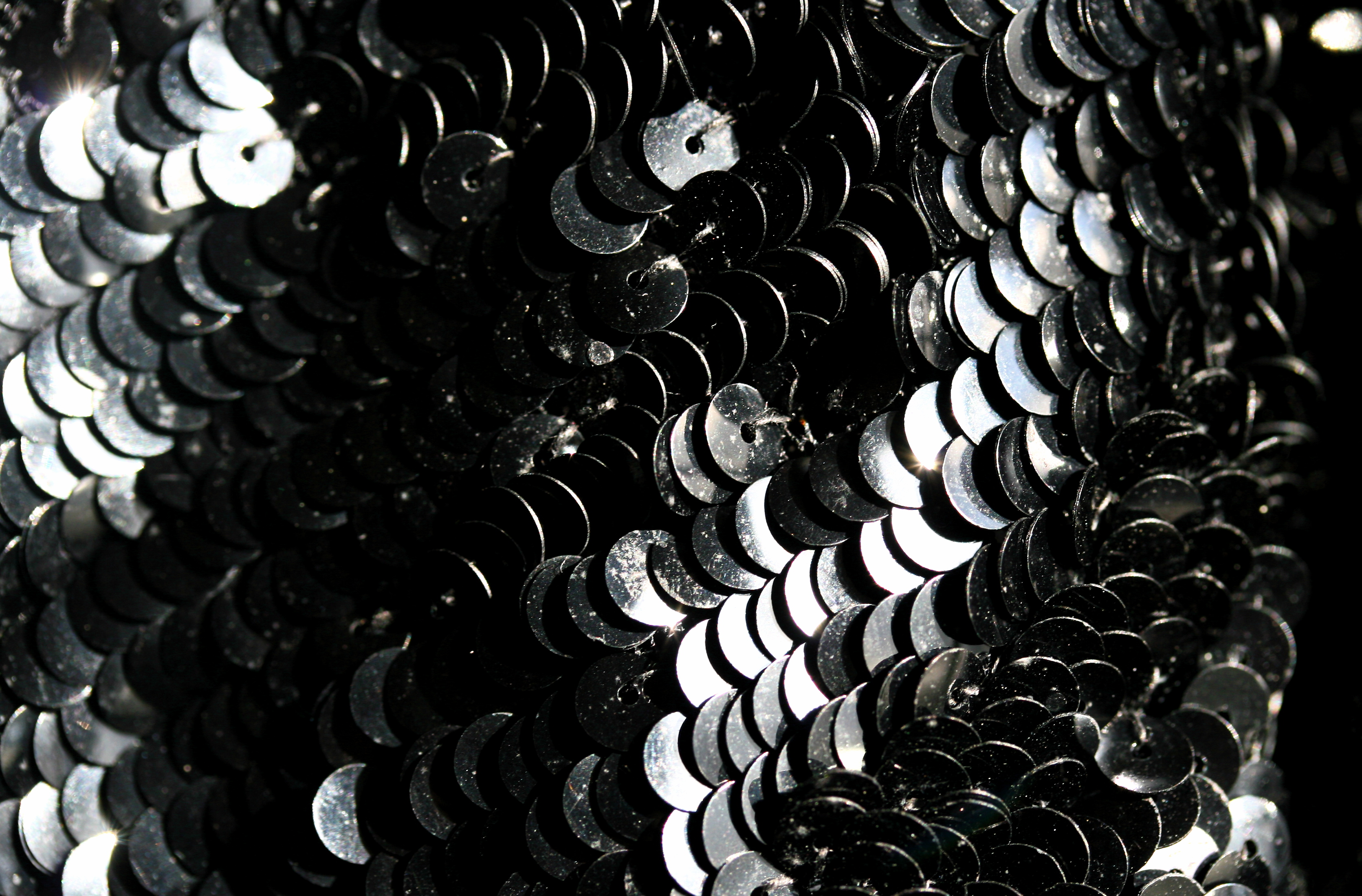
What’s so wrong with sequins?

Sequins_macroOver the past 6 months, 3 different colleagues have made comments that I have found odd. They have all made disparaging comments about wearing clothing with sequins. One colleague told some research experience for undergraduates (REU) students not to wear sequins to lab because, “the lab is not a night club.” Another colleagues mentioned his daughter was wearing a sequin-covered tank top and remarked that she looked like a “street walker.” While the first is perhaps a little silly, the second comment freaked me out.  My colleague was talking about his own elementary-school aged daughter. Shocked, I asked him why he would say something like that. He commented that the shirt yelled, “look at me!” and that is what prostitute clothing does. Actually, I never thought about what prostitutes wear and why, but I can see that what they wear should be attention-grabbing. I get that. But, I thought prostitutes were more about T and A. I associate them with spandex 5 sizes too small – not sequins. I associate sequins with fancy party dresses.

But, on the subject of your clothing saying, “look at me!” Is it really such a bad thing? As I have said before, maybe your boobs shouldn’t say, “look at me!” but so what if you wear a sharp suit, or purple loafers, or a sequin tank top under a nice jacket? Is it bad to grab for attention? I have had a number of prior posts about self-promotion (here, here, herehere), and sometimes in order to stand out from the crowd, you have to look a little different. Wearing sequins seems like a relatively innocuous way to do this. And why not? I already don’t look like everyone else. I am not balding with a paunch and a beard.

I am someone who often wears sequins – not to night clubs – but to work, to conferences, and even at my tenure-talk in my department. I even have multiple pairs of Converse All Stars covered in sequins.  I see sequins all over clothing, and I thought they were cute. So, I ask you: are sequins really so bad? What do you think? Post or comment your thoughts here. To get an email every time I post, push the +Follow button.

Leadership, but not Administration

808px-Queen_Elizabeth_I_by_George_GowerAs I have lamented before, with the coming of tenure seems to be the loss of mentoring. There are a number of new pursuits one can attempt to achieve after attaining tenure, but before Full Professor. For instance, you can begin to take on leadership roles within larger, multi-PI grants or center grants. You will likely be assigned to lead some committees within the department or within the college. You might need to organize a conference. You might get elected to a national or international organization or committee. You can become an editor of a journal or edit a compilation book. You can write a book of your own. Indeed, fulfilling some of these activities may be required to become a Full Professor at your college or university. All of these endeavors require the ability to organize and lead other professors, researchers, or investigators.

In order to achieve this next level, and to enable better leadership and management within your research groups, we should learn some management and leadership skills. Presumably, we all manage our research groups, so we have some kind of management experience. We may or may not be good at it, though. I had a couple of good advisors from whom I picked up some better management techniques (through osmosis and not through any guided instruction). Likewise, I learned how not to manage a lab from a couple of bad advisors. But managing a group of younger, less-experienced researchers (despite the fact that they might not be physically younger than you, as my first postdocs were actually all older than me) is not the same as leading a group of peers or even senior colleagues.

I am looking for guidance on leadership, but very few leadership workshops or courses for academics are geared toward “normal” leadership, such as those I describe above. Most are pointed toward new or up-and-coming administrators. They are meant for aspiring Deans, Provosts, Presidents, Chancellors. Of course, we need leadership skills far before we approach that level. In fact, we should not be attempting to go for Head/Chair of the department, Dean, or other administrative position until after you are already a Full Professor. Being a Full Professor is often a requirement for many administrative positions, although there are a number of lower-level administrative positions that do not require you to be a Full Professor, but you will be limited.

So, how do you gain the skills you need to take on the next level of leadership? Here are a few suggestions:

1. Find and attend a leadership conference. These can be expensive and are often specific for those aspiring to become an administrator. Some are specific for women in administration, such as HERS, or the COACh program. General academic leadership workshops conducted by the American Council on Education (ACE) also exist. Many of these are EXPENSIVE, and you are not going to fund yourself to go. You need the university to support you to go.

2. Use a leadership workshop or conference on campus. More and more universities and schools are seeing that leadership skills are important for their faculty members. A number of schools have been having on campus workshops or short courses. From what I hear, you need to be invited and somehow picked at your school. This is where making sure that your on campus network is in tact and strong is very important.

3. Check your local business school. Many of the schools where you work have business or management schools. Business schools almost always have a leadership course. If you get to attend or sit in on a course for free, take advantage. Contact the professor and ask if you can audit the course. Unlike a short course or workshop, which might only be a week at most, a semester/quarter-long course will give you more time to learn management over a longer time. There will be assigned reading which you might not get to in a timely manner, but will be a good reading list for what you will need to know.

These are my thoughts, but what about yours? Do you have more management workshops that you know about that I missed? It might be good to have a better list. How about other ways those of us without access to special and costly workshops my attain some leadership skills? Any good books we should know about?

Industrial Story – Part 1

3514668147_061a386342_zThis story comes from a fellow WomanOfScience who is in Industry. This is a two-part story, and should be read as an anecdote to help those of you interested in going into industrial science, and what you should watch out for in that route. Some of these characters and situations are quite similar to the academic track, which is sad. I hope you enjoy the story and learn from it, as I have. Part 2 will come online shortly.

Part 1:

I graduated from one of the nation’s most exclusive tech universities with what was considered a very “hard” major and nearly straight A’s at age 19.  I got my Ph.D. at 24, again with near-perfect grades.  I thought my math and science abilities would always allow me to overcome the occasional unprofessional encounter.

Then I entered the corporate world.

I had wanted to be a professor.  I found out a week before my planned start date of my second post-doc that there were some serious problems with the position.  Fortunately, a grad school connection asked me to interview at the only company in the world with commercial success at what I had studied in grad school.  I decided to accept a job at this company.  I thought I’d be able to prioritize my work and benefits to eventually re-enter academia.  Many departments in my FieldOfEngineering value a couple years of industry experience.  Some even require it.  Things looked bright.  My new manager “Dr. Jekyll” was world-famous in my scientific niche.  The two of us would be the only ones in the department doing research.

At the time of the job offer, I knew I should try to negotiate something more.  My father, who has a background in Science and Engineering Management, warned me that it’s much easier to negotiate options or stock, followed by salary.  Conference attendance would be very hard to negotiate.  As the company was still a start-up, I was willing to accept the low pay.  Low salary with the expectation of a big reward from stock options is the norm at many startups.  It had been drilled into me that women often wind up with lower salaries and benefits because they don’t ask for as much.  Because I still hoped to return to academia someday, I naively asked for more conference attendance (3 conferences/yr , thinking that would keep in touch with academia).   Indeed, I was told that I could go to the conferences  already in the pipeline (those at which I already had papers/abstracts accepted), but after that no more than one conference per year.

Note: In reality the only way that I was able to manage even the one conference per year that I did was because I was a member of the technical committees at those conferences.  Most other industrial scientists/engineers didn’t go to conferences every year. The lesson: be skeptical of all promises that aren’t in writing.


So now I was yet another female engineer with low pay.  Six months later, when I checked on Glassdoor to see how my salary stacked up against my peers, I was shocked that I was being paid 30% less than my peers.  I had thought the low pay applied to everybody, not just me.

Earlier, I had read “Women Don’t Ask”, about women, salaries, and negotiation.  Based on this, I put together some slides on why I should be paid more. Now, to be clear, the book had emphasized that women sometimes get penalized for asking for raises.  In spite of this, I thought that the fact that I was being paid so much less than my peers meant that I couldn’t possibly be penalized much for asking.  Here I was, working nearly every weekend while the other engineers were not.  Meanwhile, it was just a coincidence that Dr. Jekyll’s projects kept getting canceled, right?  I was still doing good work and deserved commensurate compensation, didn’t I?

The first time I made my case for a raise, Dr. Jekyll seemed taken aback.  He said he didn’t think there was much he could do.  He said our company didn’t value the research-y work he and I were doing, and that both our jobs were at risk.  Indeed, the answer he claimed to have received from above was “no.”

At this point, I was spending about a third of my time on Dr. Jekyll’s pet project, “Frankenstein.”  It became clear to me that Frankenstein would never succeed.   In private I started to mention to Dr. Jekyll the reasons we should drop this project.  He kept saying things like “It has to succeed.”  Near the bitter end, he even yelled at me for my “negativity.”

Note: the project was eventually handed off to another team.  The new team quickly realized the project was hopeless and cancelled it.  The new team couldn’t understand why it hadn’t been killed years earlier, around the time I started vocalizing my concerns…

I asked for a raise about 6 months after my first request.  Dr. Jekyll got visibly angry and said no.  I didn’t understand how he could possibly be angry at me.  I was getting more done than most engineers in my department and being paid much less.  I assumed his anger wasn’t directed at me personally.  Big mistake.
I heard about an opportunity to join another team in need.  I thought, if my current team’s work isn’t being valued and I’m at risk of losing my job, why not join another team?  The hiring manager of the other team was optimistic about my potential contribution.  However, when I next met with Dr. Jekyll, his demeanor was that of an adult who had just caught a kid with her hand in the cookie jar.  “Didn’t you know I’d find out you’ve been looking at other teams?”, he said in fury, before I could say a word.  I didn’t understand what he was so angry about.  If we were at risk of losing our jobs, wouldn’t it be better for all of us if I left for a more stable team?  A few months later, another inquiry into another internal opening yielded a similar result.

So, what do you think? Comment or post! Follow the blog by pushing the +Follow button! Part 2 will be online soon.

Equal Pay Day

Y12_Calutron_OperatorsToday, as you might have noticed, is “Equal Pay Day” where we women point out that women are still not being paid equal to men. If you haven’t seen some of these articles and statistics, I thought this one was nice. I was surprised by the wage gap as a function of race. Since we are all aware that these wage gaps are based on perceived “competence,” it is interesting to realize that your race convolved with being a woman can lead to you make HALF what a white dude makes!

The wage-gap definitely exists in academia – even at StateSchools where the wages are often public knowledge. For instance,  I was the lowest paid person in my department several semesters, and I brought it to the attention of my department chair who gave me a raise to raise me to the level of the next person. Interestingly, this correction to my salary still left me as the lowest paid person in the department. The only difference was that I was tied for last place with several other people after the correction.

Previously, I negotiated a small retention package at UState after going to an interview at another school. I made three requests for retention given in the order of (what I thought would be) least to most difficult to implement: 1. Teaching release for 1 course per year for 2 years. 2. A $5000 raise. 3. $25,000 per year for two years for research expenses. Surprisingly, I was given items 1. and 3., but not the raise! I was pretty shocked that the salary increase was off the table.

In addition to this, I have gone 2 summers with NO summer salary at all because I wanted to pay my students. I have a friend who basically just laid herself off so that she could pay for a postdoc for an extra year. Do men ever do this? I have male colleagues who say that they “don’t take summer salary,” but when I probed further, it turned out that they meant that they didn’t take the full summer salary – they only took 1 month instead of 2. This is not exactly the same thing. I suppose you could say that we do it to ourselves, but really, it is just that we are committed and used to not getting much for it. We are so used to being undervalued for our work by society, we even ourselves. We undervalue ourselves. Think about that. By not paying yourself, we are not even valuing ourselves or our work at the absurdly low level that society tells us.

So, on Equal Pay Day, let’s pledge to value ourselves. I am going to endeavor to value myself more from now on. I am going to endeavor to pull a white male and OVER-Value myself. I will not ask for the $5k raise next time. I am going to ask for $20k. How will that fly? I got zero when I asked for $5k, but I can’t get less than that, right? There is no such thing as a negative raise, right? So, since I now have tenure, and I am kicking *ss at my job, I am taking my one month of summer salary – damn it!

What do you think? Post or comment. Push +Follow to get an email every time there is a new post.

Women’s Leadership Backlash

Woman_standing_next_to_a_wide_range_of_tire_sizes_required_by_military_aircraft._-_NARA_-_196199A wonderful post from a WomanOfScience friend on women’s leadership. In particular, women in academic administration. Choosing to go the administrator route may be an exit from the research track.

Enjoy!

I’ve always recognized the advantages of being a female faculty member in a male dominated field and try not to dwell on the instances of overt or subtle discrimination. For example, when I entered grad school (15-20 years ago), there were few women in my field that my gender alone made me memorable. Certainly I did good work, but also it was likely that a member of a faculty search committee was likely to remember me which no doubt helped my job search in a subtle way. When I was an assistant professor and gave birth to our first child, there were obviously some disapproving glares from some colleagues, but still I brought the 7 day old child into my office (in a cradle) and proved to my colleagues that this wasn’t disturbing to them and allowed me to maintain my productivity. Then the slippery slope began…

Some time ago, university administrators decided that one way to relatively painlessly reduce implicit bias was to have female faculty present on key committees (most importantly search committees, graduate admissions, and many policy setting committees). The result was that every female faculty member I knew was doing far more service than her male peers. The optimistic view, however, was that we made contacts and networks both within our home institutions and nationally that were far more expansive. Down the road a decade, we had far more administrative exposure and experience and were therefore ideal targets for administrative/leadership roles (at a time when many institutions would like to showcase their strong female leaders)… except that we were/are too young (many of us in our late 30s and early 40s). It is flattering to be asked to take over a high profile chair or deanship at a young age. And I wasn’t unique in this respect. Looking nationally, female chairs and deans are trendy.

This is where the glass is half full perspective ends… Our male peers are hitting their strides as full professors and racking up the high profile awards and kudos that will allow them to build their scientific reputations. While I was able to maintain this level of creativity and productivity through the births of my three children, there is no way to do the same in the face of the unrelenting distraction of running a large organization well. The inevitable result is to take the research hit in favor of building an administrative career. I am fully aware that I am complaining about an opportunity that women just 5-10 years older than me were denied simply for their genders. On the other hand, I worry that we’re complicit in self-imposing a glass ceiling. In my experience, great scientists look down on administrators that do not have scientific stature (I would contend that young female full professors have credibility, but not yet stature). Worst yet, one of my most creative, deeply thinking graduate students informed me she was leaving my group to join that of a male colleague. She said she joined my group because she loved the atmosphere of teamwork and close mentorship that I had a reputation for, but in the last couple of years (since she joined the group) she’s watched that decay exponentially as my administrative duties increased. I am deeply ashamed that I allowed the day to day fires of running this organization get in my way of educating my students! Worst yet, she cited my case as a reason to _not_ go into academia. That talented women get duties loaded on them until they drop the ball (she described it almost as a form of titration). I’ve sadly become the anti-role model.

This summer, my family and group will be uprooting to move to a new university. Everyone (my extended family included) keeps asking what job I will have there and I have been glorying in telling them that I will be “just” a professor again!

Thanks for that post! What do you think? Post or comment here. To follow this blog, push the +Follow button to get an email every time a new post appears.

Public Science: Importance of COSMOS

1114_universe-crop-500x416So, are you watching COSMOS? We are. In fact, we are watching it twice each week – once live and once with our kids because they didn’t get to see it (their bedtime is too early). It was fortuitous because our daughter was just asking about where babies come from (she is in elementary school). Since we don’t like to lie to her we were giving her the scienciest explanation we could must with very little information on the dynamics of S-E-X. So, we were talking about DNA with a lot of hand-waving. We were super excited to watch COSMOS after both kids went to bed, and see the DNA illustrated. We were recording it, and are watching it tonight to show the kids. Both kids are super excited about it! I couldn’t be prouder. (We also watched Gravity this weekend, and my daughter thought it was scary but exciting and cool.)

I was also ecstatic because some of the science I work on was mentioned in COSMOS in episode 2! It was awesome to see it illustrated in beautiful graphic arts and brought to life. When it came on while my kids were watching, I ran to the TV, pointed at the stuff I study, and said, “That is the science I work on!”

I am super excited about COSMOS because I think science outreach to the public is so important. It is important to educate our representatives in government to ultimately improve science funding. It is important to educate people who deny evolution and global climate change. It is really important to educate future scientists to get them excited about discovery so we have enough hard working people to make new breakthroughs in science.

Also, I find that people are really jazzed and excited about science in general. I do a lot of random science outreach. Mostly, I do a lot of talking about it on airplanes, in airports, in taxis… I’ve been doing a lot of traveling, lately, have I mentioned it? When people sit next to me and ask what I do, they are often excited to learn I am a scientist. I have taken the opportunity to explain some of my science, why it is important to them, and what we could learn. They are often really excited and impressed.

Also, it is a great way for me to learn better ways of communicating my science not just for the public, but also to my classes. Teaching big service courses to hundreds of students is an essential way to make a science-literate public. For some, especially those taking ScienceForPoetsCourses, this may be one of the last times they come into contact with science in a class in college. The experience should be a positive one, and it should make them literate of what science can do for them.

Another place I have been doing a lot of outreach is to my Representative in the U.S. Congress. I have been going for the last several years to a Capital Hill visit day with one of the ScienceSocieties I am a member of. The first year I visited my Rep, I was happy to see that his office had pennants from the universities and colleges in his district. He was taking over our region due to an “ungerrymandering,” so I made sure to bring him a pennant from UState when I went to visit the second year. Mostly, I spent a lot of time talking to his staffer responsible for science, and informing her about how science works. I told her about how federal funding works, which she didn’t realize. I told her how the university only gives a research professor money to start a lab, but after that, we have to sustain it ourselves with outside funding. I told her how we don’t get paid to do research in the summer unless we bring in enough money. I told her that after we figure out how much we need to budget, we multiply it by 60% to determine how much overhead we give to the university. I told her how funding agencies typically still don’t give you what you ask for in your budget, and you get cut and have to make tough choices. Most importantly, I have kept in touch. When I get a grant funded, I email the staffer and let her know. I offer to show the representative around, if he should want a tour of some labs on campus. I offer to help with any science policy issues that might come up. The staffer knows my name and work enough to email me when she sees an announcement that my research got funding.

The next step, in addition to this helpful blog, is to try my hand at OpEds. I tried one, but it didn’t go anywhere. I was told by an expert that it wasn’t personal enough. I actually hate personal OpEds. Who knew I was supposed to like them?

I am not advocating that everyone, especially those pre-tenure write OpEds of even blogs (unless you want to write an entry here…), but emailing or visiting congress and talking science to random strangers is relatively easy and important. I do advocate that we all try to advocate a little more in our daily lives. COSMOS should help. It is easy to strike up a conversation about, “Did you watch COSMOS this week?” Then, you can talk about the stuff that was on there, if and how it pertains to your research, and the significance of the work for human-kind. What do you think? Post or comment. Push the +Follow button to get an email every time I post.

Conference Thoughts

2475011402_bf70c92575_oAs I am sitting in a session at the world’s largest conference in MyFieldOfScience, I am thinking about conferences. I am thinking about how important they are for your career in a lot of ways. For those of you who recently joined the blog (thanks for following!), you may have missed some previous posts about networking. I had one about general networking and another on networking on campus, which are both super important for getting tenure, getting jobs and just good for your career. Conferences are key for networking, being seen, and building your mentoring and scientific connections vertically and horizontally. I have come to the realization that networking is basically “professional flirting.” You can chat about science, but most convos are about family, travel, weather, grants, clothes, students, jobs, or whatever. Academic life has other aspects that we can talk about too. I had a great conversation about teaching and how to teach 400+ effectively with a colleague from another university.

Another thing conferences are great for is energizing your science. When I was young, and I think this is the case for my students, I loved going to conferences because it gave me confidence that people were actually *interested* in my science. I was able to talk about my work, have some people listen, and get validation that what I was doing was of worth. Further, seeing the work of other people that was similar to my own made me feel like I had a community of scientists who were interested in the science. Conferences re-energized me and made me look forward to working on more science and getting my work published.

Now, my science gets energized, but in a different way. Now, I look around and say, “Oh crap, we are more behind than I thought! Everyone is doing the cool experiments I thought of but haven’t gotten off the ground yet!” This is both bad and good. First the bad. It is scary to compete with your science against other groups that are better funded, have more students, and might be ahead on the same ideas you have. Also, I am so so crappy at hiding my science. I cannot keep secrets about the cool stuff we are doing. In some fields, telling people what you are doing helps to mark your territory. In others, it can be giving them the keys to all your best ideas. I have to be careful, but I can’t help but be communicative, open, and excited about our newest stuff. It might hurt me sometimes, but in the long run, I would rather collaborate than compete.

Now the good. Much like when I was young, seeing all the great stuff my colleagues are doing that is similar to my own work can be energizing and maybe even light a fire under your ass to get going. Further, it helps you to focus. If you had an idea to do X experiment and you see it done (probably slightly differently) at a conference, you can refocus your idea to probe the still open questions. Another good thing about people working on similar stuff – it shows your work is hot, important, and in fashion. As in other realms (like fashion) styles change, but if you are hitting hot you have a better chance of getting high profile publications and getting noticed.

So, those were my thoughts about conferences. What do you think? Post or comment here!

Attributes of Scientists: Perseverance

Christabel_PankhurstI am currently at a fantastic meeting for Undergraduate Women of MyFieldOfScience. I was brought across the country for this event, and today I am giving a talk on my research with some background information on myself. I love these events! The undergraduate women, who are uber-underrepresented in MyFieldOfScience, are so excited to be here. Once you group 10-20 schools worth of women together, it is a lot. Women who are isolated or the only woman in their department can connect with their peers. It is wonderful, and I am excited and honored to serve as their mentor for this short time.

Throughout the meeting, there has been a theme that has clearly emerged to me. Several of the speakers and students have described their perseverance within science, or that perseverance is a key attribute they look for in applications to REUs or graduate school. I was thinking about it, and it is really true. Although, sometimes I might call it stubbornness or pigheadedness, and it can backfire in those forms resulting in close-mindedness. But perseverance is a better term and has a slightly different meaning. It reminds me of Madame Curie’s struggle to discover radium (for a funny post on Madame Curie from another Awesome WomanOfScience, go here).

So, here is one story from me about perseverance. It is about how I got to this meeting for undergraduate women in MyFieldOfScience. It is meant to be funny, and just be a silly example of the stuff scientists will put themselves through to fulfill a promise. Enjoy.

This story starts on Wednesday morning. It was like any other Wednesday morning except the baby was sleeping in. I have two kids – elementary age and toddler age – and we still call the toddler the baby, because he will likely always be the baby. Now, the baby doesn’t sleep in. In fact, the baby usually wakes up far before I want. But today, was different, and the brief reprieve of his late slumber was making our morning cyclone a bit calmer.

I almost was worried I would have to wake him, when I heard his lovely WAIL, and I made him a bottle and was bringing it to him. When I turned on the light, I realized he had puked all down the side of this crib as he was standing over the railing crying. This kicked the morning cyclone up a notch to Kansas Tornado that Brought Dorothy to Oz level. One of us was cleaning the baby and stripping him down while the other was stripping the bed and wiping it down.  And now we were worried. What was this puke about? Was he sick with a stomach bug? Or did he just cough too much and make himself throw up? Or did he swallow too much snot, the evidence of which was still sluggishly dripping from his cute little nose, and that upset his tummy. After the ruckus, he asked for a bottle, and kept it down, he had no fever, so we assumed something besides sickness had caused the puke. We took him to school and they admitted him, despite our story of puke. Hooray for our daycare service – they are the best!

Unbeknownst to us, the puke cleaning job was infecting us with a stomach bug that was biding its time to strike. On Thursday night, my husband got hit. He was up all night evacuating his insides. Most of this I had no idea of, because we have both learned to sleep through quite a bit of noise and motion with two kids.  I was set to fly across the country, and felt totally fine. I woke at 4am, showered, and got out the door for a day of flying and uninterrupted writing time (I love that you can work uninterrupted on airplanes – no meetings, no phone calls, just you and your computer).

During my 4 hour layover, it hit me. A nauseating feeling in my stomach. No, I thought, I can’t get sick. I am already traveling. The second flight offered me a much needed afternoon nap in the *most comfortable of positions* with my mouth drying out as it hung slack jawed while my head was jammed against the window. I woke to the upset stomach and started downing the antacids I always carry when I travel – just in case – and getting a ginger ale from the flight attendant. I was able to ignore the stomach ache while working, and got a bit done. I felt like Patrick Dempsey in Outbreak in the airplane scene (They didn’t have an internet picture of Patrick Dempsey with a sickly sheen and coughing, and I didn’t want to buy Outbreak, just so I could screen capture that image, so here he is playing with the monkey infected with the Ebola virus or whatever):

Dempsey

Luckily, I didn’t actually look like him. Nowadays they won’t let you on the plane if you are sick. Anyway, the stomach thing got worse, but I persevered. I went to dinner. I talked to students. I made jokes. I got into a playful argument with a ManOfScience over whether one should clean your own toilets, or pay someone else to do it, provided they have the money. He thought people should clean their own toilets, and I thought you should pay someone to do it, so you could spend more time with your family having fun. I wasn’t as upbeat as I usually am, but I put on a good face.

It all came down after I got back to my room. I slept upright trying not to puke all night. I felt strangely normal around midnight and was able to sleep for 5 hours when I was woken by my intestines bubbling back into my stomach making me queazy and burpy. These are ominous signs. At 7am, I puked. I puked hard. I have puked enough times to know by now that holding your hair is secondary to holding your nose when you puke. No one ever talks about it, but hard puking makes it spray out of your nose cavity, too, and you have to hold your nose to block that passage. (Helpful tips on puking from your local scientist.) I got puke all over my pajamas. It was nasty. I did feel a a lot better after puking up what looked like last night’s dinner and yesterday’s lunch from my layover airport. How does the body do that?

I bagged my puke clothes, showered, got dressed, and prepared for the day. I went to the hotel lobby, and worked with them to figure out how to get my clothes laundered. The hotel is run by students, and they were not sure it was possible, but after some pleading and creative problem solving on my part, they figured it out, so that I would have clean PJs by 7pm. Note to people who don’t yet travel too much:  Hotels can do lots of stuff. You have to ask, but they will often do it. It sometimes comes with a price. I was willing to pay as much as $50 to get this stuff laundered in a hurry. It ended up costing 15 minutes and $3.

Day 2 was much better, although I was still sick. I ate and kept it down. I mingled, I served on a panel about REU programs. I submitted some letters of recommendation and tweaked my talk based on the format others were presenting. I went to dinner. And this is how sickness spreads across the country. It was holding steady in my state and now I have brought it across the country to another state. I try to be good and wash my hands, but I cannot know who I infected. So I apologize, in advance, to the bright, motivated, young Women of MyFieldOfScience that I probably infected on this trip. Yet, I persevered, and you will too.

So, should I have canceled? Should I have turned around at my layover when it was clear where I was heading with this illness? It would have saved some other people a 24-hour bug, but I made a promise to be there, and I want to help mentor this lovely, bright, smart, wonderful generation of Women of Science. I would make the same choice again. What do you think? Post or comment. You can follow this blog by pushing the +Follow button, and you will get an email every time I write a new post.

Writing, writing, writing

write-on-november-is-national-novel-writing-month-a5349cc216There is a lot of reading and writing in science. This is ironic for me, personally, because I went into science because I am a slow reader and I hated humanities classes where I had to read all day. I liked my math and science classes where I solved problems with pencil and paper. My professors delivered content, so I never read textbooks. It is true, despite the fact that I endorse active learning now where students have to read for themselves.

So, here I am, a tenured professor and all I do it read and write all day long. I rarely solve problems with pencil and paper, and I joy in the chance to do so for courses I teach or just snag some back-of-the-envelope time while reading a paper or writing up my own work. I also cannot get most of the content I need delivered, although I go to journal clubs and talks because I am a great auditory learner and I learn best that way. I even have to read papers to myself out loud. This is embarrassing, and I have to close my office door when I review manuscripts or proposals.

After writing that past post about how best to give presentations, I realize there a lot of aspects of this job that we can write how-to posts about. Writing has an seemingly unlimited supply, since we do so many types of writing. I think we will have a few posts (a theme, if you will) on writing. I am happy to entertain guest posts to describe your best practices for writing different things. I am going to list a few that come to mine, comment if you have more types of writing you can think of in addition to these.

  • Manuscripts
  • Proposals
  • Abstracts for posters/platform talks
  • Chapters
  • Books of research
  • Thesis
  • Textbooks
  • Lecture notes
  • Reviews of manuscripts for peer review
  • Reviews of proposals for peer review
  • Grant reports
  • Committee reports
  • Letters of Recommendation
  • Letters of Support
  • Job Application Materials for various stages and types of jobs
  • Published proceedings
  • Biosketches
  • Biographical Information
  • Webpages
  • Blog entries on science
  • Book reviews for publication
  • Articles for general audiences
  • Highlights of research articles
  • Annual personnel reports/highlights
  • Memoranda of understanding
  • Requests for waivers

OK, that is all I can think of. I have written almost all of these types of writing assignments over my career. I haven’t written a textbook, yet, but I really want to. I think I have worked out schemes for writing each of these types of things, and I will write a couple entries about some of the most prevalent ones (or you will). Do you have any advise to offer? Post or comment!

Tag Cloud