Helping the Minoritized Achieve in Academic Science

Giving GOOD Talks

Ferris_Bueller's_Day_OffI was recently at a Gordon Research Conference (GRC) for a field I am tangential to and want to learn more about. If you are in science, and don’t know what GRCs are, you should. They are small conferences on more focused topics. The one I was at can only have less than 200 participants. That means you can talk to many people deeply about science. Further, the GRCs are structured such that the afternoons have free time for you to socialize with the participants. I think that socializing in this way is essential for networking and forming stronger bonds, perhaps even friendships, with people in your field. At the GRC, there is only one session at a time (no concurrent sessions) and long discussions afterward. The GRC is good for learning science without getting overwhelmed or worried about not going to the right session. So, if you are a student or postdoc, especially, you should ask to go to a GRC. I think they are especially good for your career.

But, this is not the point of this post. The point of this post is to talk about talks. I think a lot about how best to present my work to people. Even if my work/publications are boring, my talks never are. They get people excited. I guess I feel more comfortable pushing the envelope in person than in writing. This is probably why I don’t get published in HighImpact-OneWordTitle-Journals. At this conference, as in all, there are many different speaking techniques. All the talks are by professors who are doing excellent and interesting work, but they don’t always speak in the best manner. It got me to thinking about some advice for giving good talks. This is not the first time I have given advice on this topic. General information can be found here.  In this post, I am talking about other aspects that I didn’t touch on previously.

***Disclaimer: The advice given here is not meant to shame any particular person. I am not talking about you. This post is only meant to give advice to help people interested at self-improvement.

Up Talk, Vocal Fry, Voice Tone, Using the Pointer, Body Language:  This was all discussed in detail in previous post. Here is an over view. Don’t sound like you are asking questions (no up talking). Make declarative statements. Use a lower voice, if possible. Two hands on the pointer if your hands shake. Don’t fidget – gesture.

Don’t Yell Your Talk: I have noticed a number of people, mostly women, basically yelling their talk at the audience. It is like a string of words without pauses at a very loud tone. I personally, find this hard to take and a bit off-putting. I am not sure when this style got developed or taught, but I have noticed it more and more. It feels like I am being blasted by the person’s talk instead of engaging with the information.

My advice: insert pauses. If you have a hard time remembering this, put things into your talk that will make you pause. A white rabbit. A small smiley face. Use these cues to remind you to pause. You need to let the audience take in the scientific information you have delivered. When you present the method or experimental system, put in a pause and ask the audience if they have questions. When you present an important result, pause and let it sink in, then state that this is remarkable or significant and why.

As for the yelling tone, I think the only thing that will cure that is thought and practice. I think the yelling is caused by nervousness mostly. This is why I am surprised to see it in experienced scientists with tenure who have been doing this for a long time. You might need to practice using inflection. Inflection is not necessarily up talking. Maybe the yelling monotone comes from a fear of up talking? There are other ways of speaking with inflection that does not sound like asking a question. Instead of thinking of a talk like a public presentation, think of it as a conversation with someone who doesn’t know what you do where you have all the information with you and arranged on slides that you just happen to have up on the screen. If you design the talk this way and maybe pick someone in the audience to talk to, you might be able to blot out the fear of “public speaking” that I think could be driving the yelling. Of course, I grant that I could be exactly wrong. If you have insight as to the yelling your face off style of giving talks, please post or comment.

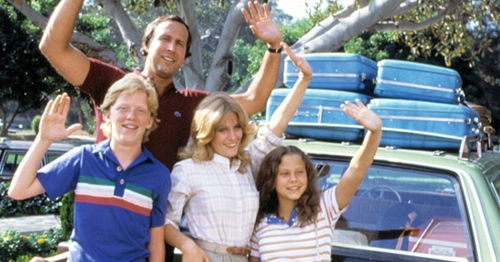
Engage the Audience: I said this before, but here I am being more general than just using demonstrations. Also, audience engagement goes along with the issue above of having a conversation with your audience. In theater, there is a concept called “breaking the 4th wall,” where the character on the screen talks to the audience. Remember in Ferris Beuller’s Day Off, when he looks at the camera and talks to you. Ferris is breaking the 4th wall. It is the invisible wall between the action going on on the screen or on stage and the audience.  When you give a talk “at” an audience, you have the 4th wall up. I recommend that you try to break the 4th wall in your talk. You can walk into the audience, although that is not always sensical if you are tethered to a laptop at the front. You can also ask your audience questions. Give them a quiz. You’re probably a teacher of some sort if you are a faculty. Or maybe you aspire to be. Putting a question on a slide by itself and asking the audience to vote on the answer is a good way to engage the audience and to wake them up.

Use Humor and Analogy: Some people are naturally funny. Some are not. If you are funny, try adding some humor to your talk. If you are not, I don’t advocate trying to include it. On the other hand, non-funny people can include analogies to well-known, modern, or macroscopic systems and objects to help improve understanding during your talk.  A few well-placed analogies with images in your talk can go a long way to taking your talk from boring or opaque to exciting and clear.

I said the same thing at the end of the last post that I am saying here, which is: I am sure there are even more helpful hints for how to give a good talk, but these are the ones that came to me just now. I realize the last post was about a year a a half ago, but maybe going to conferences makes me thoughtful about giving talks.

TrixiefriganzaThere was an interesting NPR story about being the only X in the room, where X can be anything, but is typically some under-represented group.  The story was spurred by an interview Marc Maron (love) did on WTF? with Wyatt Cenac (love). As a WomanOfScience, this has definitely happened to me where I am the only woman in a room. As a friend of many WomenOfColorOfScience, I understand how it is so much worse for scientists of color. I have a suspicion that white men have probably never had this happen to them. Of course, I could be wrong. There could be times (not times in science, of course) when you are the the only white male in a room. I asked HusbandOfScience, and he cannot recall one time when he was the only white man in the room. He says there was a time when he was almost the only white man in the room, but he was never actually the only one.

An interesting part of the original story and the report from NPR was the pull the “only one” feels between fitting in and speaking up when some racist or sexist shit goes down. They rightly point out that your ability and willingness to speak up as the “only one” depends on your personality, your stature within the group, and your level of power. I definitely have done these calculations when deciding if I should speak up about something. Now that I have tenure, I let loose all the time: with ally-colleagues, at faculty meetings, at a grant panel, at a government funding agency workshop, etc… Oh yeah, I speak up, make a joke and point it out. But, before getting tenure, I was very hesitant to speak up if I could not judge the situation, and I would seek guidance and advice from colleagues in the form of “mentoring” to let people know about certain situations.

Now, I will regale you with a tale of a time when I spoke up. I am sorry if this story is embarrassing to my department, college, or university, especially since pretty much everyone and their mom knows who I am (pseudonym WomanOfScience didn’t last as a pseudonym for very long). But, again, this is part of speaking up. We cannot hide our past like Ben Affleck wishing he was not descendant from slave owners. It happened, and I am retelling it to inform and move forward. Here is the story:

In my first year as an assistant professor, I had several run-ins with a particular senior colleague. This person was an EmeritusProfessor (EP). My first encounter was before classes even started when he approached me about another excellent ScientistOfColorColleague of mine. He asked if he thought my excellent colleague’s new paper in some “high-profile-journal-with-a-name-that-is-a-single-word” was total crap like he did. Of course, I said “no,” because I respected my ScientistOfColorColleague’s work very much. Also, this guy, EP, really creeped me out.

While at a conference, the same semester, I was fortunate to be invited to a women-only dinner with some BigFancyWomenOfScience in my field. At some point, they started talking about times they gave seminars at each other’s schools. I was so mortified when one told a story about speaking at my university and having EmeritusProfessor grill her at her seminar about the jargon of the field. Even more creepy than that, he started stalking her long distance. Except, he is old, so he did it the old fashioned way – via snail mail. She was really grossed out by his letters because they were very fawning and discussed her appearance. Again, I was very embarrassed for my department. I asked some people about it at my university, and I realized that was the last time my department was invited to seminars from the other departments. They stopped sending us the emails for fear that EP would show up and embarrass them.

My next run-in with EmeritusProfessor was at lunch with a seminar speaker. He started being very obnoxious to the speaker and me because of our subfield and the funny language it sometimes uses. This is the same jargon he harassed my WomanOfScience colleagues about, above. I told him that it is true that jargon can be annoying, but when in an interdisciplinary sub-field, you must be able to speak both languages and translate between them. He became pretty irate that I did not agree with him.

The third run-in I had with EmeritusProfessor was at a luncheon for a colloquium speaker, who happened to be a young woman. He sat right next to her, kitty-corner from me, and was creepily all over her during lunch. Yuck! At some point, he said something I thought was too far over the line. I called him out on it at the table, in front of some of my senior colleagues. He snapped back at me that I must be part of the PC police force. I made a joke about PC standing for Port Chester (a stupid reference to the movie “PCU” – love you Jeremy Piven!). We let it drop, but there was tension at the table. I approached my senior colleagues later to tell them both about the other run-ins I had with him and the story of my colleague from the conference dinner. He said he now understood my outburst, but felt it was rude at the time. Ugh. I had been worried about that, which was why I went to smooth it over with him. I was right to worry.

After that, I decide to go have a conversation with some senior people and my chair about this. These were all one-on-one conversations where I went for advice and help. Asking for advice plays well with senior white male colleagues who will always see you as a youngen in need of help.  It is not their fault that society grooms them that way. It can be annoying to play this sometimes, when really you just know better and want to suggest to them what to do, but it is the card I play most. Also, I am often seeking their support and help, so it isn’t as difficult to act. In fact, I prefer they see me as young and in need of mentoring, because the alternative is to be their competition and get no support. OK, these are extreme views, but I have heard from many women that once they reach a certain level/age, the help mentoring into resentment and competition. Perhaps another story for another day.

With SeniorColleague, I asked if EmeritusProfessor would have any say over my tenure case? I wanted to double check that he would not be apart of the discussion. In asking, I relayed the stories from above. He was actually friendly with EmeritusProfessor, but said he understood my side. He guaranteed that EP would not have a say in my tenure case, since emeritus status means they are not on the faculty. SC also admitted to me that EP had “woman problems” his whole life. SC didn’t elaborate, but I could imagine, considering how he treated women, that it was probably EP’s fault.

With the DepartmentHead, I actually asked that EP be excluded from seminar speaker invites. I cited the three seminar related issues and the fact that our entire department paid for EP’s actions by not being informed about seminars. Since I was interdisciplinary, this exclusion affected me more than others, and was unfair. Further, his rude behavior at two lunches with seminar/colloquia speakers led me to suggest at he be excluded from those activities. I said that it was embarrassing and was making the entire department look bad. I guess he agreed because EP stopped showing up for several years.

After these conversations, I felt I had a green light to fight against EP when needed. Luckily, I didn’t need to very often, as he was not being invited to seminars anymore. But, this is not where the story ends. For my RoundNumber-ith birthday party, I decided to have some catering done. Someone recommended a person to me who happened to be an alum of my department – a young woman who graduated undergrad from my university with a major in my department. We had much in common coming from the same field of study, and she actually had jobs in the field, but did catering as a sideline. At some point, she asked about EP. I was a bit cautious. Did this student like him? Hate him? I asked her story. She said that he taught her in a lab course and he disgustingly hit on her in class. He asked her to take a romantic boat ride with him. She refused him, but worried that it would adversely affect her grade. This story was outrageous, and yet expected. I mean EP was a real creep. I never asked, but I always wonder if any of his/my colleagues knew how he acted when he was a professor. I mean, they clearly knew he had “woman problems,” but did they realize how far over the line he stepped? Did they turn a blind eye? Did they purposely ignore it? It still bothers me to this day.

So, the day finally came when EP kicked the bucket. OK, that isn’t a nice way to talk about someone dying, but I cannot be nice where EP is concerned. Despite many other emeritus faculty passing on and never doing this, for some reason, some of the senior dudes wanted to take faculty meeting time to talk about EP. Ugh. I boycotted. I could not stand listening to fond memories of someone who sexually harassed his students. I let it be known to several of my colleagues that I was purposely boycotting and why. I asked how long it would take, so I could make sure I could show up afterwards. I texted my colleagues, who didn’t boycott, to figure out when to show up, because of course it took more than the allotted 15 minutes. After that, I came in, and faculty meeting proceeded as usual.

And that was the last time I had to deal with EP-related issues. I always worry I might run into some other woman alum who might have a worse story. I’m not even sure how to report something like that. The student is long-gone. I am sure it is way past the statute of limitations and now the guy is dead. She didn’t exactly disclose it to me in a way that meant she wanted me to do something about the information. She was basically telling me in a conversation of camaraderie – two WomenOfScience regaling each other with war stories from the front line of the ScienceGenderWars. Comparing battle scars. Hers were far worse than mine.

At this point, I want to also address something that was commented on from a previous post because it is related. I had a post about Why I am a Feminist. Among that list where a couple TV shows, including the Cosby Show. Someone posted a comment later if I would change my mind about the Cosby Show now that it is clear that Bill Cosby is a huge creep – most likely way worse than the EmeritusProfessor I describe here. So, I will set my record straight. Bill Cosby is a disgusting pig of a man who raped women. There is no doubt. I wish we lived in a society that valued women enough to make rape a crime without a statute of limitations, so he could be prosecuted and go to jail. The comments I made about the show were about the premise of the show rather than Cosby himself. The premise was that an upper middle class African American family in Brooklyn existed, and the mom was a lawyer, and the dad was a doctor, and they cared for their children. I value that vision, and I despise the man who presented it to me.

So, what do you think? Post or comment here. Push the +Follow button to get an email whenever I post.

TypingSo, you are writing a proposal, huh? Yeah, you are. Maybe you just submitted your CAREER proposal, or maybe you are writing to Uncle Howie for that big whopper of a carrot on a string. Either way, you are trying to convince someone that the thing you do is the bees knees. Here is one on proposal writing. Just some thoughts. I’d love to hear what you have to say – post or comment here.

I was recently having drinks with a couple WomenOfScience. We were discussing writing – mostly grant proposal writing – as it is the life blood of the academic research scientist. We were discussing how, when you write a proposal, you need to skirt the line between writing for a general audience and being technical enough to prove that you can do what you say. The women I was talking with often fall onto the “too technical” side. Oppositely, I often fall on the “too colloquial” side in my writing. Unfortunately, both of these can be deadly to a proposal.

Too Technical: It can be insulting – you make others feel stupid because they cannot understand what you are saying. It can be frustrating to a reviewer. Reviewers are all smart people with PhDs or MDs. Further, many reviewers have egos. Egos need to be stroked, and making them feel stupid is the opposite of what you want to do. Reviewers might think you are trying to make yourself seem smart by putting others down. Also, it can look like you are hiding behind jargon. People can and do assume you don’t really know what you are talking about because you are using technical terms instead of explaining it simply.  This can be difficult to control, especially is you are naturally detail oriented and really do think about your subject in this technical way.

My suggestion: Spend a lot of time on the first couple pages trying to tone it down. If you capture your audience’s attention and get them on your side, you can ramp up the technical speak over the course of the proposal. This way, the technical stuff can sneak up on them, or even seem gradual. You should always spend a lot of time at the beginning, but if you are a technophile, you got to write it for your granny. I am assuming, perhaps incorrectly, that most people’s grannies are not PhDs directly in your subfield of science.

Too Colloquial: When I write a proposal, a paper, or give a talk, I automatically go into pedagogical/educational mode. Oddly, writing too colloquially can have similar issues as writing too technically: it can be insulting. You look like you think others are stupid, and that is why you are dumbing everything down. Another issue with writing or speaking too colloquially is that you can make what you are doing sound simple or easy. I am doubtful that any science being proposed is “easy” or else you wouldn’t need the bureaucracy of the university behind you.  Yet, writing in an easily accessible way can make what you do seem unimportant, easy, or obvious.

My suggestion: Sell up the innovation, importance, and significance. If you discuss significance in a clear way, people love it. Use your gift for laymen’s terms to explain the significance of your work and really sell it. Later in the proposal, you might want to explain the experimental or theoretical methods, which are bound to be technical. Thus, you will give your work a technical expertise that will ground it.

Unfortunately, I think both of these offenses are less acceptable if you are a woman. Let me explain.

If you are too technical, you might be incompetent. You are hiding behind jargon you don’t really understand. Or, you are a bitch who is purposely making others feel stupid with your fancy words.

If you are too colloquial, you are probably stupid and don’t know the technical terms.

So, either way, you are incompetent. This is the typical issue for women in the academy – you have to be more competent than the men. People assume you are less competent if you don’t perform perfectly. So, you must walk the line – strike that perfect balance. You are won’t succeed overtime. But, you know what? That’s OK, as long as you practice, and try and try again, and listen to your reviewers. At some point, you will figure out how you are screwing up, and probably go to far the other way. If you practice enough, you should be able to strike the right tone eventually.

So, anything to add? Comment or post here! Push the +Follow button to get an email every time I post.

national-lampoons-vacationTenure – check.

New avenues of science – check.

Sabbatical approved – check.

Ah, sabbatical. One of the truly beautiful perks of being an academic. If you thought the tenure blues were a myth, why is there a programmatic method to try to get you out of them? Sabbatical is a way to lift up your spirits and get your creative juices flowing for another round of reinvention. I am psyched because I get to do this. We are going away. Far away. It is a bit daunting, though, and there are not a lot of online resources to help out. So, much in the tradition of a travel weblog (the birthplace of all blogs), I plan to document what I am doing. I will take you through the steps and point out my missteps, in the hope that you will not be doomed to repeat them.

Also, perhaps in the good old days, when I would have been a white man with a stay-at-home wife who could make a bunch of these preparations for me, this could be easier. But, we are two academics and neither of us has time to deal. So, I am bumbling around, calling my friends who are currently on sabbatical to get tips, and basically trial and erring.

Step 1: Use a project management software. I decided to bite the bullet and just take my planning online. That way, my HusbandOfScience can contribute. We planned our wedding together in a notebook, but we are not always in the same place at the same time nowadays. Luckily, there is technology to the rescue! I plan to use Trello.com. It comes highly recommended by some of my peers.

Within the software, I set up to do lists for things there: housing, schools, status at the new place, transportation to and while there, and visas or other travel documents.  I have to do lists for stuff here including making arrangements for my own home, my pets, my lab and students.

Step 2: Get housing. In my case, I had to get housing before I could do anything else. I couldn’t enroll kids into schools or get do a bunch of other stuff. Again, the internet to the rescue. I don’t know how people did this before the internet. Did they beg people for newspapers from the location to be sent to them, so that they could call for rentals? Anyway, usually the place you are going has an office or secretary who knows which websites are used most for that area. There are some that are used more than others, such as SabbaticalHomes.com. I used an online site and found a place. The reviews were all really great, and the pictures were very clear. But, if I was concerned, I would have asked a friend there to go check it out in person.

OK, so this is as far as I have gotten. What I would love from you, dear readers, is for you to help me. What am I missing? What needs to be included? As I go along, I will fill out more parts and steps to this along the way. I hope to hear from you! To get an email each time I post, push the +Follow button.

Do what it takes

2015-06-23 12.31.18This blog post was inspired by a recent conversation I had with two pre-tenure WomenOfScience. We grabbed a beer after a late night movie night to see the feminist action film, “Mad Max Fury Road.” Don’t believe me that a Mad Max movie is feminist? Check out these articles (guardian, jezebel) and this funny tumblr site (hey girl). My take on Mad Max: the movie was a tad violent and quite hilarious. Every other sentence or wry look screamed, “This apocalypse was caused by men!”

OK, so afterwards, we were discussing tenure, getting tenure, and crappy mentoring. See, these women are scared. There were 4 people who didn’t get tenure last year – an all-time high record for their university. Their departments are trying to figure out how to mentor them, but they keep giving them platitudes like, “write grants and get them,” or “have more papers,” which are not helpful. Other mentors say things to them like, “don’t be so stressed out,” and “why are you worried?” which are somewhat demeaning and ridiculous. I was worried. We are all worried. If you aren’t worried, you might be fooling yourself. As I have gotten further away from tenure, I can see that I am losing perspective myself. That makes me less and less helpful to people as an advice blogger on this topic. But, as we were talking, I realized that there were some concrete things I could add. I am going to try to summarize them for you, and please, others add more information and send questions and suggestions.

1. Write grants that are fundable. So, you got this job because you had a great, new idea and everyone thinks it is amazing and super smart. That is great. You have sent a few young investigator award applications out and perhaps 1 or 2 federal grants on this idea, and maybe it isn’t playing as well as it did when you could describe it in person. OK, there are two things that you need to do here:

A. You need to write grants on things that are less flashy, but solid and doable. When I first got to my job, I wanted to work on a really cool thing, but I couldn’t get funded for it. When I would talk about it, people thought it was cool and exciting, but I couldn’t articulate it well on paper. Further, I didn’t really have a lot of background in this thing, and I didn’t really have track record. So, instead, I sent out proposals on incremental stuff that was doable and, frankly, easier experiments. I got enough preliminary data on the doable work to show I could do what I proposed. I proposed 3 objectives. I got a theory collaborator. These things I got funded to do at first were not what I wanted to do with my career, but they built a foundation for what I wanted to do later. I could build a story that they were related and they got me money, papers, and (let’s face it) tenure. Maybe this is why I was so obsessed with tenure = freedom (post).

B. You need to practice writing about the big thing you are interested in doing and get preliminary data on it. As I said above, the really cool thing I wanted to do was not getting funding. What to do? I scammed it. Once I got a grant from the National Science Foundation, I made sure to write for supplemental funding for undergraduates almost every summer (they are called REU supplements). I used these funds and my undergrads to work on the projects that were a bit more risky. Undergraduates can work on high-risk projects because they don’t need to get a paper to graduate like a grad student does. Using this method, I got two papers on the really cool stuff. Those two papers fueled my applications for really cool stuff and I ended up getting two grants to work on it, just as I came up for tenure. Also, I never stopped thinking and refining my writing and speaking about really cool stuff. It helped that really cool stuff also gained traction in a particular subfield and became popular. I am not exactly known as a big shot in really cool stuff, but with our new grants, we are now working to get papers out and we are starting to get noticed.

2. Write grants to everywhere. The current funding situation is unprecedented. The older you are, the more out of touch you are with what you have to do to get funded because our older colleagues got tenure in a time of 30% funding rates. Now, our older colleagues are venerable and established, so they don’t have as high a bar to prove that they are fundable and doing good work as a new person might be. Despite my grousing about being a mid-career faculty, in my opinion, I have found it easier to get funding now that I have tenure and an established track record of many publications behind me. Even when I was applying to young investigator awards, I was told that I didn’t have enough of anything. I actually had one reviewer say that it (paraphrasing here) remained to be seen if I could even start a research program… well, duh! I was applying for a new investigator award. It did remain to be seen, but if I don’t get funding I won’t have a shot to prove myself. As I was saying, the current funding situation is abysmal. If you want funding, you need to apply to everywhere. If you think your stuff is best at NIH, write NIH AND NSF anyway. Here are my reasons why:

A. Writing is a skill that needs practice. Some people are really good writers. I envy them. I am not. You have read my blog, so you know that my writing is very colloquial. Some people like it, but it is not sophisticated. I have to practice and practice and practice. I wrote ~10 grants per year to get that practice.

B. You will get critique and feedback necessary to hone your message. If you are having trouble selling your message to the science community who are serving on panels, the practice (above) and feedback you will get from writing a bunch of grants are essential. Don’t forget to always look for the truth in a review (see this post on criticism) – even if you do not agree with their assessment or feel they didn’t really “get” your research. If they didn’t get it, that is YOUR FAULT. You only have one shot in a grant to get your point across and make the reviewers excited. Once again, that takes practice and listening to critique.

C. You might get funded at NSF. If you apply for funding from the NSF, here are some things that could happen: 1. You don’t get funded, and you get some feedback. -OR- 2. You do get funded.  Seems like a win-win to me. Here is why I like NSF: 1. You always get feedback as long as you are compliant. 2. Teaching is a bonus, and many of us do teach (and like it – gasp!). 3. There are many programs, and program officers will shift around your grant, if they think it will help. Sometimes this can hurt you, but you will get more critiques. 4. In the panels I have served on, the people have been fair and reasonable. I don’t get the impression they care about your status as much as NIH appears to (again, my opinion). But, they will likely not be right in your field, so you have to sell it to a broad scientifically-literate audience and write a grant that is clear.

3. Be a f*cking squeaky wheel. If you have been teaching for 3 years and have taught 6 different classes, you need to speak up. If you chair shrugs and says, “that is how it it – tough shit,” you take it up the ladder. My university has a wonderful awesome woman in the Dean’s office who is concerned with young faculty issues. Does yours? If you want tenure, you should know. You should know that person in person. I have had previous posts about jumping the chain of command (post). Your chair and senior people in your department should want you to get tenure. Simple rules within a department can really help, such as making sure that you get to teach the same class 3-4 times in a row before coming up for tenure (see below). Or to make sure that you are getting the resources you need in your lab space and office. Squeak, squeak, squeak. Why should you squeak? If there are issues that can be addressed, and you are hoping someone will notice, they won’t. This is your career. This is your life and livelihood. Do not leave it up to someone else. If someone accuses you of being pushy, aggressive, or of jumping the line, you will have to make a choice: do you prefer to be (A) liked -OR- (B) tenured ? Besides, if you couch your arguments in terms of seeking advice, help, and assistance (i.e. you are asking for help and assistance) most people are quite receptive. If you already asked for help from your chair and they are unhelpful, time to go OVER THEIR HEADS.

4. Teaching the same class multiple times. This follows from above. When you are pre-tenure, you need to make sure that you get to teach the same course multiple times and not jump around too much. I have had several posts about how you can make incremental changes to your teaching to be more effective and get better evaluations (here, here, herehere). But, you cannot implement changes if you do not get to teach the course again.

In some departments, like mine, you have to demonstrate teaching excellence at all levels. This can often be done with two different classes – one at the sophomore level (lower level) and one at the senior/grad level (upper level). So, even if you are only teaching 1 class per semester, you can still make sure you demonstrate your teaching ability at “all levels.” Demonstration of excellent teaching at all levels DOES NOT mean demonstration of excellent teaching in ALL courses. Many departments make you teach a huge lecture section before you get tenure (mine didn’t, thank goodness). All the more reason to get to teach it multiple times to get better at it.

5. Writing papers. OK, this is a no-brainer. We all know we need to get papers published to get tenure. Yet, some people still submit packets with 2 papers when going up for tenure. Let me tell you, two is most often not enough papers in most fields. ***There are exceptions, such as someone who is working with a mouse model and had to raise mice from pups and watch them die, which could take 2-3 years to do one experiment. If that is you, you better squeak and make it very, very clear in your tenure packet that this is standard in your field (see these posts about your tenure packet: research, teaching, service) and make sure your allies are in place (tenure tips). Yet, two papers of your own independent work is a lot to do in, let’s face it, 2-3 years. Because the first 2-3 years on the job is spent getting a lab space, lab equipment, training people, and just figuring this job out (see this prior post on how to organize your time efficiently when you start your job). OK, so what should you do?

A. You need to build your body of work. I don’t think that most places expect you to actually make a huge impact on your field before tenure. Let’s face it, only very few of our colleagues at BigPrivateUs can even do that with amazing resources and students. So, let’s not shoot for Science and Nature papers. Let’s shoot for good papers in reputable journals that are known for good, reproducible work prior to tenure. This goes along with point 1, A above. If you are writing and getting funded grants on attainable science, you should also be able to make a few papers on that science. It can be foundational, as I said, so that you can build to the really cool stuff you want to do, but it needs to be there. I think more schools are happy with 4-5 solid papers than 1 Nature paper. Besides, how will you get that Nature paper? It is an unobtainable goal for most people (more power to you, if it is within your grasp).

B. Collaborate. Sometimes when people are pre-tenure, they are told explicitly or implicitly, not to collaborate. I felt this pressure, too, and it made it so that I could not work with some of my best friends in science who were all also going through tenure. But, collaborating and lending a figure of original data to someone else’s paper can help build your body of work. Several of my papers pre-tenure were articles where my lab contributed a single figure to someone else’s paper. In my packet, I openly discussed these and made it clear exactly what my contribution was to each paper. Of course these do not count as much as articles where I am last author, but it demonstrates expertise and reputation. It also shows that good data came from my lab and we were being productive and collegial, even while we were getting our other papers out the door.

C. Get your opinion and work out there in any form. Part of building your reputation and your body of work is getting your ideas out there. When I was pre-tenure, I was asked to write a couple methods chapter and a few review articles. I did not turn many down. In each of these, I tried to be pedagogical and interesting and inspiring when I discussed my views on science or the methods being implemented. Although I agree that these publications are not as important as reviewed journal articles where I am the senior author, they do add to my reputation and body of work. They are an important part of building that body of work. And if you are having trouble getting those corresponding author papers out because of experimental issues, you will at least have something to show for your time and effort that can go on your CV.

OK, this post got pretty long. I hope you find it helpful. Post or comment, and please let me know if there are things missed or other topics you want to see posted. Writing a long one like this is good to tie in the many previous posts that you might not have noticed or seen before. To get an email every time I post, push the +Follow button.

Am I Eligible?

1600px-Solvay_conference_1927It is award season for some of the societies of which I am an active member. I had someone email me to ask if I was eligible for the only women-only prize at one of the societies. It turns out that I am not. I am too old. But, I got to looking around at the other prizes. It seems that, although I am an avid and active member of the society, I am not eligible for any other award. For some awards, it isn’t the right subfield. But, even ones where I could be in the right field, I am not eligible. I need to be much, much older or much, much younger. Yet, even as I pursue the names of previous winners, I realize that there is another way in which I am not eligible. As I look at the names, all the winners are men. Almost 100%. For one, very prestigious prize, which has been given to 100 people in the past 45 years, only 3 winners were women. OK, that prize was very prestigious and had Nobel Laureates among the winners, but only 3 women? That is so, so sad. Further, even the names of the prizes are exclusionary. They are all named after great men of the fields. The only one named after a woman is the woman-only prize, which, as I say, is only for women of a certain age (young).

So, I guess I am saying that I feel ineligible for two reasons:

  1. I am not the right age. I am not young enough to be a “promising” young woman. I am too young to be a gray-haired venerable scientist.
  2. I am not the right gender. I feel that, even if I do become a gray-haired, venerable scientist, I will never be the correct gender to win these awards. I often determine my appropriateness for awards based on who has already won them and how similar we are. I see no similarity between the winners of these awards and myself. Maybe everyone feels this way?

I am thinking a few things can be done:

  1. We can nominate more women of the appropriate ages for each of these awards. I’m not talking about the woman-only award. Screw that award. I am talking about the big ones. There are senior women who have accomplished as much as the dudes winning these awards. In each field, we need to be nominating these venerable, gray-haired (perhaps dyed to be not so gray) women.
  2. There should be more awards for people of a certain age – middle age. We are forgetting the middle aged. Post-tenure, National Academy or Society Fellow age, there should be something out there.

What do you think? Should their be more mid-career awards? More women-only awards? How do we get women nominated and winning awards? The mid-career awards would help men, too. I don’t want my awesome, but not quite old colleagues to miss out on praise, too. Comment or post here. To get an email whenever I post this stuff, push the +Follow button.

1160px-Eleanor_Roosevelt_receiving_the_Mary_McLeod_Bethune_Human_Rights_Award_from_Dorothy_Height,_president_of_the_National..._-_NARA_-_196283I have said previously (a long time ago now, actually) that awards are important and publicity in general is essential (awardspublicitypublicity). When I wrote those original posts, I have recently gone through the tenure process. I was thinking about how you needed to publicize yourself to ensure that your letter writers can speak well about you. But, as you go along and get older, publicity is still important. Remember, being a PI is like being a pop star (PI Pop Star), you need to stay relevant and go on world tour to make sure your science is being heard. In that vein, getting awards is still important. Unfortunately, as I have said previously, once you get tenure, mentoring seems to more or less end (end of mentoring). That means that you probably have to try even harder to get nominated for awards. Further, since you no longer need mentoring or support, many people won’t even bother to write you their own letters. You will likely have someone request that you draft the nomination letter or letter of support for the award. This is for two reasons: (1) People are busy and we are getting busier every year, so providing the letter is essential. (2) You actually know all the great stuff about yourself way way better than anyone else. When people ask you to write your own letter, they often are thinking it will be better for you – especially if they are someone you do not know all that well. I recently did this to someone. I felt bad, but the letter this awesome WomanOfScience provided was way way better than anything i could have written.

So, the question remains: How do you write a letter about yourself? How do you nominate yourself for an award? What is you have to write letters from multiple people and make sure they are different enough? Obviously, you expect people to edit the letters, but in case they don’t?? Below, I give my advise:

Drink alcohol and get a bit tipsy before you start. This will help to lower your inhibitions about things, especially about talking about yourself. OK, I get that not everyone drinks, but what I am really saying is try to get to a less inhibited state. Our self-inhibitions make it really difficult to talk about ourselves in the awesome light you deserve. WARNING: Do not get drunk. You will get sleepy and actually do nothing. Just get tipsy.

Open your most recent and updated CV.  Do not use a biosketch! A biosketch is just that – a sketch – you should have a long CV. If you do not know what should be in your long CV, click here: Your CV. OK, now that you have your CV open (an updated) do the following:

Make a list of all your awesomeness in all categories: research, teaching, mentoring, service to field.  Now, what of these things would this person for whom you are writing the letter, know about? How would they know? What example can you provide that verifies the awesome attribute you are trying to write about? For instance, if you are trying to say you are creative, give an example of a particular time when someone could have observed your creativity. If you are trying to say that your work is paradigm-shifting, cite a particular paper or topic that is paradigm-shifting. What have you done for education or mentoring that goes above and beyond?

Stick to important things. I would not discuss how hardworking you are. You are not trying to get into grad school or a postdoc. You are trying to get an award. Awards are given for being smart – a genius even. I KNOW! This is so hard! Because (1) society tells us that women cannot be geniuses, (2) what does it even mean to be a genius?, and (3) even geniuses probably don’t think they are geniuses. Presumably as soon as you think you are a genius, you probably stop pushing yourself. That is why winning the Nobel Prize of Field’s Medal too early in your career is the kiss of death for your career. Think about someone in your field who you think is awesome. What would you write about them? Can you say anything similar about the same attributes about yourself?

Multiple letters. If you have to write multiple letters from multiple people:

(1) Pick a few things you think every single letter must highlight. Make sure that goes into all letters.
(2) Pick 1-2 important things that it would be reasonable for each of the people to know about you. For instance, if someone is from your home dept, they might know more about your teaching and mentoring activities. They could comment more on that. If another person is a big mucky-muck in your field, they should stress your research and your service to the field. More than one person can talk about these extras, but make sure it is reasonable. For instance, a big muckety-muck in your field won’t know about your mentoring per se. But, they might know you taught at a cool summer school or something that is higher profile teaching.

Have someone who is good at promoting others read it after you. Hopefully the person you are giving the letter to can do this. But, just in case, see if someone else can read it and help out.

Submission. When you send the letter to the person who is supposed to have written it, also send your complete CV. If they want to pick and choose a few extras, they can. They will have to submit the letter themselves, or the nominator will, so make sure they have all the information they need about how and when to submit it. You don’t want to lose out because they didn’t push the button in time!

Try again and again. Will you win every award? No. You do not get every grant awarded, and you will not win every award. But, your chances of winning are zero if you do not get nominated. There is NO DOWNSIDE to being nominated! People see your CV. They see people care enough about you and your work to nominate you. People will get to know your name. Even being nominated is actually great. Plus, awards committees often complain that very few qualified and excellent women are nominated. This is code for ZERO women who are qualified for the award are nominated. Yes, we have an uphill battle to win awards – especially awards where we are competing with men. Study after study show that women are always seen as less competent. Yet, we have to keep pushing and trying. We have to put ourselves out there. If enough of us are nominated (more than one woman), they will have a very hard time justifying only giving awards to men. When only one woman is nominated, it is easy to write her off. But, if 20, 30, 50% of the nominees are women, they will have to give it to a woman more often!

What do you think? Are there any more helpful hints about how to do this? If so, post or comment here. To get an email every time I post, push the +Follow button.

Girls with Toys

LabRatIn case you haven’t seen it, there is a hashtag going around Twitter and Facebook called #GirlsWithToys showing awesome WomenOfScience and their experiments. I posted a few myself on each platform. I can see that the broader public probably doesn’t see women as “toy-oriented.” But, what I want to discuss is how, within the social construct of science, there are different stereotypes of what are masculine and feminine. Further, what is seen as appropriate for men and women to do/work on/study within science appears to depend on the field of science you are in.

Women in “Soft” Subfields. I have noticed that some subfields of certain fields of science have more women than others. In many cases, those subfields are seen as “soft,” but to set the record straight – they are anything but. For instance, in Physics, Astronomy and Biophysics seem to have more women. In Astronomy, this is historical. There are many examples of excellent women who have made big, huge discoveries. AAS has a blog and Berkeley Astronomy has a nice site. More can be seen here and here.

Biophysics has had its share of women who are not well-celebrated (think Rosalind Franklin). What about Margaret Oakley-Dayhoff? Biological physicists within physics departments are more likely to be women. Why? In my opinion: I think it is because biophysics was seen as relatively new, and the field wasn’t already a “sausage fest.” Most women I know compete with themselves, but shy away from direct competition with aggressive men. A field that has few people in it also have fewer men and even fewer aggressive men that want to push everyone else out.  The issue with there being more women in such subfields is that they are often seen as “less serious” or “less difficult.” This is soft sexism at work.

Women Theorists vs. Experimentalists. Physics and Chemistry both have a division between theory (like Sheldon in “Big Bang Theory”) and experiment (like Leonard in “Big Bang Theory”). Again, I think there is a bias that such theoretical fields are “harder” than experimental fields. That is certainly how Sheldon acts. As Leonard always points out, this is NOT TRUE. I feel there is an implicit bias against women entering those fields because they are somehow viewed as more masculine and are thought to require more mathematics than the experimental sides. Interestingly, I find that when women are theorists they are somehow more capable of being feminine. It is easier for them to wear skirts because they don’t have to climb around their equipment fixing things. Ironically, once women choose the experimental side of a field, they somehow become more masculine. I have had a number of conversations with WomenOfScience friends about how best to dress as an experimentalist – not too femme in case anyone doubts your science/experimentalist cred. So, even though only incompetent, non-mathematically inclined girls do experiment, you better look like a dude while you do it. That is how masculine physics is. Of course, I stress that these are my personal feelings. Others may feel differently, and I encourage you to comment.

By the way, while I dare to mention Big Bang Theory, I want to point out that Leslie Winkle was the BEST character. Why did they take her away? Bring her back! She was clearly way smarter than Sheldon, as pointed out in several episodes. She was also an experimentalist. Maybe she went away because she got a job as an Assistant Professor at a top university while Sheldon and Leonard seem to still be some kinds of weird postdoc or soft money scientist. She should have tenure by now. I vote that they bring her back to give a seminar at CalTech to rub her lifetime appointment at BigEliteUniversity in Sheldon’s face.

Another weird thing about all this: How is it even noticeable or detectable at all? How could I sense or feel that I shouldn’t be a theorist? It isn’t like there are so many women in any given field. Even in the subfields with “more” women, it is only about 20% or so.  Once you get to about 20% women in the room, things feel even – despite the fact that they are not. Maybe the feeling that there are more women in the room (20% instead of 5%) clues you into where science-society tells you to be?

Finally, I want to point out that this is all a construction of our society. How do I know? Ask a woman in science in Iran. They will tell you Physics is a “woman’s field” because it is creative and more akin to art. Women in many developing countries have more opportunity to do science and are supported to do so. Each has its own little sexist take on it. For instance, saying that “Physics is OK for women, because it is like art,” implies that other fields, such as Engineering, are not open to women (which is the case). Also, some cultures that allow women to do science also don’t give them the opportunities to do it at a high level. They are OK to teach, but not to pursue research.

So, what do you think? Which areas of your field of science are more “manly”? Which are more “femme”? Is it weird that science has gender at all? I think so. Comment or post here. To get an email every time I post, push the +Follow button.

Julio_Ruelas_-_Criticism_-_Google_Art_ProjectI was chatting a few months ago to a AllyManOfScience who complimented me by saying he uses a lot of the laboratory organizational ideas I present here to organize his lab. (Lab organizational stuff can be found here, here, here, here.) I asked if he had anything to add or modify from what I said, and he added something very interesting. He said that he prefers to hire students who have had some background as an athlete or musician at a high level. He said that people who have done sports or music at a high level are very comfortable with criticism. They have an inherent understanding that even a good performance can still be made better and that critiques are not personal. Critiques are made to make their performance better. I started thinking about it, and I realized that a lot of scientists I know did do sports or music. I was a gymnast who competed at a fairly high level and worked out 24 hours per week to hone my skills. I wasn’t Olympic level, but high enough to be getting a lot of criticism after each routine on a regular basis. HusbandOfScience was a band nerd who taught himself guitar. He spent hours practicing guitar in high school. If you have a good musical ear, you can self-correct, and do not need others to tell you you did it wrong. Other WomenOfScience friends were cheerleaders, synchronized swimmers, and even champion dog show groomers/runners. All of these sports take skills and practice and involve getting criticism.

Science is full of criticism. You have to take it and say thank you. Then ask for more if you want to make it. You do an experiment – you get criticism. You make a figure – you get criticism. You give a talk – you get criticism. You make a poster – you get criticism. You write a paper – you get criticism. You apply for a grant – you get criticism. Over and over and over. It doesn’t stop. It won’t stop. The most famous people in science still get criticism when they submit a paper or a grant – even if they get the paper accepted or grant money a lot easier than you.

If you have a hard time taking criticism, I say practice and get better at it, or leave. You can get better at getting criticism. The first time I got a paper review as a graduate student, I cried. We made the changes and the paper got in. The second time I got a paper review as a graduate student, I cried… OK, so I didn’t learn how to take criticism over night. By the time I was a postdoc, I didn’t cry. I was learning how to take criticism. As a professor, my first couple grant rejections got to me, but after writing 10 proposals and finally getting one funded, I didn’t get so bummed when I didn’t get funded.

Reviews can be too harsh. Sometimes reviews are too harsh, too emotional, or just plain mean. And this sucks. But, your job as a logical scientist is to try to see through the crazy and find the truth in the words. Of course, you are entitled to be pissed off at a mean review or overly harsh or unhelpful critique. But, after you have cooled down, try to figure out what is actually wrong with what you did. Perhaps nothing. Perhaps they misread something that was perfectly clear…but perhaps you could make it clearer. Even bat sh*t crazy reviewer number 3 probably has some point.

There are bad reviews. I don’t want to say that all reviews are equal. I am on the editorial board for a journal, and I serve to find the reviewers and make the editorial decisions. Some reviews are, frankly, emotional. As an editor, I don’t want to see, nor do I care about, your emotions as a reviewer. I also don’t care about your personal opinions about science. I care about facts. Your reviews should be full of science facts. If you think that cats can fly, and that is your scientific opinion, you need to back that up with some references. I am OK with your opinions about the style of the writing as long as you make helpful suggestions to make it a better paper. If your review is emotional and not helpful, I’m not going to take it seriously. You are reviewing a scientific paper – not TROLLING your favorite blog.

So, what do you think? Add your two cents here in a comment, or send me a post. To get an email every time I post, push the +Follow button.

WomanNetworkNetworking is so very important!! I cannot stress this enough. This is true at all levels. At early levels (student), it helps you to establish connections and can even get you a job (see this post). Pretenure, it is essential to get the word out that you exist and are doing things that people should pay attention to. You gotta go to conferences (old post) and network on campus (recent post). When you are senior, lack of travel and often result in lack of recognition, and getting back out there can be essential to re-starting after a long absence due to childcare or other issue (see this awesome post).

When you are a professor, another important place to network is on grant panels. Serving on grant panels is so important for so many reasons:

  1. You get to read grants. Good grants, crap grants, many in between grants. When I read grants, I not only try to evaluate the science, but I also use the time to think about how best to write grants. Of course, you have to get rid of the grants afterward, but you can think and even write down what was good about the writing, the style, the format. All these things matter to writing a great grant that gets funded.
  2. You get to meet other scientists. On grant panels, you spend an intimate 1-4 days with a group of scientists talking about science that can be funded, using your expertise, learning new things you never knew before, and basically interacting. You are also together at meals where you spend time talking about your family, your pets, your house, and all the other lifestyle stuff. Scientists have similar lifestyles no matter if you are from California, Texas, or Michigan. This is the networking. This is the close kind of network that you often only find at very small meetings. Grant panels are the smallest of meetings.
  3. You get to meet program officers. In addition to working with other scientists who may or may not be in your field, you also get to work with the program officers who will presumably have the opportunity to fund your research. You can figure out what types of science they like to find and how they like to interact with scientists. Different program officers like to hear more about motivation or technical stuff or diversity impacts. Plus, if you are already at a funding agency, you might be able to visit other program officers while you are there.

What is a grant panel like? I have a lot more experience serving on NSF panels and foundation proposal review panels, so that is what I will describe. If you have information about NIH, DOD, DOE, or other, please comment here! At NSF you have to come prepared and be early. Most program officers want you to have all your evaluations uploaded over a day early, so they can prioritize the discussion list. Be prepared – it takes over an hour to review a single proposal and write a review, so make sure you start early enough.

At the panel. The program officer will start with a little background or information you need for the panel. Good ones will describe implicit bias and how it is important to be aware of biases, so that you can avoid them.

Reviewing. The panel will begin to review each grant. Some panels prioritize the grants so that the obvious ones (all highly rated or all low rated) are discussed first and taken care of. Sometimes the bottom ones are completely triaged – not discussed at all. Most program officers will try to keep you on track by giving you only 12-15 minutes to discuss the proposal. One person will be the “lead” discussant and describe the strengths and weaknesses of the proposal. The second and possibly third reviewers will describe and additional and not previously described issues. Typically, a third or fourth assigned reviewer will serve as the scribe who will record what is said at the panel to give some inside information about what was said in the room and write up the panel summary that also goes to the proposers.

Serving as a virtual panelist. In a recent panel, I served as a virtual panelist. In this, I used my computer camera to interact with the panel. Frankly, I didn’t like it. It was harder to interact and network with others. I felt like it was also more difficult to be convincing. Most of the other virtual panelists had cameras, but not everyone, so I couldn’t use facial cues to help me be more convincing. Also, I realize that I typically use these meetings for networking – specifically with the women scientists on the panel. I am not sure if I will be a virtual panelist again.

Anything else I missed? Post or comment here. To get an email every time I post, push the +Follow button.

Tag Cloud